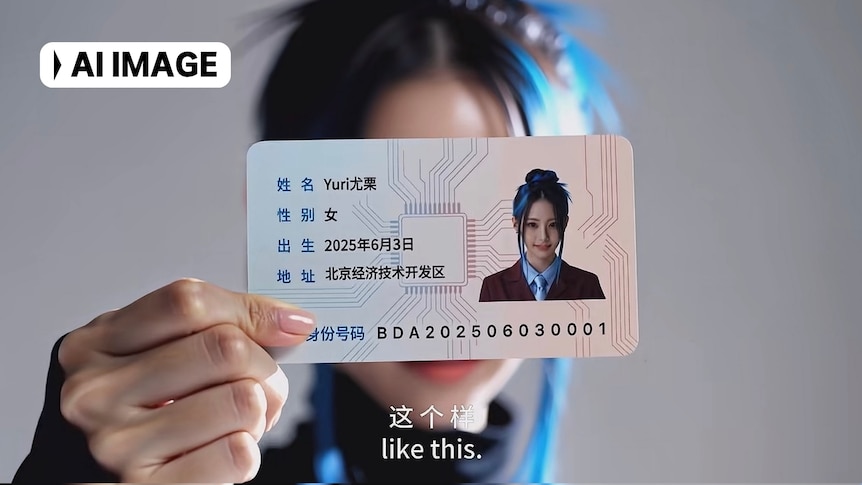
Beijing is running a pilot that gives official identity cards to AI-generated "digital humans". Yuri, a virtual idol, received the first one earlier this year, and she was also named the country's first licensed AI artist. The card records a name, birthday, address and facial features, and lets the people operating the character open a digital currency wallet for her business and sign commercial partnerships in fields such as fashion, gaming and cars.
Yuri has more than 100,000 followers on Chinese social media and is counted among the country's most popular AI influencers. She once sang in Mandarin and English to a crowd on Shanghai's Bund, appearing as an adult on a 100-metre screen. A human team builds and maintains her system and handles her contact with fans, whereas many other digital influencers borrow the face or voice of a real person.
“Digital identification is a way of tracing that wrongdoing to the company that's made it available.”
Jeannie Paterson, Centre for AI and Digital Ethics, University of Melbourne, to ABC News · abc.net.au ↗
The pilot sits inside a fast-growing business. The market was put at about 48 billion yuan (roughly US$10 billion) in 2025, and a Communication University of China report counted at least 1.3 million linked firms. Digital humans appear across broadcasting, streaming, micro dramas, e-commerce and propaganda, and the state has used them as government-report presenters and as officers answering public enquiries. Last month Beijing issued a practice guide urging broadcasters and video services to register theirs.
Supporters argue that registration protects intellectual property and curbs online scams. The worries behind it include digital humans posing as doctors to promote false medical advice, and celebrity faces and voices used without permission for deepfakes and unauthorised adverts. Critics counter that the scheme strengthens state surveillance. Lennon Chang, a cyber security expert at Deakin University, says registration could unmask people who use avatars to stay anonymous, leaving businesses under pressure to censor themselves.
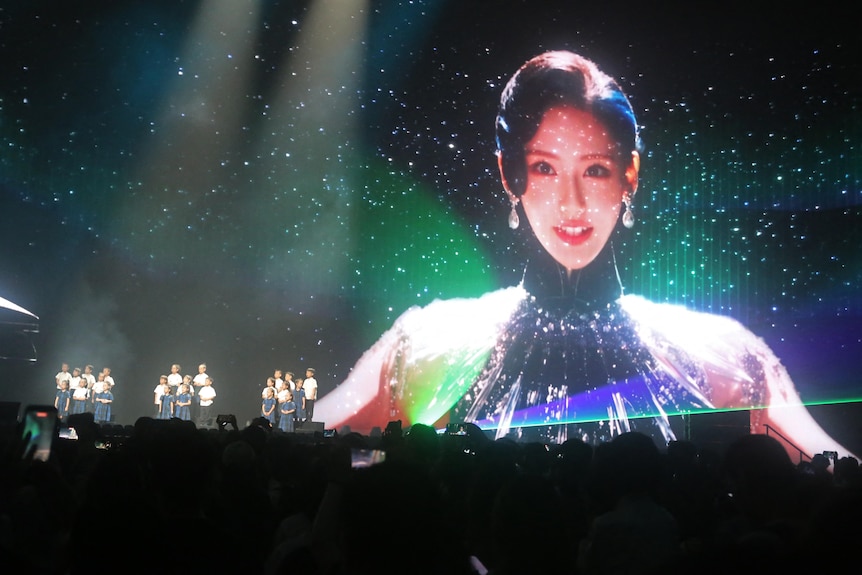
Yuri shown as a woman in a black dress on a large stage screen during a live concert
AFP: CFoto · Image: ABC News (Australia)
The category began with people using avatars to hide their identities in vertical videos and live streams, and has since moved from script-reading anchors to influencers that respond to users in real time. They are popular in live-streaming commerce because they offer round-the-clock company at low cost. Scrutiny has grown: an advert in which a digital influencer, Fang Taozi, praised the comfort of contact lenses was taken down this year after netizens questioned the claim, and some firms have reportedly offered ordinary people up to US$20,000 to license their identities.
Shanghai took a different route in 2024, with a blockchain framework that gives each digital human a permanent serial number, but China has no unified national system. Several government agencies are rolling out plans of their own, following Xi Jinping's push for "new quality productive forces" and greater self-reliance in AI.

A man posing for a photo with a pink-haired AI-generated woman, an example of the digital human industry
Supplied: Johnsmith.ai · Image: ABC News (Australia)
Sources · 1