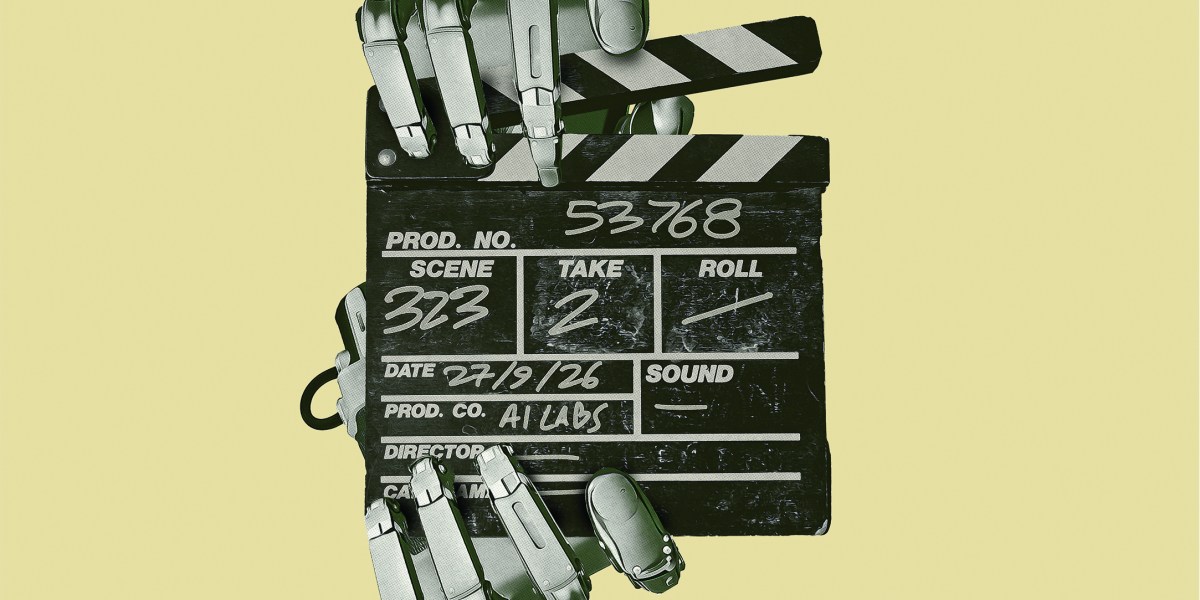
Chinese state media says more than 95% of the 120,000-plus microdramas released in China in the first quarter of 2026 were made with AI, up from almost none a year earlier. Data firm DataEye counted roughly 50,000 AI microdramas on Douyin in March alone, close to the whole of 2025's uploads. Fortune and a New York Times piece carried by The Boston Globe both describe an industry that has switched tools in about twelve months, and Fortune widens the view to studios elsewhere in Asia.
Cost explains much of it. Some Chinese firms turn out microdramas for around $30 a minute, and Caixin Global reports that Hangzhou producers make 100-minute dramas for under 20,000 yuan, about $2,981. The Globe puts the AI microdrama market at more than $3bn this year, inside a microdrama business worth over $14bn. The tools named across the two pieces include ByteDance's Seedance 2.0, Kuaishou's Kling AI, which claims 100 million users and says 70% of its revenue comes from overseas, Alibaba's open-source HappyHorse and the US startup Higgsfield AI.
“It’s like it was raining, and then suddenly the rain stopped.”
Li Jiao’e, microdrama actor in Hengdian (translated), to The New York Times, via The Boston Globe · bostonglobe.com ↗
The shift reaches the biggest names. iQiyi, founded in 2010 as a Netflix-style home for human-made shows, said in April it was pivoting to AI and turning its app into a platform for AI-generated content, and its founder Gong Yu called the technology a once-in-a-decade opportunity. Its chief AI scientist, Danming Xie, told Fortune it is increasingly impossible to make video without AI and that the question is how deeply creators use it. Hong Kong's TVB released the first local drama with AI-generated characters last September, the ten-episode You, and Only You, and now uses its virtual actors in ad campaigns.
Outside the mainland, Singapore marked its 61st birthday with two films in which everything except the scripts was AI-generated: Bersama Majulah, about a zombie siege, and Trace Project, about a boy who becomes the country's first astronaut on Mars. Edenstone's founder Joel Boh made his four-minute zombie film for S$8,000. It drew mixed reviews but about 70,000 users in three days, and his servers went down three times. Pax Chen of the FizzDragon studio, which made Trace Project, says AI helps get around Hollywood's diversity problem, and Boh says it lets stories be told that might never have been filmed. Chen concedes that traditional filmmakers and moviegoers are hard to persuade, and she is now turning to AI interactive films in which viewers make choices that shape the plot.
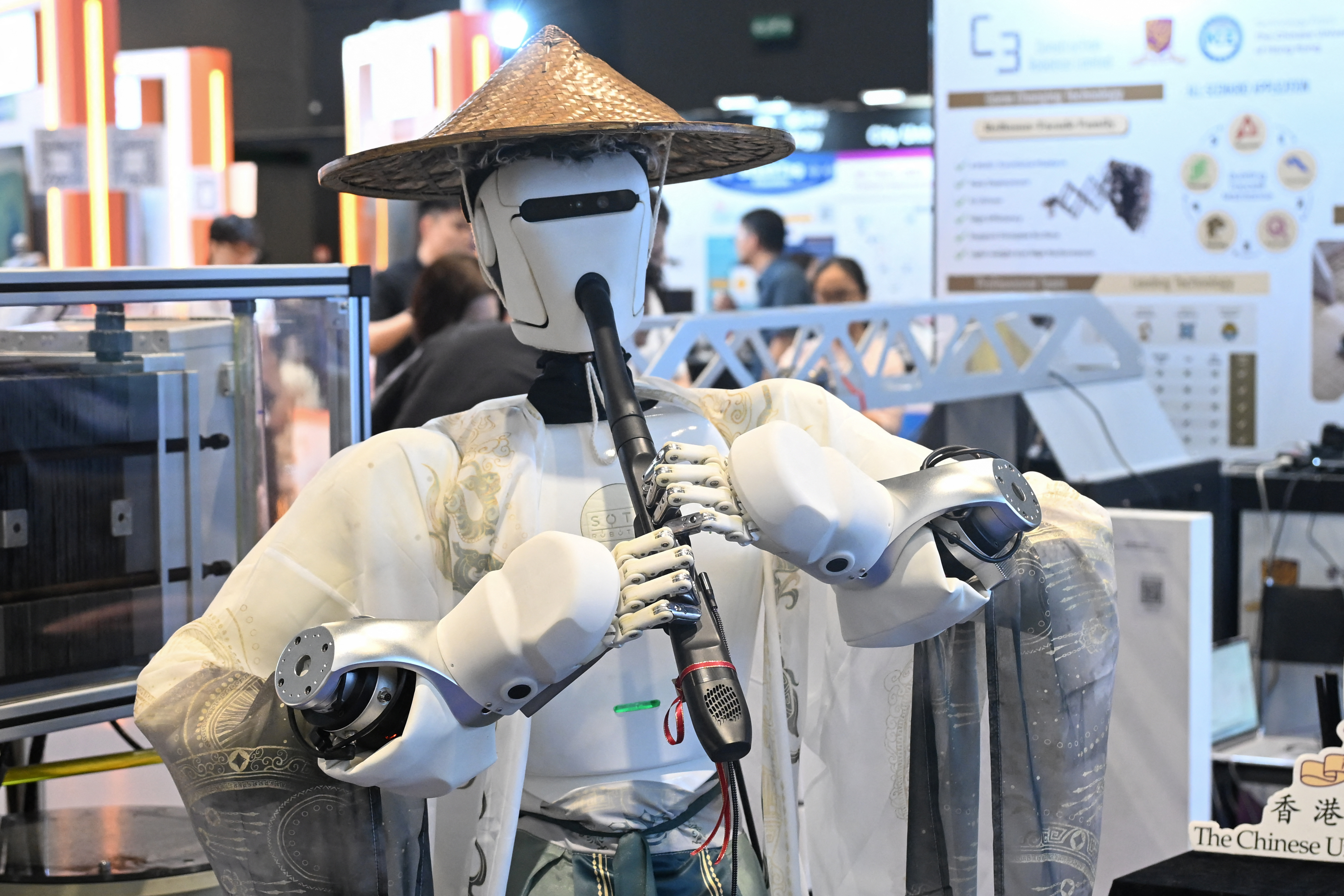
Stock-style photo of a technology fair in Hong Kong, used to illustrate the AI microdrama story
Peter Parks / AFP via Getty Images · Image: The Boston Globe
The human cost is clearest in Hengdian, the film-studio town nicknamed China's Hollywood, which both outlets describe as emptied of actors and productions. Performers there say work has dried up and fear being replaced, and Chris Shaw of Singapore's Lasalle College of the Arts says many actors and studios have suddenly disappeared. Likeness is a second flashpoint: a streaming site assembled a database of more than 100 actors' faces for AI use, and a ByteDance-owned platform pulled a show that had used two users' faces without their consent. Disputes over likeness have already prompted legal threats.
Rules are arriving unevenly. Seedance 2.0's February launch set off copyright complaints after realistic clips of Tom Cruise and Brad Pitt fighting on a rooftop spread, and ByteDance agreed to stronger safeguards in a truce with the MPA and restricted real faces. China now requires AI microdramas to be labelled, and regulators last month demanded consent before a person is used as a digital avatar. Academics quoted by Fortune, among them NTU's Ian Dixon, say China lacks legislation to stop AI filmmaking and has little street protest of the kind American writers and actors mounted in 2023, while the West is more militant about protecting artists' rights.
Audiences remain divided on length. They seem to tolerate AI in short-form video, but they are still sceptical of feature-length AI films, and Shaw argues that a good one still needs strong fundamentals in filmmaking. In August a crudely animated, human-made film about a cow, Niu Lai, from a mother-and-son team with no film experience, grossed 60 million yuan, about $9.1 million, and beat Spider-Man: Brand New Day, which Fortune reads as viewers welcoming something human amid a flood of AI content. Fortune also notes that only one original film, F1: The Movie, sat in 2025's ten top-grossing releases, and Dixon argues that studios can swap in AI because cinema already resembles an AI product.