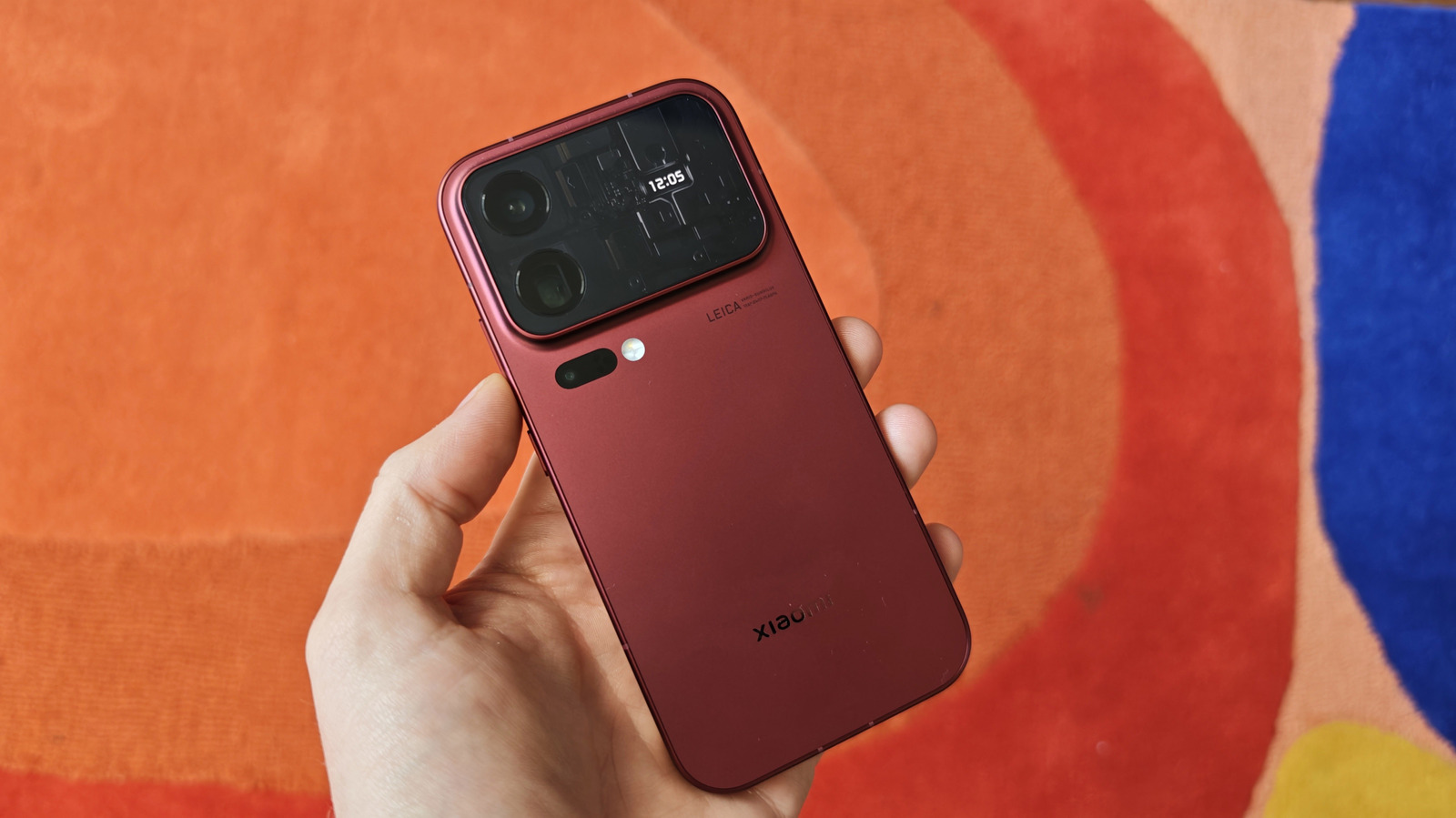
Xiaomi's new 18 Pro and 18 Pro Max add a feature aimed at the small screen on the back of the phone: owners type a description of a mini app, and generative AI tries to build it. Engadget, which tried the Pro in a hands-on, likens it to vibe coding for the rear display. The assistant behind it is Xiao, which also handles timers, reminders and AI-generated cards on that screen.
The phones went on sale in China on 23 September and are now reaching more regions, including the UK and Western Europe, though not the US. In Britain the Pro costs £1,199 (about $1,580) and the Pro Max £1,400 (about $1,850), both above last year's 17 Ultra. In China the Pro starts at 5,999 yuan (about $900) and the Pro Max at 6,999 yuan (about $1,042). The rear display measures 2.7 inches on the Pro and about 2.9 on the Pro Max, a figure Digital Trends puts at 2.86. It reaches 4,000 nits and 120Hz and sits under the same Gorilla Glass Victus cover as the cameras.
The mini apps are simple, single-purpose interactive widgets rather than full apps. Xiaomi promises more than 50 presets at launch, many more than the reviewer's 17 Pro had. Generation needs an internet connection, and it is unclear whether the work happens on the phone. A built-in button rewrites the user's idea to help the AI along. In testing it fell short: a prank wallpaper that cracks when touched kept showing a crack counter however often he asked for it to go, and a flag quiz stuck to about 25 easy countries, then struggled when asked for 100 more. Building and refining apps felt slow next to other AI coding tools.
Xiaomi's pitch is that people can make software for their own needs instead of relying on fixed widgets. The reviewer calls the idea clever, since it avoids persuading developers to design for an unusual screen size, but says he could not get apps to look or behave as he wanted. Rear screens on flip phones such as Samsung's Z Flip and Motorola's Razr mostly show notifications and camera previews, whereas Xiaomi's runs apps. It is the first rear display to run Spotify, YouTube Music and Google Maps, and Xiaomi says Gemini Live works there too, though it would not on the reviewer's unit. A pin-to-back function keeps text or images such as a boarding pass or QR code in view, and AI Group wallpapers can merge two subjects into one portrait.
The rest of the hardware is a flagship spread. The Pro Max uses Snapdragon 8 Elite Extreme Gen 6 and the Pro the Snapdragon 8 Elite Gen 6, both on 2nm, which Xiaomi's international head Adam Zeng teased at Qualcomm's Snapdragon Summit on 22 September. Both carry dual 200MP Leica cameras with a 50MP ultrawide (the Pro Max also gets a LOFIC main sensor), and a privacy display that can switch on per app and warns when someone looks at the screen. Battery sizes differ by market: the UK Pro Max has 7,050mAh, while the China model is listed at 8,500mAh with 100W wired charging. The reviewer rates the cameras below the 17 Ultra's.
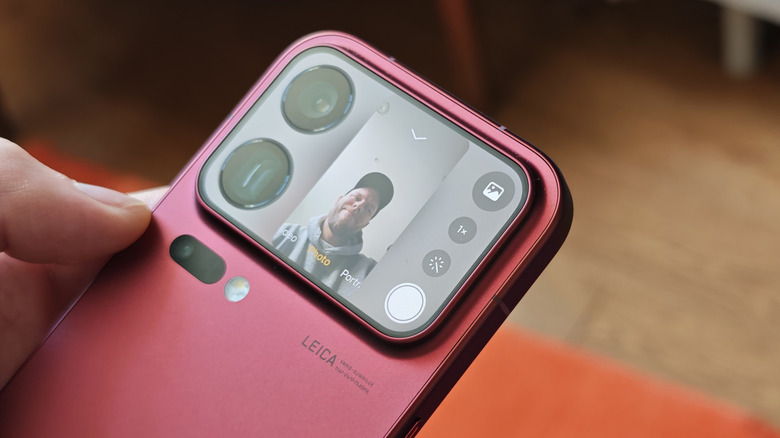
The 18 Pro's rear display showing the camera viewfinder
Mat Smith for Engadget · Image: Engadget
Beyond app building, the back screen has other jobs. It can show the camera viewfinder, and a pin-to-back function holds a boarding pass or QR code where it can be seen without unlocking the phone. Wallpapers made with the AI Group feature merge two subjects, and the reviewer notes that composite portraits of celebrities and fictional characters are possible. Colours include Velvet Red, Black, White and Cosmic Blue, and a transparent red Special Edition with 16GB of memory and 1TB of storage was shown in China.
Xiaomi's international launch gives the reviewer a point of comparison with its own past. He had far fewer rear-display apps on the 17 Pro, so the promise of more than 50 presets matters as much as the build-your-own option. His camera verdict is blunt: the 18 Pro's cameras do not match last year's 17 Ultra, which he still calls Xiaomi's photography flagship.
About the Xiaomi 18 Pro
The Xiaomi 18 Pro and 18 Pro Max are flagship Android phones from Xiaomi with a small second screen beside the rear cameras. They launched in China on 23 September 2026.
The rear display began with the Xiaomi 17 series, announced on 25 September 2025, whose Pro and Pro Max were the first phones in the line with a secondary screen on the back. That series sold more than a million units in China in its first week. The 17 Pro's screen was a 2.66-inch OLED used for personalised wallpapers and dynamic notifications, and the 17 Pro Max set a day-one sales record. In October 2025 Xiaomi said its next Android generation would keep a rear display like the 17 Pro's, with more R&D behind it, and that an update would add real-time translation.
The rear display first appeared on the 17 Pro and Pro Max in China in September 2025. The reviewer's Pro Max unit was due the day his hands-on appeared, and he plans to update the story once he has used it. Both models can be ordered in the UK from Xiaomi and Amazon, with the 18 series moving beyond China into more regions.
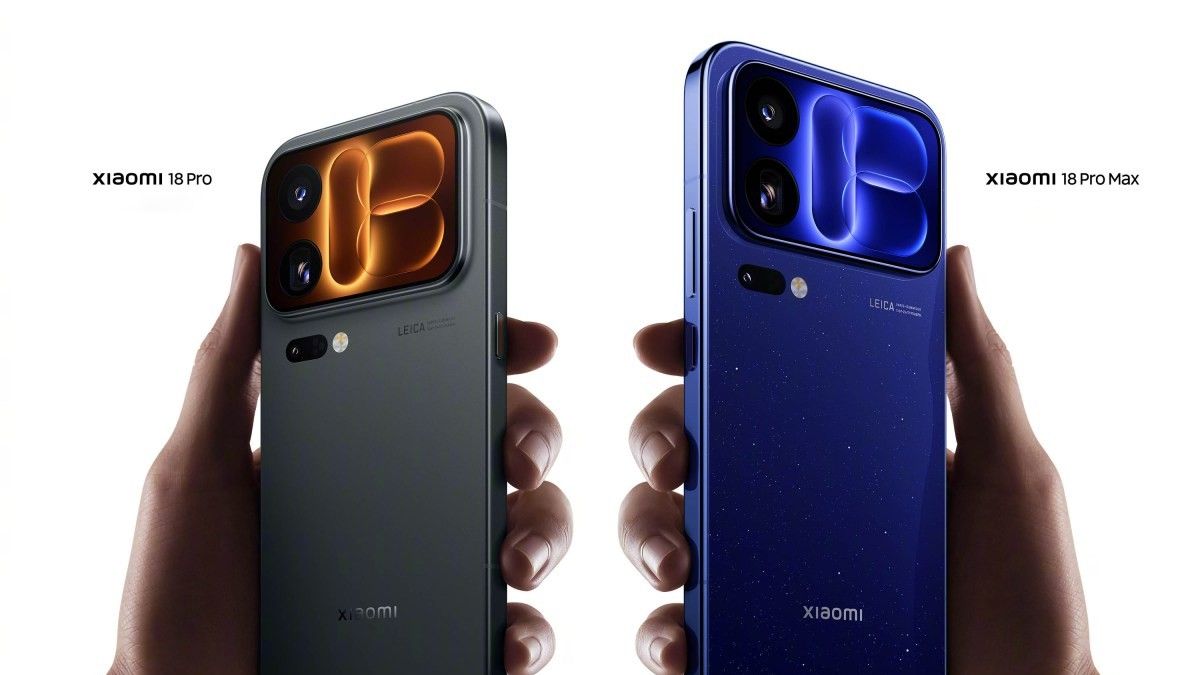
Xiaomi's press image of the 18 Pro series from the China launch
Xiaomi · Image: Android Central
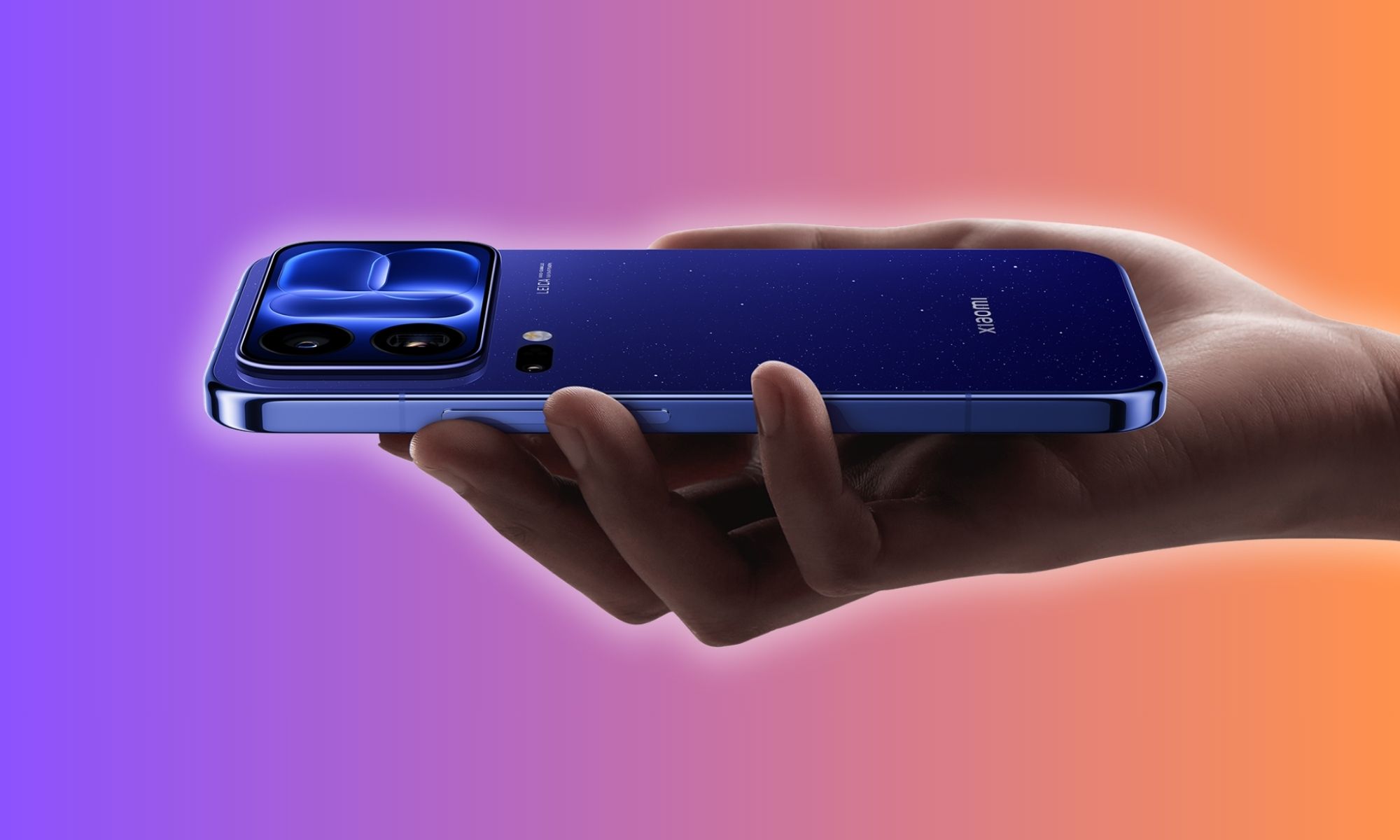
Launch image of the Xiaomi 18 Pro series
Image: Digital Trends
Sources · 3
Comments