
Meta launched Spaces in its Muse agent on 6 November 2026. A space is a topic-focused breakout conversation, which Meta calls a custom experience, listed in the sidebar of the interface, where Muse works toward a single goal. Users describe an idea in chat and Muse builds the space, whether that is a tracker, a planner or a project board, and they can then ask for changes to its content, look or behaviour. Spaces is available wherever Muse is.
“Describe an idea in chat, and Muse builds a space for you, whether that’s a tracker, a planner or a project board”
Meta, in its announcement · techcrunch.com ↗
Meta's examples run from a vacation planner and a holiday gift tracker to a trivia game, a music tracker with concert alerts, a school dashboard and a client hub. A space can be pinned to the sidebar or the main tabs, hidden, or scheduled, so a weekly planner shows during the workweek and gives way to weekend plans on Saturday.
Connected apps keep spaces current in the background, surfacing things like new concert dates, price changes or savings progress without a prompt. Meta's Muse product designer Alex Cornell described a space as a command turned into its own interface, easy to come back to for ongoing tracking. Mark Zuckerberg posted on X that he had built a BBQ game, an event tracker and a home control dashboard; Social Media Today adds that one of his spaces controls the vents of his smoker over Bluetooth.
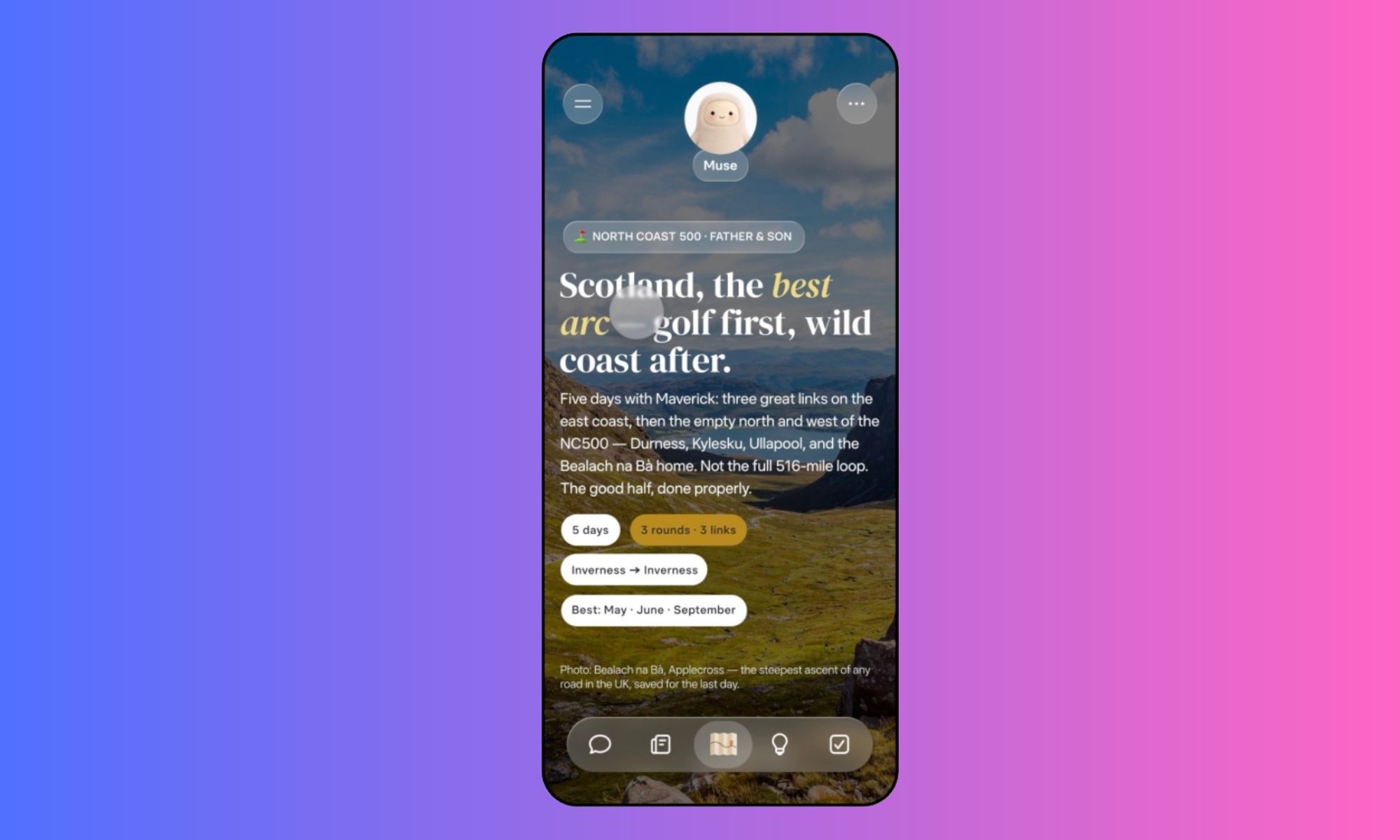
Meta promotional image for the Muse app's Spaces feature
Meta · Image: Digital Trends
Alongside Spaces, Meta rolled out specialised models for Meta AI and Muse trained from its Muse Wonder series, with Active Memory to separate temporary from permanent information and Active Focus to keep agents working through setbacks. A day earlier it announced Muse Voice, for video chats and spoken commands.
About Muse
Muse is Meta's personal AI agent, with its own apps and website. It can shop, draft and send emails and plan trips on a user's behalf, and Meta says it needs no technical experience to set up.
Meta revealed Muse on 8 September 2026. It connects to Meta's own apps and to third-party services including Google Workspace, Ticketmaster, OpenTable, Spotify and Apple Health, and can build its own connections where a public API exists. At launch each user's agent ran on a dedicated virtual machine, and Muse was set to ask for approval before sending an email or completing a purchase. Meta said it would still make mistakes and that most of what people need would be free. On 12 October 2026 Meta introduced the Muse Wonder series, its most capable agent models, with Active Memory and Active Focus, and said they would soon power experiences in Muse.
Muse agents debuted in early September 2026, and at the October earnings call Zuckerberg said they had 10 million users in the US and Canada. Social Media Today notes that Sensor Tower data shows retention dropping sharply two weeks after download. The reports do not say whether spaces can be shared or what they will cost.
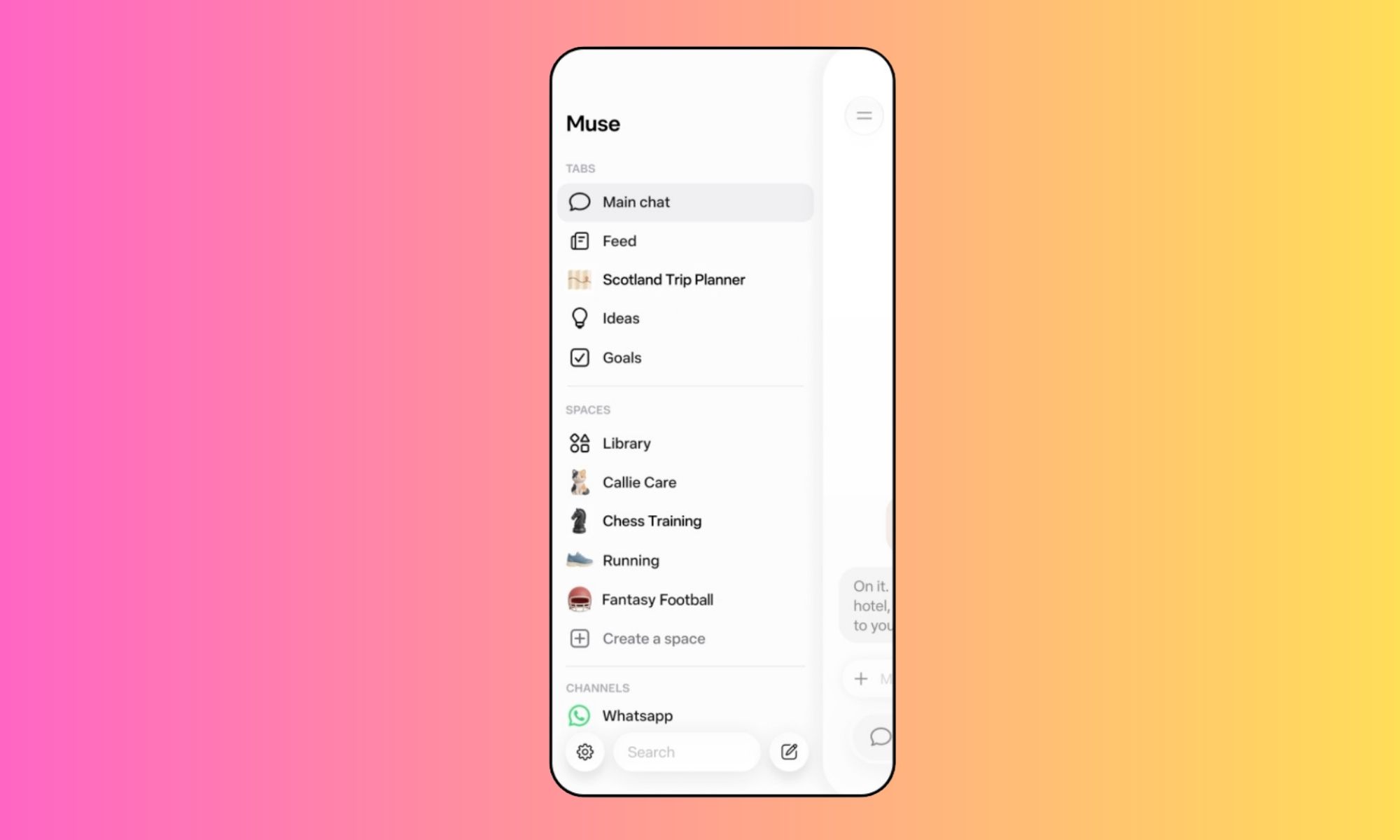
A second Meta promotional image of Spaces in the Muse app
Meta · Image: Digital Trends