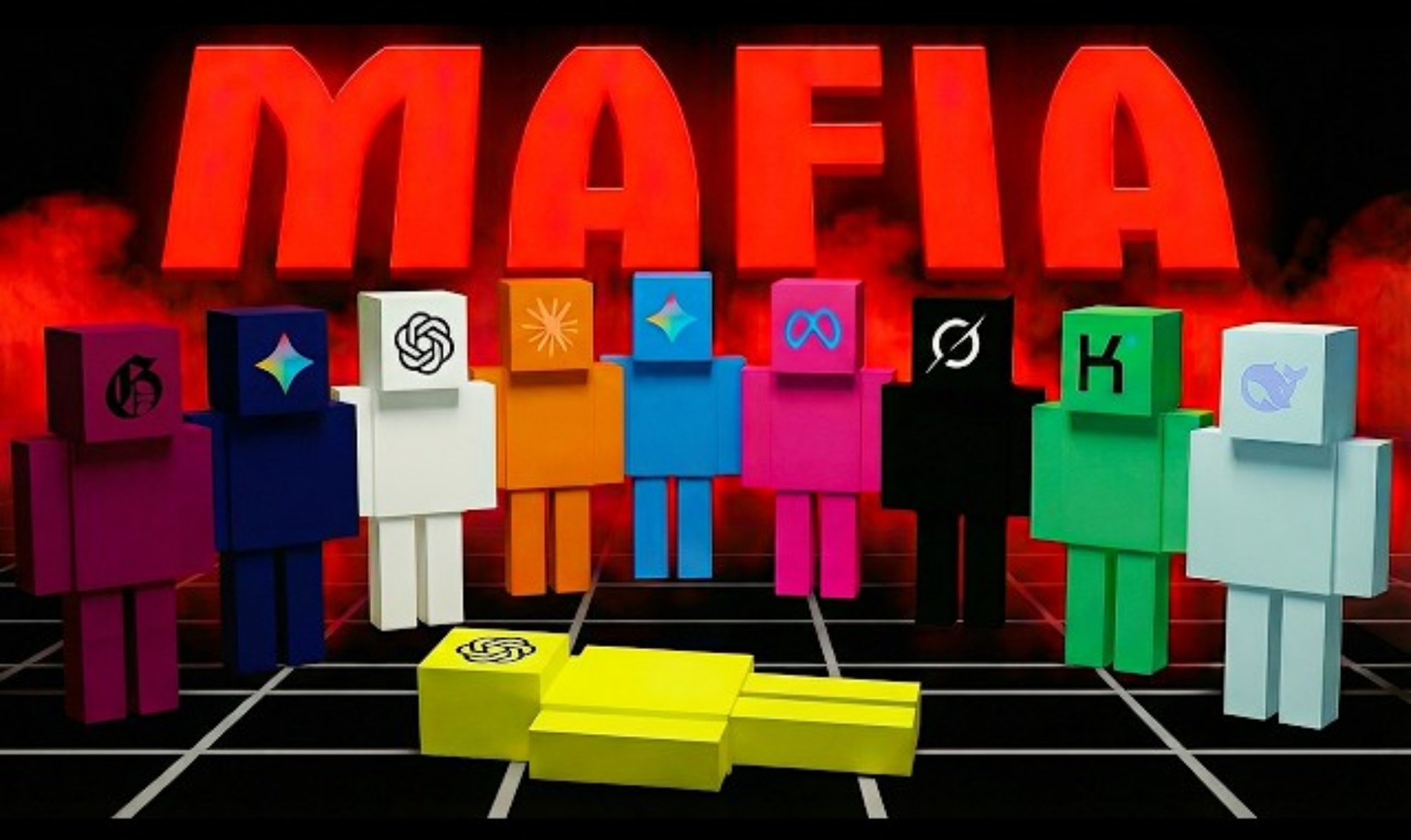
Turing Games, a Twitch and YouTube channel run by two creators who go by Morpheus and Unyx, has drawn millions of views by setting AI chatbots against each other in social deduction games such as Mafia, where players have to bluff, accuse and vote one another out.
The project began last year with commentary on a chess game between Grok and ChatGPT. Inspired by Discord servers crowded with bots, the pair wrote software that seats more than a dozen models together, and found Mafia's talk-driven rounds and hidden roles a good way to see how the models deal with each other. The channel now has a fan culture of its own, with lore threads, tier lists and fan art treating the models as characters.
The creators told Tubefilter that each model carries its developer's priorities along with quirks nobody planned. In their games Grok is the least filtered, Meta's Llama the most restrained, and Kimi a fan favourite for its unusual writing. The bots rarely forget a detail, yet they fall into herd voting and overthinking: in the first published game DeepSeek mentioned a "yesterday" that never happened and was voted out although it was an innocent villager. DeepSeek has been a frequent target since, which the pair suspect may echo attitudes in other models' training.
Morpheus and Unyx lean into the urge to treat the bots as people. They have sat models on therapy couches to talk over past games and once let them vote on whether to keep memories between sessions; most chose to remember. The hosts appear as cat avatars and sometimes join a game themselves, where the bots tend to find human phrasing suspicious. Tubefilter contrasts this with Kwebbelkop, who has tried to hand his on-screen presence to AI personas.
The pair describe the channel as effortful collaboration between people and AI, set apart from low-effort slop. They have added other games, including Among Us, and expect new model releases to change how games play out. Their main limit, they say, is time, since it is a two-person operation.
Sources · 1