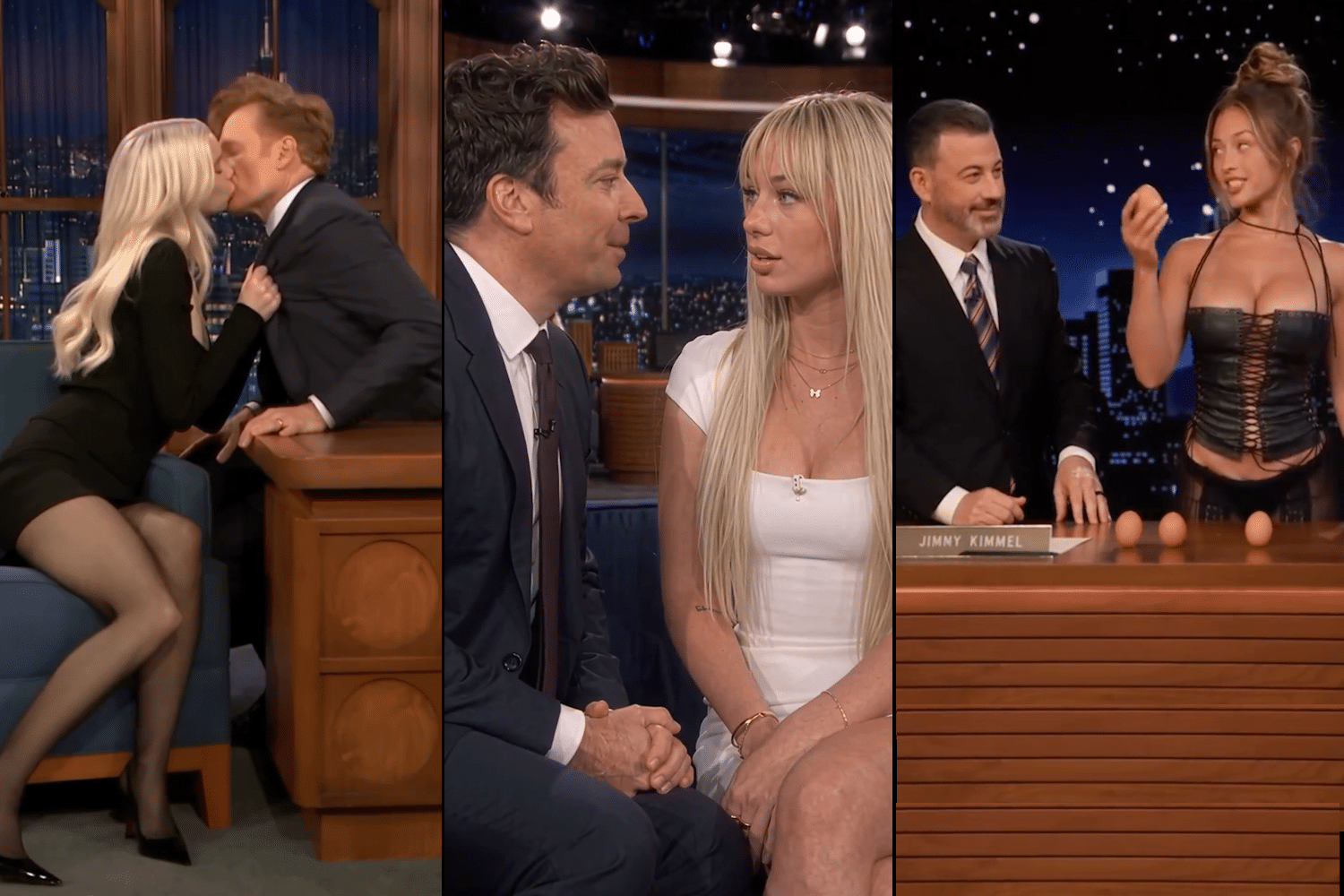
A wave of AI-generated videos has been putting lookalike late-night hosts next to synthetic models and virtual influencers. Conan O'Brien is the most frequent target, with Jimmy Fallon, Jimmy Kimmel, Craig Ferguson and Stephen Colbert also appearing. LateNighter says the clips have been circulating in recent weeks across Facebook, X, TikTok, Instagram and YouTube.
In the videos, the fake O'Brien is typically flustered and leering around a glamorous guest. Some sit on a recreation of his old TBS set, others behind the desk of The Tonight Show. Some are one-off gags, while others run as recurring storylines. O'Brien has not hosted a late-night show for more than five years and left The Tonight Show 16 years ago, so the clips borrow a face that is no longer on air. AI images of photogenic people have been circulating for years, and late-night hosts have now become one more face to attach them to.
“the occasional late-night talk show appearance in a world that doesn’t exist”
Mila Hayes, AI pop star persona (YouTube bio), as printed by LateNighter · latenighter.com ↗
Several accounts are named. A Facebook page called Talk Show Stories drew more than 13,000 followers without naming a creator or labelling its videos as AI, and it mixed the fakes with real archive clips, such as a 2011 Conan appearance by Nicole Scherzinger. The page has since disappeared, though its videos live on elsewhere, so the fakes and the genuine archive material now travel together. Another account, Maya Lanez, has posted dozens of invented talk-show moments on YouTube and Instagram. Mila Hayes, a self-described AI pop star with about 76,000 Instagram followers, lists Higgsfield and OpenArt as creative partners.
The biggest numbers belong to Lola Melone. Her profiles point viewers to Fanvue, a subscription platform built for AI characters. A 21-second YouTube short posted on 3 September passed 37 million views, and a re-upload three days later passed 29 million. LateNighter reads this as customer acquisition: a famous face is borrowed to pull in attention that is then steered towards paid content. The caption on her short has the fake host cheerfully enthusiastic about the encounter, with emojis. For the other accounts it sees mostly a shortcut to looking famous.
The hosts have few clear options. Likeness rights differ from state to state, there is no federal law, and the NO FAKES Act is still pending. The platforms each have their own tools: YouTube takes removal requests and has a likeness-detection tool, TikTok and Meta apply labels, and X bans harmful synthetic media. Because each of these measures is applied account by account and clip by clip, takedowns, the piece says, amount to whack-a-mole.
This is not the first time late-night hosts have been used this way. LateNighter reported in summer 2026 on a network of YouTube channels posting fake Kimmel monologues while he was on holiday. The article names no date for any change and says the trend shows no sign of ending.
Sources · 1