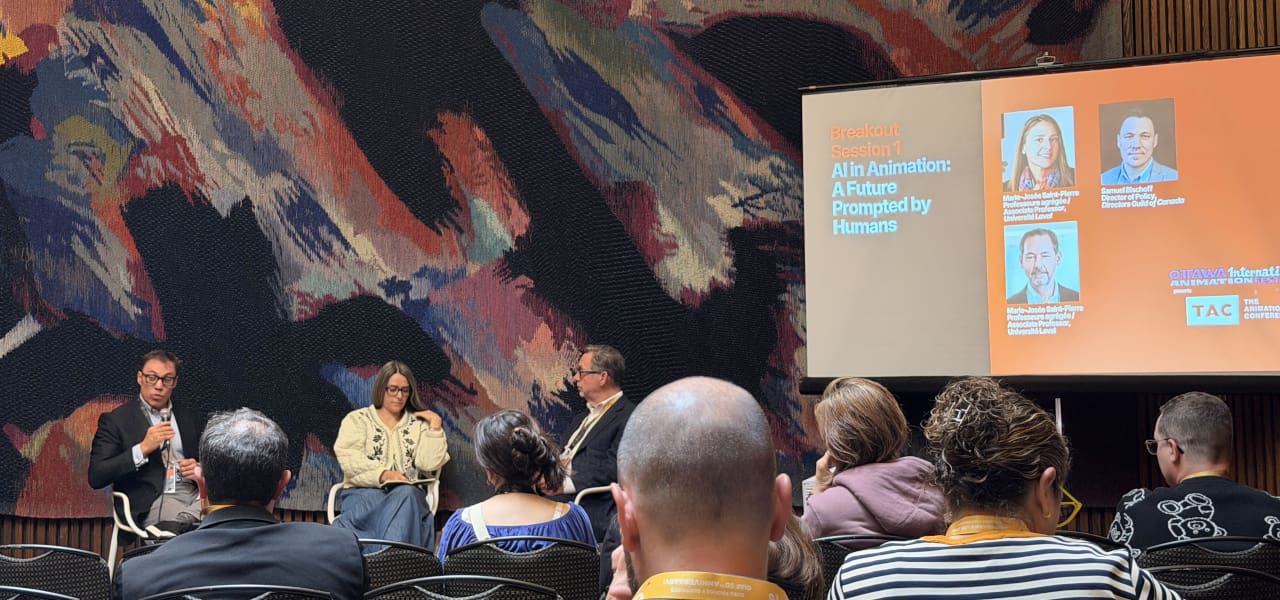
At the Ottawa International Animation Festival's industry conference on 24 September, a panel led by entertainment lawyer Mark Edwards took on three questions: how junior animators learn if AI absorbs entry-level work, where using a tool turns into replacement, and who gets to decide.
Animator and Université Laval professor Marie-Josée Saint-Pierre warned that losing junior roles removes the route to senior ones, and said students still need to draw so they can judge what AI produces. Her test is control: whether software carries out an artist's intention or starts setting style and movement. She now trains a model on material she can trace, and said the big commercial models are getting pricier and worse.
Samuel Bischoff of the Directors Guild of Canada described members split between indifference and alarm, many already using AI for admin and some creative work while some resist training. The guild looks at transparency and whether the artist chose to use AI, and he raised consent and pay for training data and who should disclose AI in finished work.
Edwards doubted any single line could hold, given open questions over training data, ownership and broadcasters' rules. The session closed on protecting the conditions artists work in, with Bischoff's reminder that art is not content.
Sources · 1