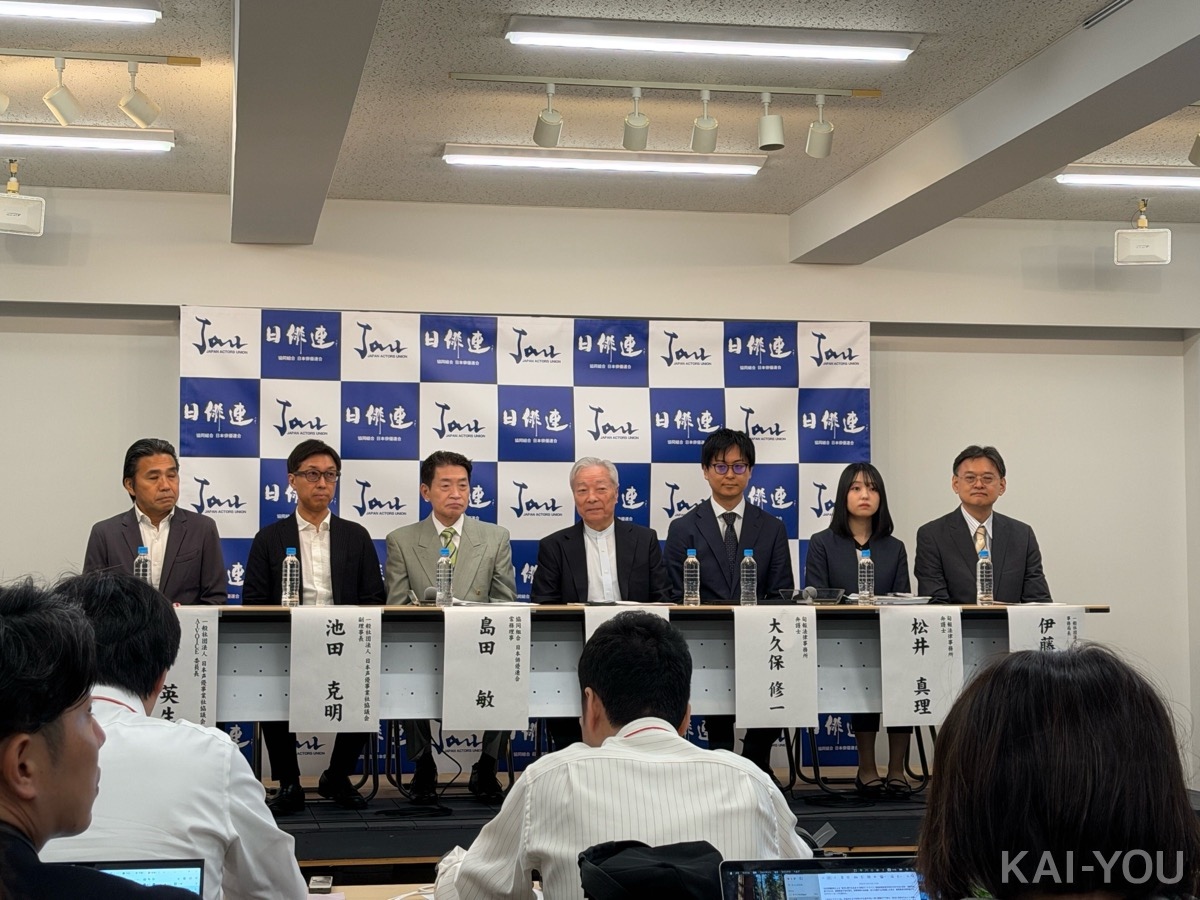
Japan's actors and voice actors set out rules for generative AI and voices at a Tokyo press conference on 15 October. KAI-YOU names the Japan Actors Union as issuer; SBS, citing Kyodo, a council of performers' organisations.
“There was an instance where an unauthorized AI voice of a character from an anime I acted in was made to sing.”
Bin Shimada, voice actor, at the press conference · news.sbs.co.kr ↗
The 22 articles require consent at three separate stages: analysing voice data, building a model of a voice, and using generated speech in a work. Performers get seven days' notice before a new model is trained and 48 hours before generation with an existing one, and prompts naming a performer count too.
The guidelines as shown on the Japan Actors Union's site
Japan Actors Union official site · Image: KAI-YOU
Consent runs one year at most in principle and cannot be bought out wholesale. Training, use, advertising and multilingual use are paid separately, and refusing carries no casting penalty. Deceased performers' voices are barred from new works unless bereaved families agree, and AI is not to replace actors in dubbing films or dramas.
The text is a voluntary standard for AI developers, providers and users, not law. It follows a September Tokyo District Court finding that a voice has economic value protected by publicity right in Kenjiro Tsuda's TikTok case. The union will press the industry to adopt it.
Sources · 2