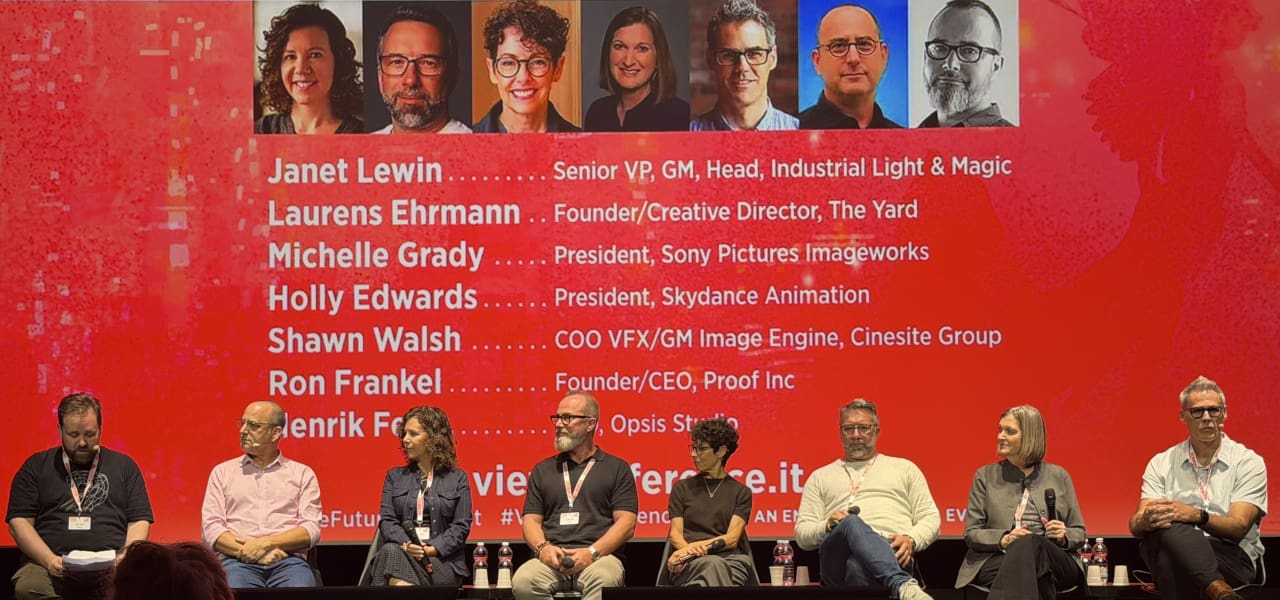
Seven studio leaders sat on a panel at the VIEW Conference in Turin on the evening of 14 October 2026, asked to talk about technological and economic change and what it means for artists. Ian Failes of befores & afters moderated. On stage were Michelle Grady of Sony Pictures Imageworks, Janet Lewin of ILM, Holly Edwards of Skydance Animation, Ron Frankel of Proof, Laurens Ehrmann of The Yard, Henrik Fett of Opsis Studio and Shawn Walsh of Cinesite Group's VFX and Image Engine arm. The conference programme lists the session as "Industry Executives Shaping the Future of Cinema", one slot in a five-day event running 12 to 16 October.
Most of the executives presented generative AI as one element of a broader shift in technology, not an imminent substitute for the methods studios already use. The changes they described in concrete terms were about pipelines. Imageworks works in Unreal Engine alongside Sony Pictures Animation, a practice that began with KPop Demon Hunters, grew on Goat and went much further on Spider-Man: Beyond the Spider-Verse.
Imageworks has also built a workflow around "story camera, story performance, story lighting", so that artists can experiment with a film's look and staging well before full production begins.
“Many of us are part of a parent company that makes decisions that we can’t control.”
Janet Lewin, SVP and general manager, ILM, at the VIEW Conference panel · cartoonbrew.com ↗
Lewin said traditional feature VFX now makes up about 40% of ILM's work, with the other 60% coming from location-based entertainment, immersive experiences, digital musician avatars and a partnership with Meta on immersive cinema. Fett said Opsis is working on a large-format touring concert installation. Edwards said Skydance Animation is concentrating on pushing the CG animated feature itself, while floating the idea that there could be room for a new outlet along the lines of Adult Swim.
On AI directly, Frankel thought it could speed up the creative back-and-forth with filmmakers. He likened its arrival to that of photography and hoped it would set off an explosion of new storytelling forms. Ehrmann argued that it can quicken execution but not taste, which means newcomers have to learn how to judge images rather than only produce them.
Walsh urged a gradual approach to change and expects VFX artists to be needed to manage the transition. Lewin warned that there is no magic bullet, asked colleagues to keep an open mind and stressed transparency and retraining as the tools spread through studios.
She also pointed out that parent companies, with their greenlight and budget decisions, sit beyond what the executives themselves control. Grady's position was that studios do not exist without artists and have to use technology to make great images with great artists.
The panel split on incentives. Fett opposed tax breaks steering where work goes, whereas Frankel said Proof, as a local vendor, has to follow them to stay in business.
Asked what young artists should do, the panel advised against hyper-specialising, knowing the craft well and staying adaptable. Edwards backed training and moves between departments as a way of building range.
Cartoon Brew's own assessment is that the executives gave few specifics about protecting jobs, at a time when the major studios keep cutting staff and consolidating while promoting new technology and efficiency. The report also notes the speakers had been announced ahead of the event, with Grady, Lewin and Edwards among them.
Sources · 1