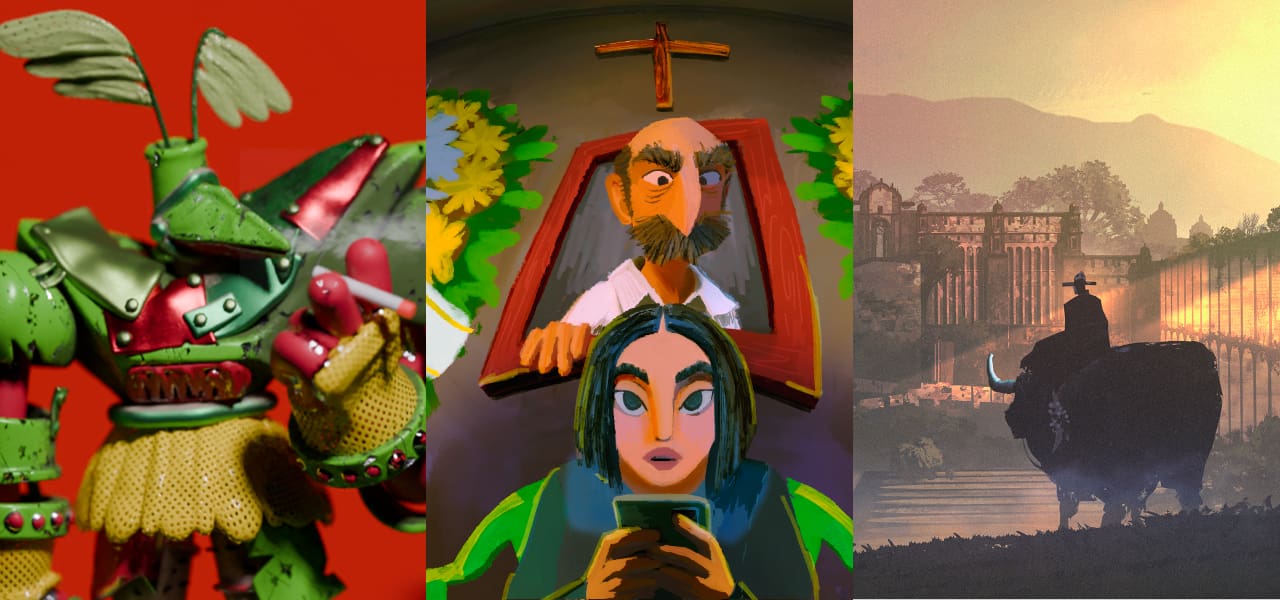
This year's Next Lab Generation workshop in Madrid made two technologies compulsory for its six finalist teams: Meta's VR animation tool Quill and the AI image service Magnific. Over eight weeks, with mentors, the teams built proof-of-concept material for shorts, a series, a feature and a game, and at the pitch each had to report how many of their hours went into each tool.
The verdicts split sharply. Nearly every team liked Quill for sketching, blocking and prototyping in 3D despite its learning curve. Magnific was mostly kept for early concepts, lighting tests and mood images; teams said it could make a single striking picture but abandoned it for production because of inconsistency, weak control, a lack of visual personality, and credit costs that climbed with every iteration.
Individual pitches show the pattern. The Don Quixote-inspired short Don Quiosker-Man kept only two AI-rendered shots; the preschool series Rewind found AI unable to hold consistency across a sequence; the grief short The Message was finished almost entirely in Quill because AI could not give the handmade feel it wanted. One co-director of the comedy The Shower Club summed up the mood by saying the humans did the boring part while the AI got the fun part.
The exception was Sad Mahan, a paper-cutout game intro about overtourism in the Canary Islands, whose director built a pipeline pairing Quill puppetry with AI-assisted rendering while insisting the artist must stay in control. The Mexican fantasy feature Taras used AI mainly for lighting and atmosphere.
The finalists were chosen from over 70 submissions, and the event was backed by Madrid's regional culture ministry and city council. The jury picked The Message, Sad Mahan and Taras as winners, each receiving accreditation to Annecy's Mifa market in 2027.
Sources · 1