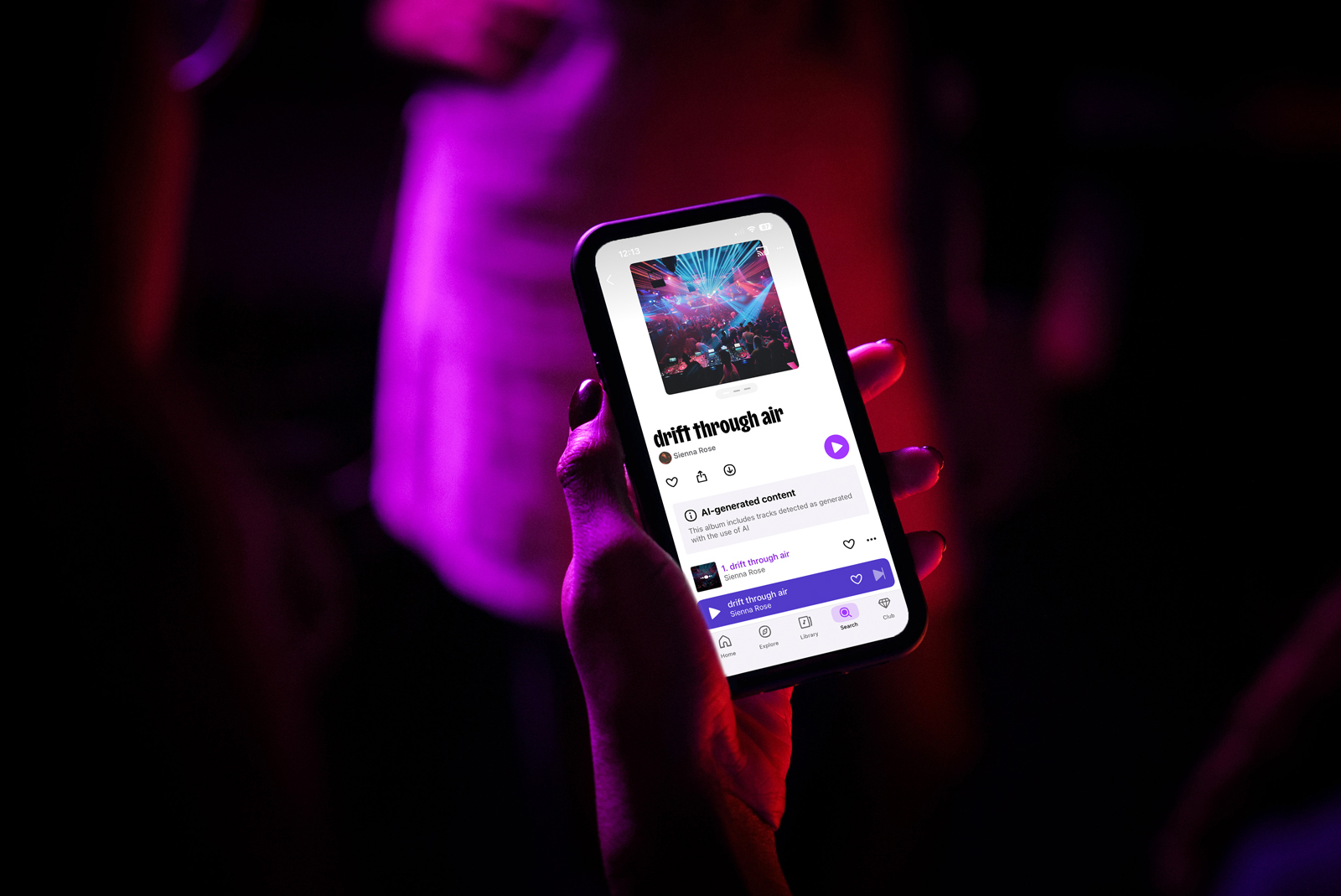
Deezer published the second edition of its yearly AI-and-music survey on 17 November 2026, again carried out with the research firm Ipsos. It questioned 9,000 people in eight countries (the US, Canada, Brazil, the UK, France, the Netherlands, Germany and Japan), 6,672 of whom use music streaming. The company says the headline result is that 80% agree both fully AI-generated and AI-assisted music should be clearly labelled for listeners.
Attitudes in the United States hardened the most. Only 37% of Americans now see AI as a valuable tool for artists and composers, down 17 points from 54% a year earlier. A larger 69% expect AI to cost music its creativity, and 51% think AI will play a significant part in making music, 11 points fewer than before. France is the most pro-transparency market, with 88% wanting labels on fully AI music and 90% on AI-assisted tracks, where 76% also fear a loss of creativity, up six points. Brazil is the most positive, with 61% calling AI a valuable creation tool against 35% across all respondents, and 63% there believe they have heard fully AI music, up from 46% in 2025. Japan is the least exposed: 46% say they have never heard it, against 32% across all respondents. Across the board, 67% fear a loss of creativity in production and 69% say fully AI music threatens artists' livelihoods.
“It is clear from this year’s survey that an overwhelming majority still want transparency when it comes to AI music, and that there is a significant gap between what listeners think is in their playlists and what is actually there”
Alexis Lanternier, CEO of Deezer, in Deezer's announcement · newsroom-deezer.com ↗
On the streaming side, 72% of users want to be told when a service recommends fully AI music, and 60% say it should not chart alongside human-made work; only 7% want equal chart treatment. Some 41% would like to filter such tracks out, 43% would skip them, and 61% would try one out of curiosity. Views on training are firm too: 66% say copyrighted material should not be used to train music AI, 73% call doing so without artist approval unethical, and 67% want lower payouts for fully AI music. On AI use in general, 84% of respondents have tried it, 25% daily and 49% weekly, though only 17% say they trust it and 55% describe themselves as curious about it.
Deezer sets this against its own platform figures. While 74% of streaming users believe their playlists contain no fully AI music, around 57% of the 53,000-plus people who joined Deezer in October had already played at least one such track. Another finding is that 54% expect AI to bring more generic, low-quality music, and 54% find it unacceptable for a favourite artist to release a full track made with little human input, while 45% accept AI for producing, mixing or mastering. The company says it now receives nearly 90,000 fully AI tracks a day, more than half of daily deliveries on peak days.
Deezer says it was the first streamer to tag AI content and to remove it from algorithmic recommendations, and that it keeps AI tracks out of editorial playlists. Its detection tool, running since early 2025 and described by Deezer as TIME's Best Invention of 2026, is aimed at output from models such as Suno and Udio. Deezer filed two AI-detection patent applications in December 2024, which the EU and US offices published in June 2026, and its first Ipsos survey ran in November 2025. The company says a toggle to exclude AI-generated music from search will arrive before the end of 2026.
About Deezer
Deezer is a French music streaming company founded in Paris in 2007 by Daniel Marhely and Jonathan Benassaya. It is available in more than 180 countries and is listed on Euronext Paris under the ticker DEEZR.
This is not the first time Deezer has taken on AI music. In January 2025 it deployed a detection tool that flagged about 10,000 AI-generated tracks a day and kept them out of algorithmic and editorial recommendations. By April 2025 it reported that around 18% of daily uploads, over 20,000 tracks a day, were fully AI-generated. On 12 November 2025 it published its first Ipsos survey, in which 97% of respondents could not tell fully AI music from human-made, and it cited more than 50,000 fully AI tracks a day, 34% of deliveries.
This is Deezer's own research, published in its newsroom, so the figures come from the company that sells the labelling it asks about.
Sources · 1
Comments