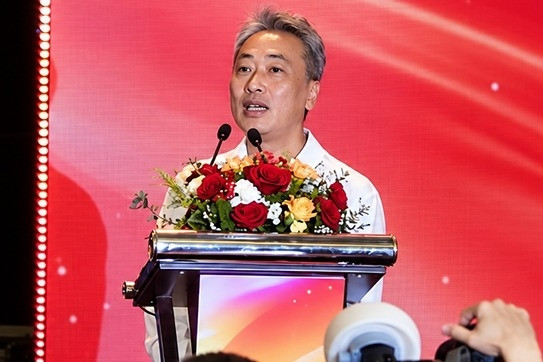
Well-known Vietnamese film-makers have joined projects with a company that set out an AI-based model for making and releasing entertainment in Ho Chi Minh City on 29 September, VietNamNet reports. Directors Victor Vũ and Nguyễn Quang Dũng and producer-director Võ Thanh Hòa all work with the organiser, on cinema films and on short dramas.
The plan announced at the event is to turn out 200 AI-assisted short films a year from 2027, about 20 a month, at a production base in Nanning, China. Original stories will be developed as creative joint ventures with directors including Võ Thanh Hòa and Phan Minh Mẫn, so that the company co-owns scripts and spin-offs instead of buying short-term rights.
Victor Vũ said his detective sequel Thám tử Kiên 2 is in post-production for a Tết 2027 release; the first film took close to 250 billion dong in 2025. After that he will shoot Chiến bào, a historical epic about the Lam Sơn uprising aimed at the uprising's 610th anniversary in 2028. He said the technology gives his team a way to tell a story that used to be very hard to tell.
For Nguyễn Quang Dũng it revives an idea he has carried for more than 20 years, since his days at the Ho Chi Minh City drama and film school. The story suits animation, which he calls costly and labour-heavy, so it stayed a written piece. Now it is planned as a feature: the script and character designs are done and animation has begun.
His method is to cast actors, build their looks and record their emotions and way of performing for the AI to learn from, then make the film scene by scene as in traditional animation, with far less time and crew. He puts the share of AI work at more than half, while the core creative decisions stay with people.
Two films backed by the organiser open in October: Án mạng karaoke, produced by Võ Thanh Hòa, and Chị chị em em 3, out on 16 October.
Võ Thanh Hòa said a trip to a short-drama festival in Shenzhen in March showed him a billion-dollar industry. Vietnam's whole box office is about $200 million a year, he noted, less than half of one Chinese short-drama firm's annual revenue. He said the aim is quality, not speed.
Sources · 1