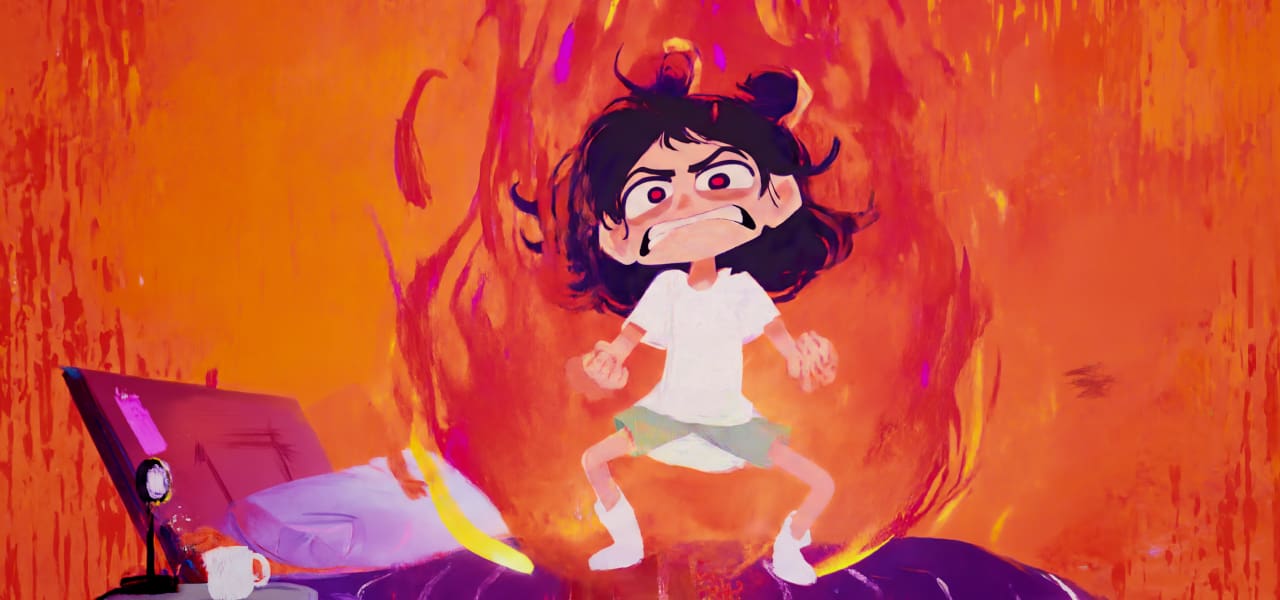
Dear Upstairs Neighbors, a six-minute animated short directed by Connie He and produced by Márcia Mayer, has finished the one-week theatrical run that makes it eligible for the 2027 Oscars, and Cartoon Brew has picked it out as a contender in the animated short race. The film was made by animation veterans led by Pixar alum He, whose credits include Inside Out 2 and Love, Death & Robots, working alongside researchers at Google DeepMind. It blends hand-made animation with generative models that were trained on the artists' own artwork rather than on prompts, and the team treats it as a test of what such tools can do in the hands of working animators.
The story follows Ada, a woman desperate for sleep who lies awake picturing what her upstairs neighbours are up to. Her imagination slides into surreal fantasies, and the look of the film changes as her frustration climbs, each fantasy getting a visual register of its own. The idea came from He's own pandemic-era life in an apartment block, where thumps and the dragging of furniture overhead were part of the day. Sound does much of the storytelling, because the audience only ever hears the noises from above. Sarah Affleck edited the film, and the surreal sequences each take on their own painterly treatment, so the same bedroom can turn from a calm refuge in cool colours into something far more expressive as Ada's patience wears thin.
“Ultimately, technology should always serve the story and the artists behind it.”
Connie Qin He, director, to Cartoon Brew · cartoonbrew.com ↗
The technical approach is the heart of the story. Cartoon Brew's account is that the storyboards, designs and the underlying 2D and 3D animation were all made by artists, and the generative models supplied the painterly finish of the final images. Production designer Yingzong Xin produced the concept art and character designs, and DeepMind fine-tuned custom versions of Veo and Imagen on a handful of example images from that artwork. According to Google, the models picked up more than colour and texture: they absorbed ideas such as two-point perspective and the use of brushstrokes to show sound. Animators then made rough animation in 2D with TVPaint or in 3D with Maya, and the models restyled it video to video, with no text prompting involved. A custom ComfyUI workflow using fine-tuned Imagen handled some frame-by-frame work, so the artists' performances stayed theirs while the models carried the look across every frame.
Control was the stated priority. The research team built controlnets and mask-editing tools so that one region of a shot could be reworked without regenerating the whole image. Shots went through daily critiques over several rounds, and Google's team says none of the final shots came out of a single one-click generation. Veo's upscaling took the finished shots up to 4K for the big screen; that upscaler is available in Flow and was due to reach Google AI Studio and Vertex AI. Named collaborators on the animation and research sides include Ben Knight, Mattias Breitholtz, Steven Chao, Cassidy Curtis, Andy Coenen, Forrester Cole, Ellen Jiang and Erika Lu.
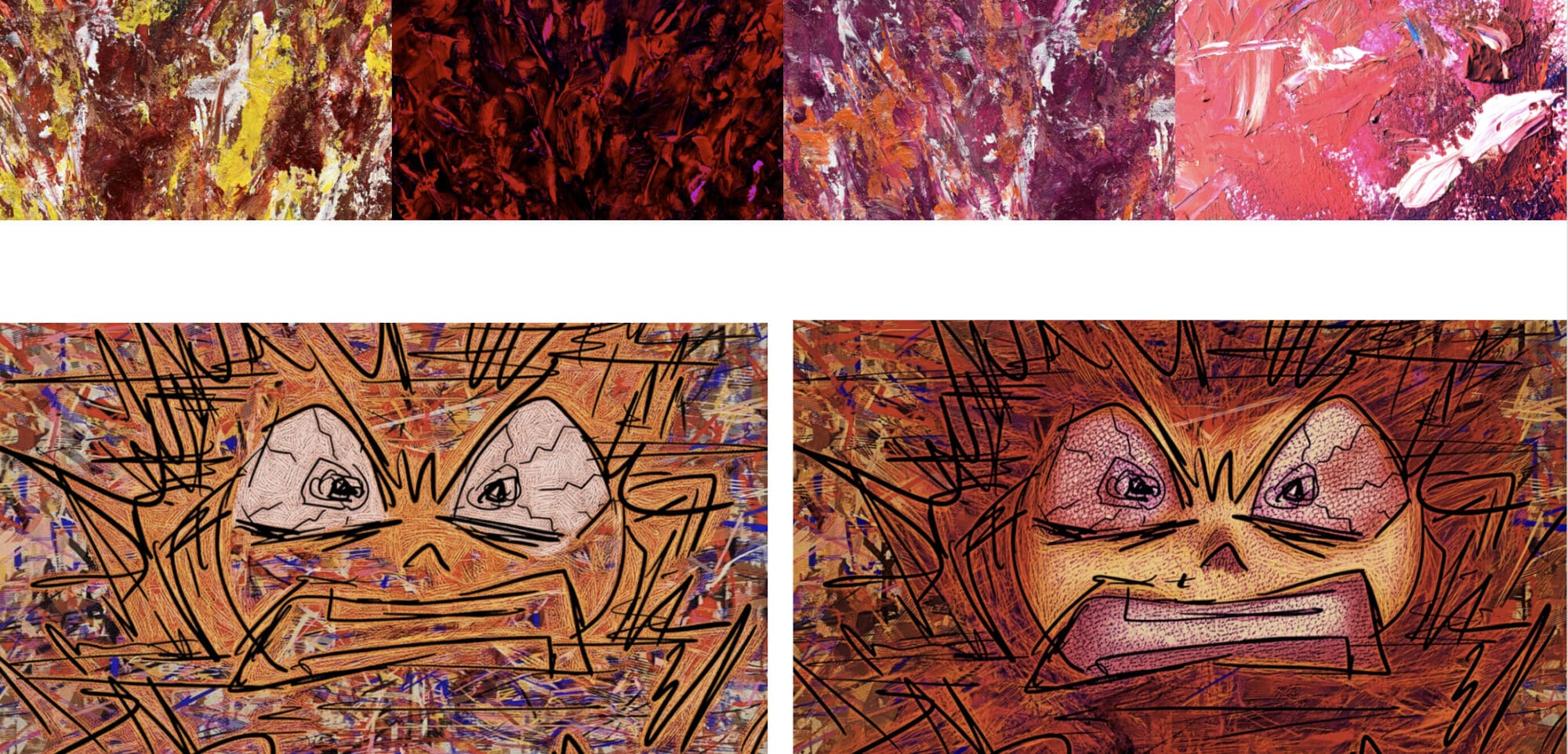
Concept art for the film by its production designer
Yingzong Xin · Image: Cartoon Brew
He presents the project as an exploration rather than a shortcut: the aim was never to save time, but to see what the technology could open up in animation, and the director frames the tools as a route to creative empowerment rather than automation. On the research side, Google's team describes its own goal as giving artists the potential of generative AI without losing control over its unpredictability. In both accounts the artists' judgement, shot by shot, decides what stays in the film and what goes back for another pass.
About Dear Upstairs Neighbors
Dear Upstairs Neighbors is an American animated comedy short of about six minutes, directed by Connie He, about a young woman kept awake by noisy neighbours. It was made by animation artists together with Google DeepMind researchers, who fine-tuned custom Veo and Imagen models on the artists' own concept art.
The film was previewed at the Sundance Institute's Story Forum, with Google announcing the project on 26 January 2026. It then screened at the Tribeca Festival in June 2026, billed as a world premiere, with the director interviewed afterwards.
The project was previewed at the Sundance Institute's Story Forum, which Google announced on 26 January 2026, and then screened at the Tribeca Festival in June as a world premiere. Tribeca lists the film at about six minutes in length. With the qualifying run complete, the 2027 Oscars short-film race is the next stage.