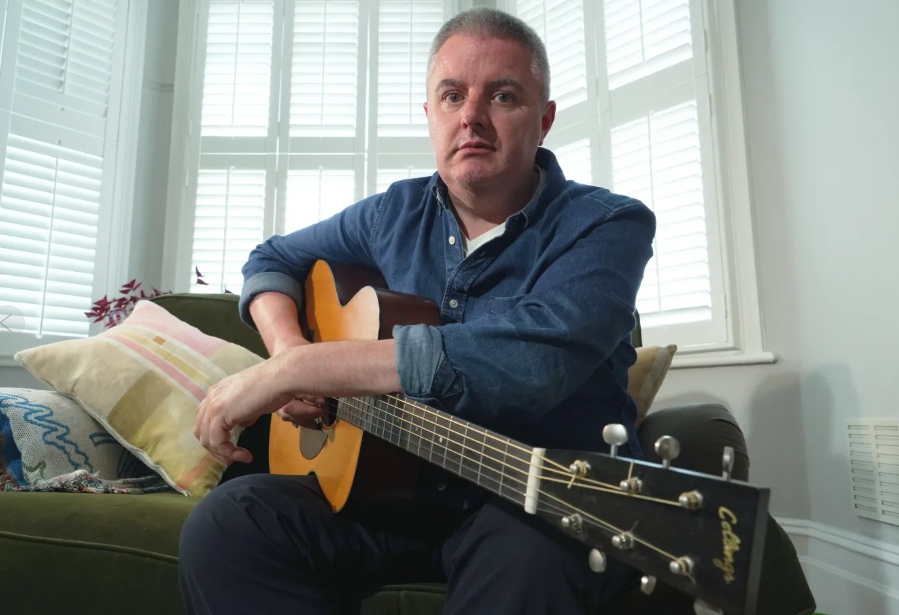
London-based Americana singer-songwriter Samuel Smith, diagnosed with Parkinson's in 2020, turned to AI song generators while making his second album, The Art Of Letting Go, as the disease took away most of his guitar playing. The AP story, carried by The Star, describes how he used the tools to sketch arrangements rather than to make the record itself. Tremors, stiffness and fatigue wore down his playing over the year or more he spent on the album, and he says it quickly became clear his music was going to suffer.
For the instrumental Horizon, one of the album's eight tracks, Smith hummed rough melodies into his phone, uploaded them to Suno and Udio, and described the instruments, mood and style he wanted. The results were demos to show session players what he heard, and none of that audio went into the finished recording. Getting something close to his own music often took 50 to 150 attempts plus heavy editing. The article notes that anyone can get a passable song out of these apps, which analyse patterns of melody, harmony and rhythm in large training sets, but that Smith was using them as a working musician whose illness attacks the hands his songwriting depends on.
Smith, 49, frames the choice as stopping or finding a way through. He insists the lyrics and music are his and that AI only lets him keep writing and communicate ideas. The generated demos are a way, in his account, to play session musicians something and say this is what he hears in his head. His 2023 debut, In The Springtime, was made partly so his two sons would have a record of him playing, and he says his four-year-old will probably never remember him with a guitar.
The album was produced by Matt Rollings with a roster of roots and bluegrass players including Jerry Douglas, Alison Brown, Stuart Duncan, Bryan Sutton and Viktor Krauss, with Julian Lage on two tracks. On Horizon, during a brief spell in the studio when his arm loosened, Smith managed a guitar duet with Lage, which he calls the last of his playing. He had not been able to play for months and had hoped that bringing a new piece to the session might give him a short window, which it did for about ten minutes. Singing in a Nashville studio beside musicians he had admired for decades was, he says, an extraordinary moment.
The piece places this against the industry split over the same tools, which the major labels sued in 2024 before Universal settled with Udio and Warner with Suno; both companies deny infringement. Artists including Tift Merritt and David Lowery signed a February letter objecting to AI works that dilute royalties. Brunel University composer Ruaidhri Mannion compares the tools to cheap recording software, which opened music-making to far more people, and sees promise for musicians with disabilities or illness who want to work with ensembles. He also warns that leaning on them too heavily could strip out the trial, error and collaboration through which musicians develop.
Smith wants AI companies to work with health professionals and music therapists to prove their worth. In May he joined a Berklee Music and Health Institute event in New York on music and neurological conditions, and sang again with musicians from the album. He says the work has let him refuse to be defined by the disease.
Sources · 1