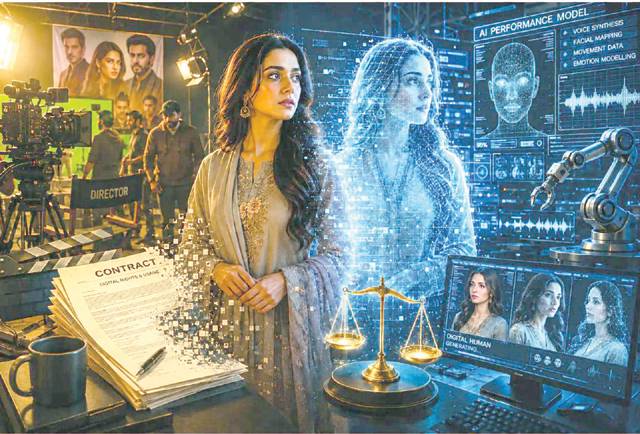
Session players and producers in Pakistan say AI music tools have taken much of the recording work that paid their bills, according to a report from Islamabad in The Nation on 28 September. Work that once needed live instrumentalists, studio time and a production team is increasingly done with AI, faster and far more cheaply. Musicians who live only from recording, the report says, feel their years of training are being made worthless.
Flautist Salman Adil said a regular client who used to pay him Rs5,000 to 10,000 per flute part stopped calling. The client had switched to an AI subscription of about Rs5,000 that covered flute for several songs. Adil also pointed to an AI version of Pasoori in the voice of Nusrat Fateh Ali Khan, who never sang it, as proof that instruments like tabla, flute and sitar can now be imitated too. Tabla player Qamar Babar said recording calls have dried up, and that live musicians fear little work will be left for them. He used to be booked regularly, but where a live player was once needed, people now try AI first. He accepts that AI makes many tasks easier, but calls the change very damaging for live musicians and says it is hard to see how their work will continue.
Producer and composer Jibran Rafiq explained the economics. Most Pakistani singers have small budgets, and a basic Saraiki production with people costs around Rs25,000 to 30,000. Some musicians who used to record two to four songs a day now record that many in a week. Studios are losing mixing and mastering jobs to AI mastering, which he says many singers accept without knowing what good mastering sounds like. He added that the distinctive Saraiki style has been harder for AI to copy.
Both men see signs of a swing back. Rafiq said a lot of AI music began to sound the same and listeners got bored, and platforms are now reacting to it; in his view the trend rose fast and is already falling. He also warns that the short-term savings could erode singers' own skills and the wider market.
Adil says AI cannot match the shared experience of live music, and found a recent AI-made qawwali he heard hollow. Adil once had a client return an AI flute part and ask him to replay it with a human feel. Another time, a music director filmed him recording so he could prove to a client that a person had played the flute. Adil expects artists will more often have to prove their work is their own. Until the human touch is valued again, the report concludes, musicians who depend on recording work face an uncertain future.
Sources · 1