
Meta reported third-quarter 2026 results on 21 October. Revenue came to $64.6 billion, up 26% on the year and ahead of the roughly $63.3 to $63.4 billion analysts had expected. The profit line told a different story: a $9.89 billion charge for the August settlement of teen mental-health claims pulled reported earnings well below what the business produced underneath. Alongside the numbers, the board approved a new class of non-voting stock.
Net income was $9.86 billion. Reported earnings came to $3.83 a share on a GAAP basis, and without the charge they were $7.40, against about $5.46 forecast. The outlets present these two figures differently: TheWrap ties the $7.40 to the $9.86 billion profit, while Seoul Economic Daily and Unite.AI, which agree with each other, give $3.83 as the GAAP number and $7.40 as the figure before the charge.
The charge comes from the settlement Meta reached in August with 52 state attorneys general, worth up to about $18.59 billion over ten years. TheWrap, which leads its piece with it, notes that it barely registered on the investor call, where finance chief Susan Li mentioned it only briefly. The same day, a New Mexico judge separately ordered a $25 billion penalty against the company over data-privacy claims.
“The goal is to fund growth and support our ability to maintain our leading position amid fierce competition at home and abroad”
Meta, on the Class C stock, in a statement on the stock plan · en.sedaily.com ↗
Spending is where the AI push shows. Capital expenditure in the quarter was $34.91 billion including finance leases, against operating cash flow of $32.79 billion, which left free cash flow at negative $2.12 billion after a positive $784 million in the previous quarter. The outlets disagree on the full-year capex range: Seoul Economic Daily and Unite.AI say it is now $135 to $145 billion, up from $130 to $145 billion, while TheWrap reports a narrowing from $130 to $140 billion to $135 to $140 billion. Reality Labs lost $4.13 billion in the quarter, and Meta expects that division to lose $18 to $19 billion in 2026 and around $15 billion in 2027.
Zuckerberg said the company's investments are paying off and its core business is strong. In the results release he pointed to milestones towards what he calls personal superintelligence, including the launch of Muse and Muse Wonder, described as Meta's first frontier model. According to Seoul Economic Daily he credited Muse, the AI agent launched in September, with driving growth, though TheWrap and Unite.AI do not make that link, and the agent had been out for only a few weeks of the quarter.
Looking further out, Zuckerberg expects revenue per Muse user to exceed the several hundred dollars a year that existing apps earn, with much of it coming from businesses and, in the long run, from transaction fees. He gave no concrete plan for getting there.
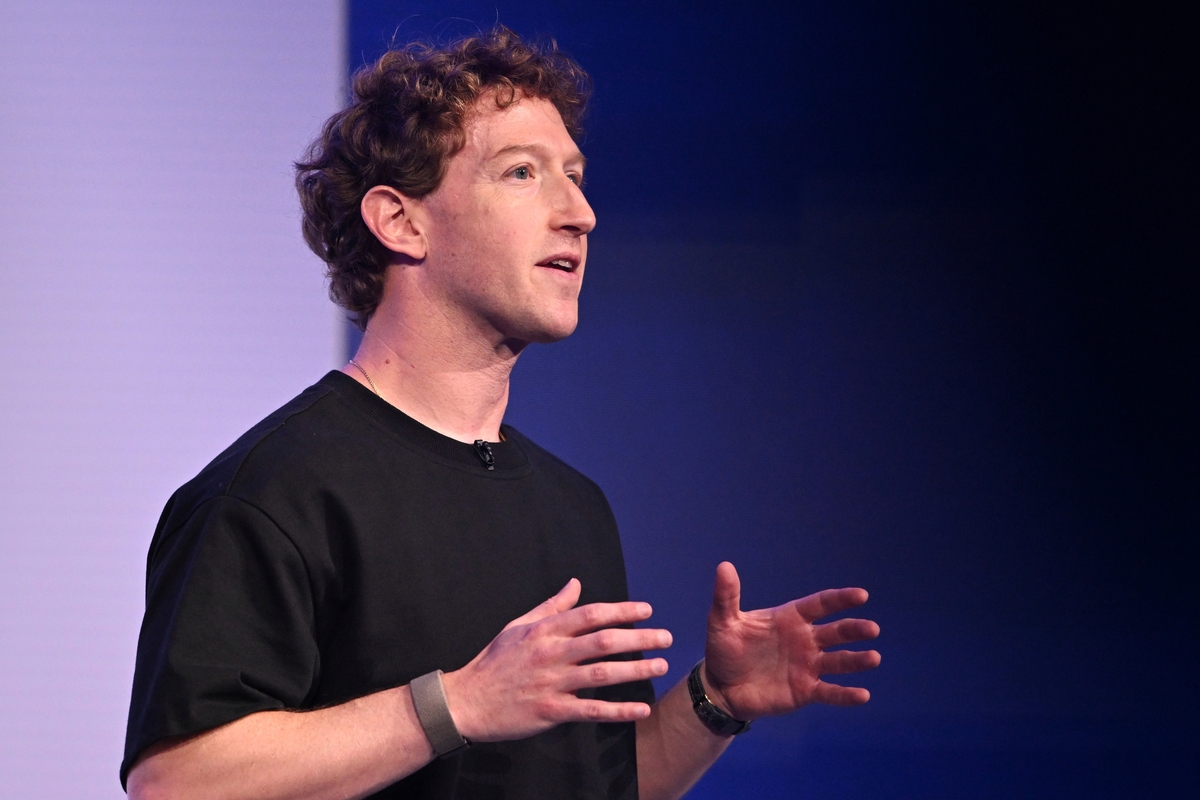
Lead picture on the Seoul Economic Daily report on Meta's capex floor and stock plan
Image: Seoul Economic Daily
The new Class C shares carry no vote and are due to be issued in January 2027, which in effect works like a roughly two-for-one split. Meta says the structure keeps the founder-led model intact while paying for growth.
Beneath the profit line, total costs and expenses were $51.61 billion, up 68%, including the litigation charge. Operating income fell 37% to $12.99 billion, and the operating margin was 20% against 40% a year earlier; without the charge, operating income would have been $22.88 billion. The effective tax rate was 24%, compared with 87% a year earlier, and would have been 17% before the charge. On the advertising side, impressions across the family of apps rose 10% and the average price per ad rose 14%. Li said time spent on Instagram grew by double digits, which she put down to better feed and Reels recommendations, and Facebook video time rose 9% worldwide.
Zuckerberg also gave usage milestones: 3.6 billion people use at least one Meta app daily, Instagram has reached 2 billion daily users, and Threads passed 500 million monthly users. The family-wide daily figure for September was 3.64 billion, up 3%. Meta ended the quarter with $82.45 billion in cash and securities and a headcount of 66,775, down 15% on the year.
Zuckerberg added that WhatsApp is already the main place where people use Meta AI. Meta guided fourth-quarter revenue of $73 to $76 billion and a tax rate of 15% to 17%. Shares rose more than 6% in after-hours trading before paring the gain to about 3.7%.

Illustration for the Unite.AI report on Meta's Q3 results and Class C stock
Image: Unite.AI
Sources · 3