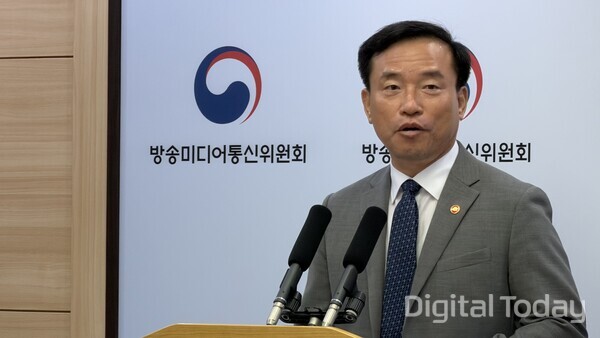
South Korea's Broadcasting Media Telecommunications Commission has approved a policy plan that would oblige people who post AI-generated content to label it and make portals and platforms responsible for checking that they do, Digital Today reports. The plan was adopted at the commission's 39th plenary meeting on September 30 and is its first comprehensive blueprint, which it calls its first-term vision, since the commission was set up in October last year.
The commission frames the plan around what it calls a "basic media society", treating citizens as holders of media rights rather than mere users, and shifting its focus away from the broadcasters and telecom operators it has traditionally regulated. As media becomes the basis for education, work and civic life, it says, the state should guarantee that everyone can reach and use it. The plan sets 12 tasks under four goals: universal access, citizen participation, safe and trustworthy choice, and a sustainable ecosystem.
On platforms, beyond labelling, the commission wants services to disclose how their recommendation algorithms work and when they change in a significant way, and to let users decide whether and how recommendations apply to them. Over the longer term it will weigh dedicated protections for users of AI services, covering their rights and dispute mediation, either through a separate law or by amending the Information and Communications Network Act.
Support comes alongside the rules. Vouchers for paid generative AI services would go to elderly and disabled people and to rural fishing and farming areas, and the hand-out of adapted TVs for disabled viewers would gradually become a voucher for the media services each person needs. Young people from vulnerable groups could get help paying for AI and content-production software. Small broadcasters would get vouchers to adopt AI production and editing tools, and local broadcasters vouchers for translation and dubbing, marketing and legal work. The commission also plans training data for broadcast video AI, development of generative AI previsualisation, AI visual effects and digital humans, and more legal and marketing help for Korean OTT services going abroad.
Traditional media are part of the overhaul. By December the commission intends to draft an integrated media bill spanning broadcasting and OTT streaming, with a basis for legacy and newer outlets to compete on fair terms. Broadcasters would face lighter re-licensing for terrestrial and general channels, looser rules on pay-TV rates, ownership and cross-ownership, no caps on entertainment shows or on imports from a single country, and advertising rules under which anything not expressly banned is allowed. OTT services would get a basic framework matched to their influence. Planning director Sung Jong-won said regulation and promotion are being paired so the industry does not shrink, noting that the body now has a promotion role as well as a regulatory one.
Much is still open. Lawmakers have already tabled their own bills, among them one on audiovisual media services that would take in both TV and streaming, and these will be weighed alongside the government's text; Lee Ki-hoon, head of terrestrial broadcasting policy, said the commission will draft its own version rather than adopt lawmaker Choi Min-hee's proposal. Kim Jong-woo, who heads information integrity policy, said the labelling rule must be squared with the AI Basic Act run by the science ministry, with talks continuing. The vouchers are not yet in the budget proposal, and the timing of a committee on the media law is unconfirmed. Chairman Kim Jong-cheol called the vision a starting point rather than a finished set of policies.
Sources · 1