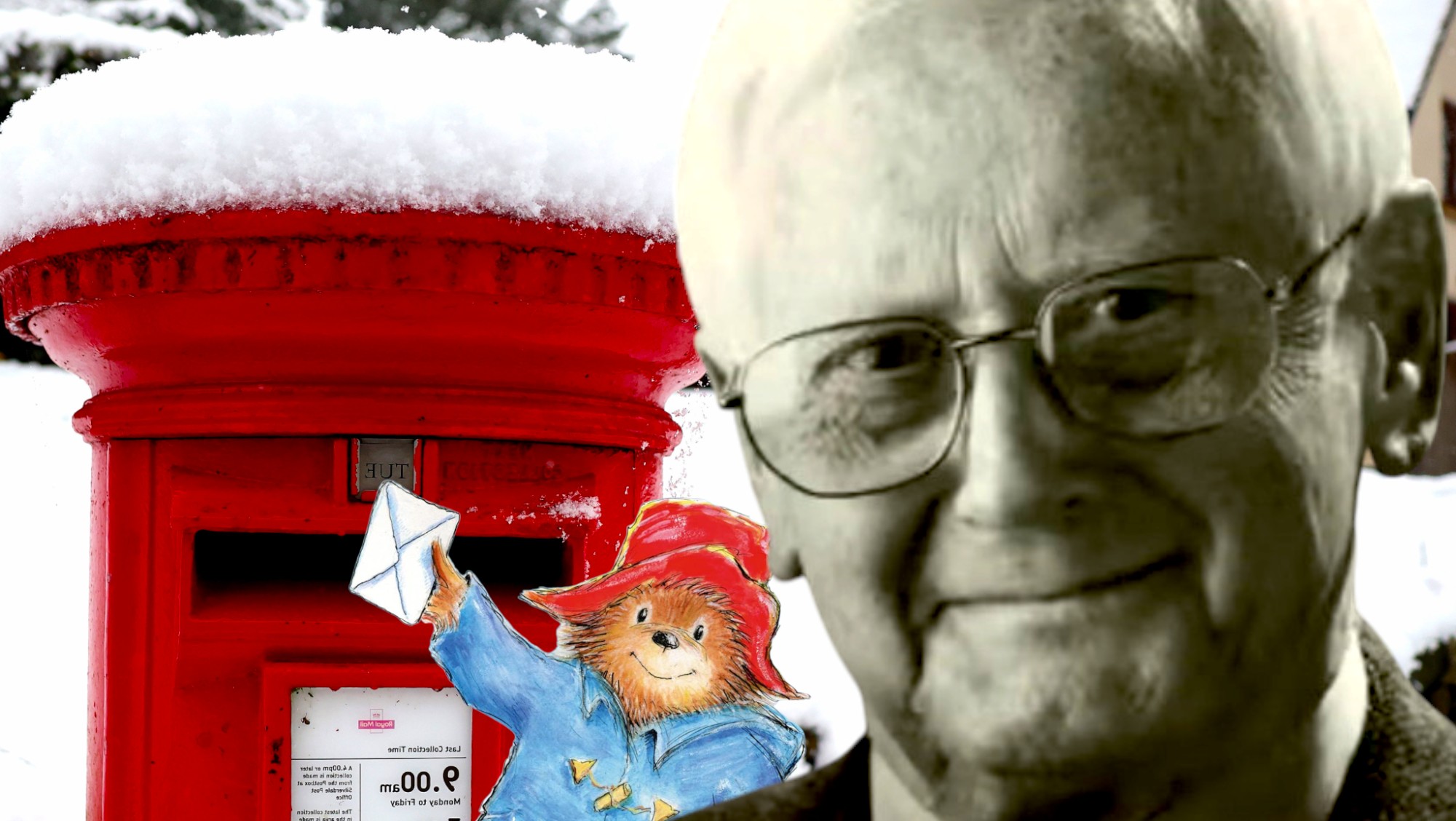
Royal Mail has acknowledged that the voiceover in its 2025 Christmas television ad was made with artificial intelligence, after the daughter of the late narrator Paul Vaughan said it sounded like her father. Lucy Wynne heard the ad on ITV in November 2025 and believes her father's voice was recreated without permission. Vaughan died in 2014. Deadline broke the story as an exclusive on 9 October 2026, and Arise News published its own version a few hours later. Royal Mail has not said that the voice was meant to be Vaughan's; the dispute is over whether it ended up sounding like him and whether anyone checked.
Vaughan was a familiar voice on British television and radio. He narrated the BBC's Horizon, Radio 4's Kaleidoscope and the nuclear drama Threads, and he read the Paddington audiobooks. The ad's line was "Royal Mail, it's so much more than just a card".
“There's an inflection in his voice that no one else has.”
Lucy Wynne, Paul Vaughan's daughter, to Deadline · deadline.com ↗
Asked about the ad, Royal Mail confirmed to Deadline that it used AI rather than a human actor, and said that the voice was not designed to copy any particular person. The campaign came from the agency Darwin & the Machines with Untold Studios, which subcontracted the narration to a Czech AI company, Fameplay. Fameplay licenses ElevenLabs technology; ElevenLabs says the result was not a direct clone of Vaughan and would not say whether its model had been trained on his recordings. Fameplay says it used no reference to Vaughan in its prompts. Deadline notes that Fameplay is backed by Czech Media Invest, chaired by Daniel Kretinsky, whose EP Group owns Royal Mail.
The resemblance was tested in several ways. A voice psychology researcher at Queen Mary University of London, Dr Nadine Lavan, pointed out that relatives are good at recognising a loved one's voice, so Wynne's reaction is plausible. Prof Vincent Hughes at the University of York found considerable similarity in pronunciation and timbre, though the short clip limited what could be concluded. Deadline also ran the clip through three open-source speaker-analysis tools, and each said the ad voice could be the same speaker as Vaughan. None of this proves that his recordings were used, and the experts were working from a short clip, but it is the basis for Wynne's complaint.
Wynne says she is outraged and that Royal Mail should have checked whose voice its narration resembled and simply hired a human voice artist: in her words, "pay the money and get somebody in to do the job". She has had no apology from the company. Royal Mail says its producers ran checks that raised no concern about resemblance, and that it understands the worries raised and has taken them seriously. A production source told Deadline that Fameplay's Juraj Felix pushed for AI narration despite the team's reservations about using it for a British institution.
Royal Mail did not disclose the use of AI when the ad ran, and it came to light only because a family member recognised the voice. The Deadline report adds that ElevenLabs, which declined to say whether Vaughan's recordings were in its training material, has since placed his name on its list of No Go Voices. A Royal Mail spokesperson described AI voiceover as increasingly common. Peter Caulfield, who founded the campaign group Save Our Voices Now, argued that careless use of AI risks taking a voice from the grave and upsetting families.
No formal action or deadline has been named. ElevenLabs has since added Vaughan to its No Go Voices list, which blocks that voice, and Wynne is still looking for someone to be held accountable. Of the two outlets, only Deadline reports the ownership link between Fameplay's backer and Royal Mail's parent group, and only Deadline says the use of AI was not disclosed at the time.
Sources · 2