Young cinema audiences are still far from sold on artificial intelligence. Research gathered by NRG, an entertainment market-research firm, for the opening piece of a series on Gen Z and Hollywood shows that most Gen Z respondents oppose AI in films, although a minority are open to some uses. Studios and startups are pressing on with AI projects all the same, which sets up a test of whether the audience's stated unease turns into box-office behaviour.
The series is called Decoding Gen Z, and the first instalment is built on data NRG collected specifically for it. The numbers are lopsided on the biggest question. Nearly two-thirds of Gen Z respondents call it unacceptable for an AI to play a film's main character, and the group is also more wary of AI in posters, trailers and other marketing. Yet 39% said they would be more interested in a movie containing some AI-generated material, a share above that of Millennials and Gen X. Gen Z is the most permissive of the three generations about AI in colour correction, special effects and even stunt doubles. Kevin Tran, who leads trends and futures at NRG, said these attitudes have not shifted dramatically over the past year and that the cohort remains more wary than not about AI in entertainment production.
“I went in expecting a bad movie and I got a bad movie but with AI”
Nick Rampe, 22, college graduate from Nashville, on Ice Cream Man, in the survey coverage · thewrap.com ↗
The reasons given are mostly practical rather than philosophical, and they come up repeatedly in what students and graduates told the researchers. Students and recent graduates pointed to worries about jobs, and to the stream of low-quality "AI slop" they meet online. Hartbeat's president Jeff Clanagan made much the same point, saying a generation that lives on social media is constantly fed bad AI content and forms its dislike from that. The wariness also sits beside broader gripes about job losses, data centers and chip costs, all of which young viewers tie to the technology, and young viewers have shown a taste for old-school formats such as 70mm and Imax.
Taken together, the picture from the research and from the people who spoke for it is of an audience that is not hostile to technology in general but is sceptical of it where it replaces the people on screen or crowds a feed with filler. Individual cases show how that plays out. Nick Rampe, a 22-year-old from Nashville, spotted generative AI in an animated segment of Eli Roth's Ice Cream Man in August; Roth acknowledged that AI elements had been used, and the film drew a backlash on social media, which is the kind of reaction that studios now have to weigh before they announce an AI element. Hank Green slowed production on one of his projects and said he would stop using AI after criticism of AI-assisted scripts, a sign that the pressure reaches well beyond traditional studios and onto online creators. Machine Cinema's Grinstein said that Gen Z tends to see the chief executives of AI companies as pariahs.
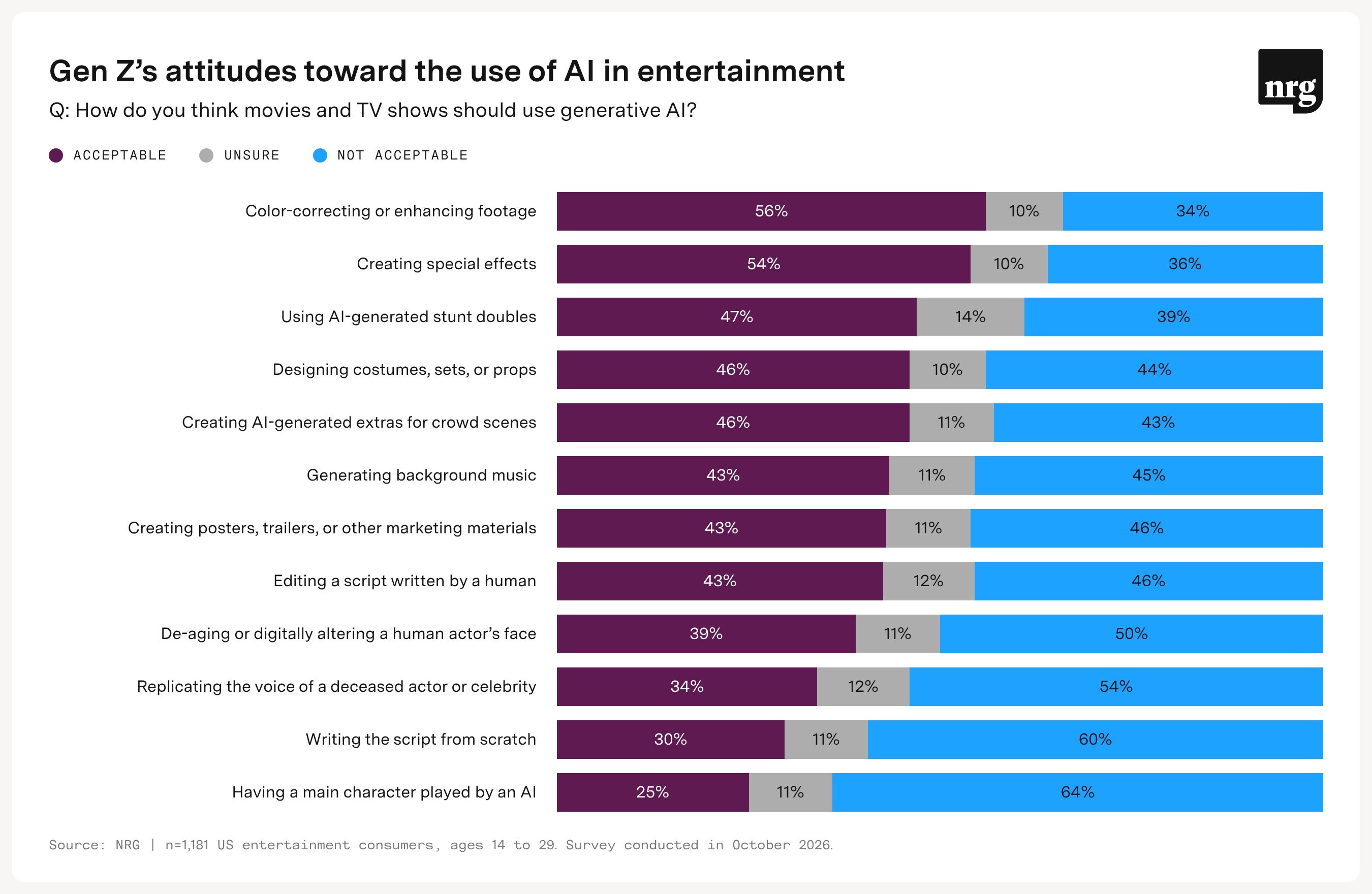
NRG chart of Gen Z attitudes toward AI in entertainment, from the survey run for the story
Image: TheWrap
Hollywood is moving in the other direction, and the people doing it say that craft goes into good AI work and that the real divide is between slop and story. Gods Don't Give Gifts, an AI-animated science-fiction film based on Gossip Goblin's YouTube channel, reaches theaters on 4 December, its trailer already at 2.4 million YouTube views, and Fable Studio plans a Best Animated Feature campaign for it. Fable's chief executive Edward Saatchi put the mood simply: the walls between AI and Hollywood are collapsing. The reach is not limited to independents: Disney+ is due to carry the AI-animated show Ozzy Fox next month.
Hybrid productions, which mix AI with human performers, are the other route. Secret Level, the company run by Jason Zada, is making the AI horror film Terrarium with SAG actors including Jake Busey, with Sundance in its sights. Hartbeat, whose president is quoted above, is developing the AI-hybrid series Exotic Foods after a concept video scored well with Gen Z viewers, and Shortical has released an AI microseries starring Aki Avni, who agreed to have an AI double made of her.
About NRG
NRG, short for National Research Group, is an entertainment market-research firm founded in 1978 by Joseph Farrell and Catherine Paura, with offices in Los Angeles and London. It tracks audience awareness of films for Hollywood studios ahead of release, running over a million interviews a year across the thirteen biggest movie markets, alongside test screenings and focus groups.
Nielsen bought NRG in 2002 and sold it to Mark Penn's Stagwell Group in November 2015. This is not the first time it has put audience views of AI to the test: in a March 2026 study with the same publication, it found that 56% of respondents said AI actors would never be as good as human ones, while 7% said they already were.
None of this means young audiences avoid new work wholesale, or that they reject everything unfamiliar: they turned out for Iron Lung, Obsession and Backrooms, all of which became hits. Gods Don't Give Gifts will serve as an early test of audience appetite when it opens on 4 December. Terrarium aims for Sundance and Ozzy Fox lands on Disney+ next month, so the gap between what Gen Z says it accepts and what it actually watches will begin to show soon.
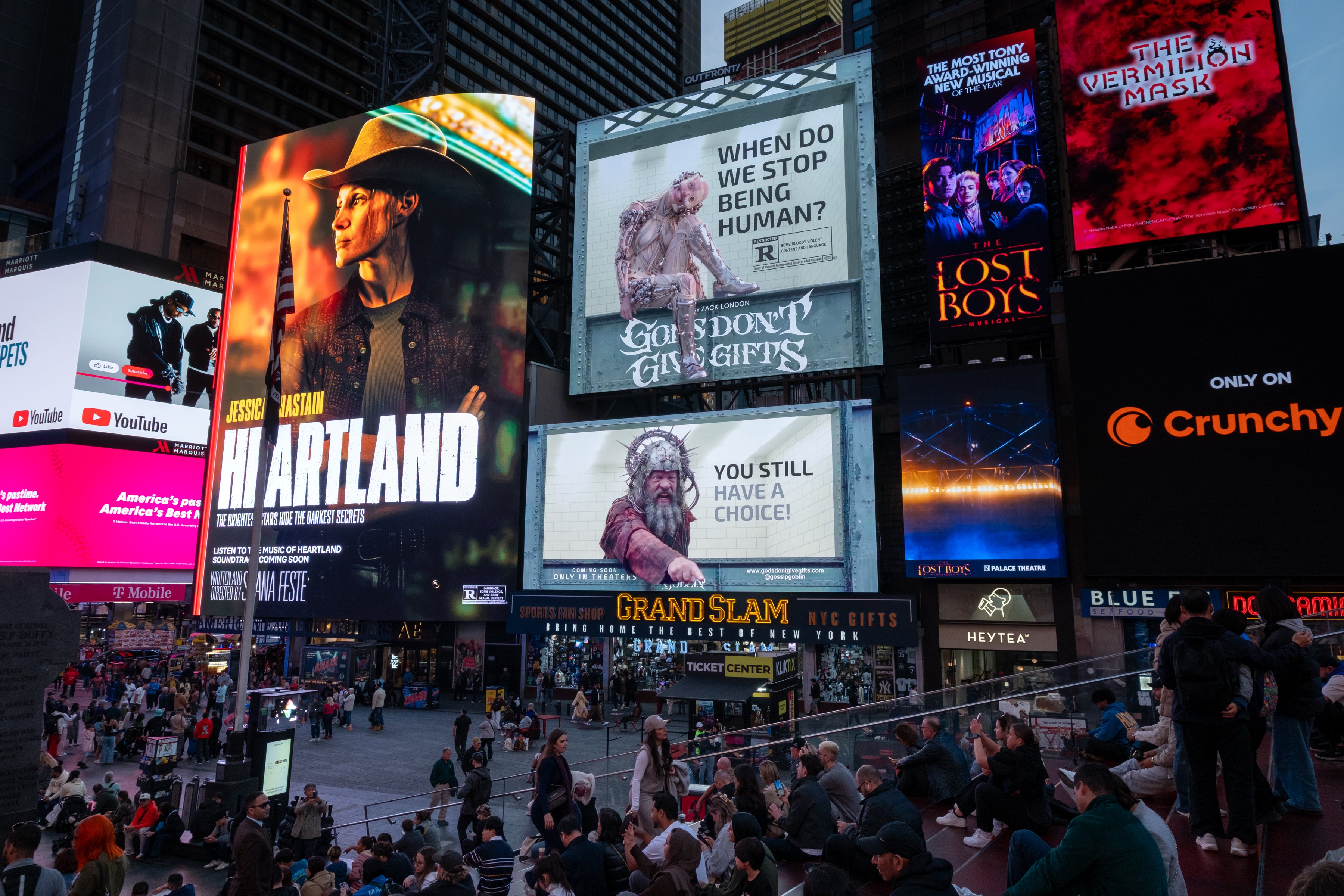
Gossip Goblin Studios artwork tied to the AI sci-fi film Gods Don't Give Gifts
Image: TheWrap
Sources · 1
Comments