aipopdb

16 Oct 2026  ·  2,748 works · 693 news indexed

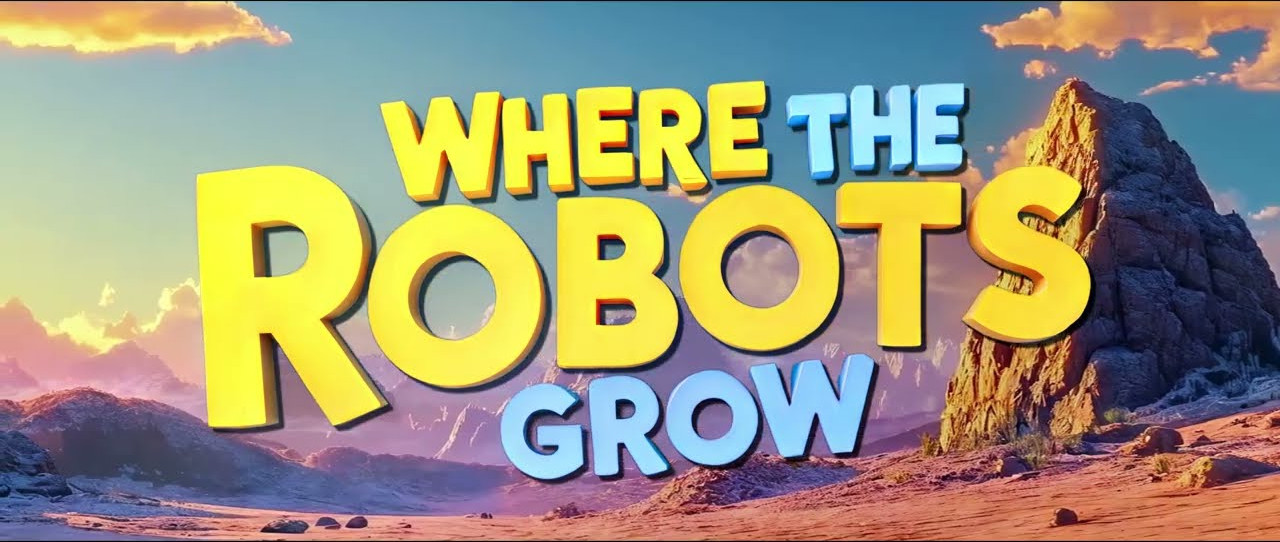
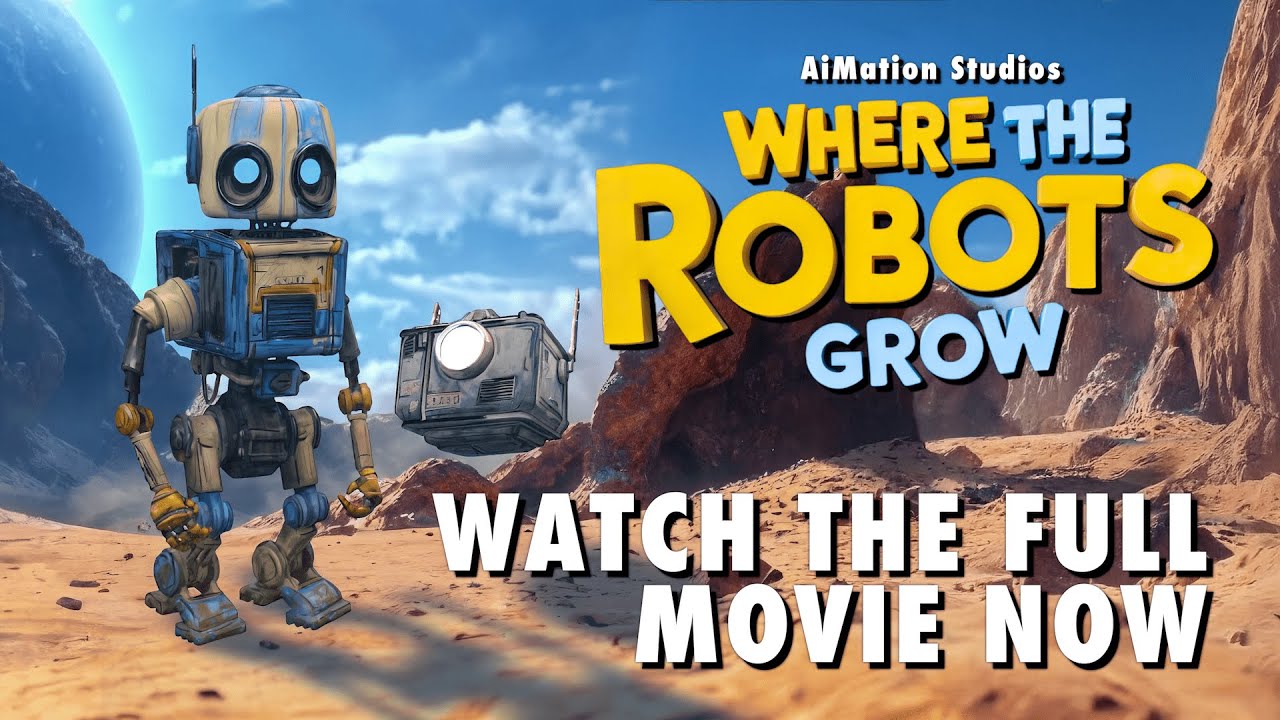
Artwork for Where The Robots Grow

Films /

film
2024
Animation
Family
Adventure

Where The Robots Grow

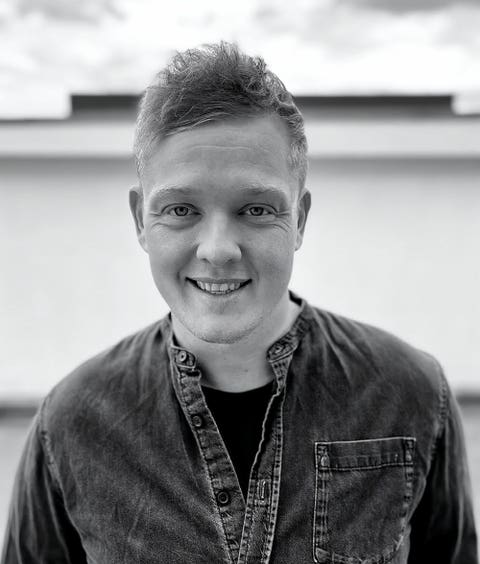
Portrait of Tom PatonTom PatonAiMation Studios202488 min

Format
Film
Year
2024

Synopsis

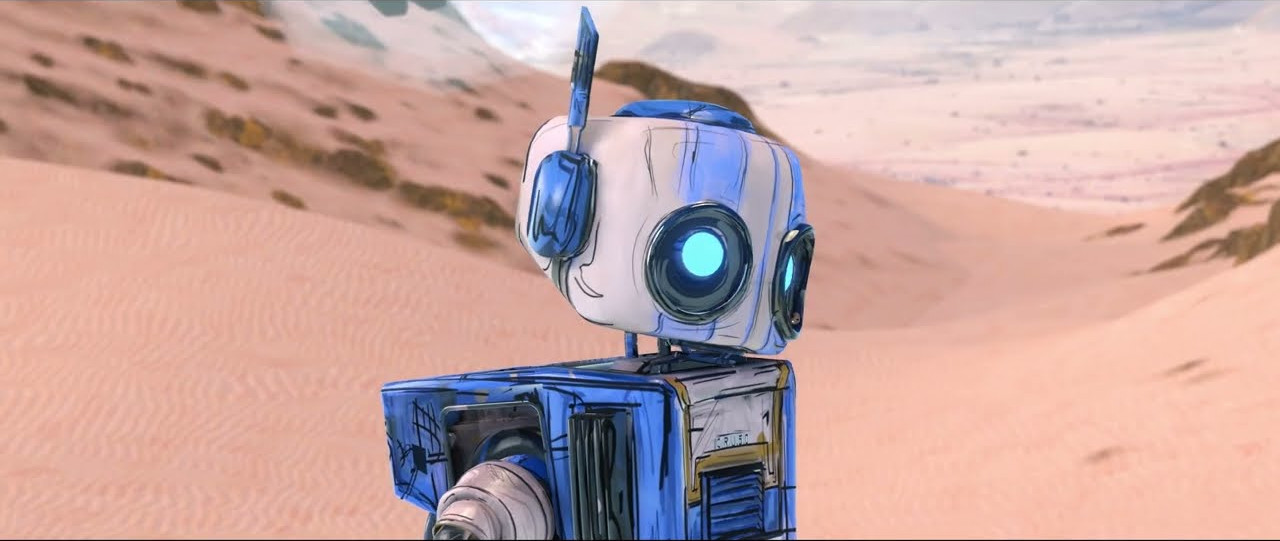
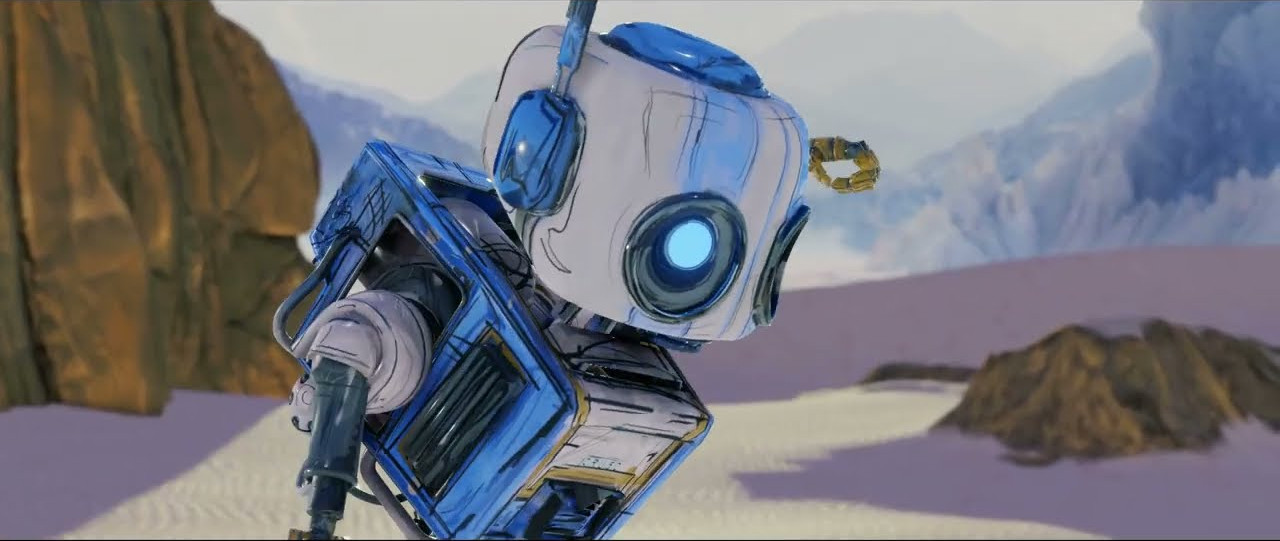
Where The Robots Grow is a family animated adventure set in a future where Earth's last survivors have sent robots to farm a new world called Oracle. Its hero is Cru, the newest model of farming robot, who goes about his work expecting a life of crops and routine, in a world far from the people who sent him.

That sense of purpose is rewritten when a pod arrives carrying the last human baby, held in suspended animation. Cru sets out on a journey guided by an AI operating system named POP, and the robots around him have to decide what they owe the child. Not every machine is friendly: a character called Number Two is the film's sinister presence.

The robots include Numbers Three and Four, N.A.N.A. and a younger version of Cru, and a girl called Little Miss appears too. Scenes of Cru and POP talking through their future as farmers set the tone, which is gentle and hopeful, a picture of humanity's future among the stars told for the whole family.

The film leans on its two central voices, the farming robot and the guiding computer, to carry the story, and keeps its pace unhurried, with long stretches of the pair walking, talking and working the land. At heart it asks what a robot built for one task becomes when the task changes to raising life.

Last Updated 14 October 2026

About the Show

Where The Robots Grow is an 88-minute animated feature film written and directed by Tom Paton and produced by AiMation Studios, made in the UK in association with Pigeon Shrine Consultancy. It was released free on YouTube on 17 October 2024 and also listed on Plex. It was billed as the first original AI feature film and was the first release from AiMation Studios.

AiMation says the film was made with generative AI, motion capture and other CGI. Paton's method, which the studio calls "aiMation", uses AI visualisation and AI-generated virtual production to bring effects work forward in the schedule so actors join later, with human artists staying in the loop. One write-up names Adobe Firefly and Stable Diffusion, and the YouTube upload tags Runway, Sora, Luma, Kling and Minimax, but no page says which tool did what. ElevenLabs, in a customer story, says lead actor Taylor Clarke-Hill voiced several characters through its voice changer and that its sound-effects tool supplied ambient audio. Credits list visual effects by BigTooth Studios, with Nicole Bartlett voicing Pop and N.A.N.A., Lee Preston as Number Two, and Cory and Olivia Teplizki as Young Cru and Little Miss.

Paton describes himself in a podcast interview as a former VFX artist who has worked in film for about 20 years, as a writer, director and producer. He says nine people made the film in 90 days, and that "the film gets made in the edit": the team began from a script, gathered matching material, cut a rough version and revised it from notes. ElevenLabs reports that the same film would now take about eight weeks with four people. Coverage put the cost at roughly $8,000 a minute. AiMation is a company of Pigeon Shrine, which Paton leads as chief executive.

On release, Paton chose to go independent rather than take a distributor's proposed early-2025 deal, and the film went onto AiMation's own YouTube channel after, he says, larger creators hesitated over AI backlash. Tech coverage treated the free release as a showcase for investors and Paton called it "our Toy Story moment". ElevenLabs says AiMation is developing 25 more films and a pay-per-view platform, and Paton's interview describes a closed-beta app for it.

Reception was divided. A Sci-Fi Radio review on 22 October 2024 gave it 4.5 out of 5 and found the dialogue "painfully bad", saying the film "offers nothing beyond its novelty". Plex shows a low audience rating, and IMDb's user score was 4.8 at the time of that review. Commentary also questioned the "fully AI" label, since the process is hybrid, and the "first" claim: a commenter under Nerdly's video review points to earlier AI features, and a Forbes correction (reported in search results, not read directly) names DreadClub: Vampire's Verdict. Its significance, in the coverage, is as an early test of whether a small team using generative tools can deliver a full-length animated feature.
Audience sentiment

What people think of Where The Robots Grow

Mostly negative: commenters on a review video find the story, animation and mixing weak and the film near-unwatchable; one calls it good work

Overall

67% negative

  • Positive 11%
  • Mixed 22%
  • Negative 67%

Based on 9 comments about the show on YouTube

By platform

YouTube9 comments
11% positive, 22% mixed, 67% negative
Criticism

Story and animation do not hold together

“It is honestly nothing special at all. Story is dumb and not connected with logic whatsoever, the animated characters slide across the floor as they walk, the film cannot decide which visual style it wants to take on…”
View comment on YouTube
Criticism

Music drowns the narration

“Audio mixing. At the beginning soundtrack is SOOO loud that I can hardly understand what narrator is saying.”
View comment on YouTube
Mixed

Enjoyable, but the score is overbearing

“I liked the film, but thought the soundtrack was hugely overbearing and even drowned out the dialogue a lot of the time.”
View comment on YouTube
Praise

Good work, clever robot design

“yes, I watch it and very good work, also they are smart, create robots with no lipsyn,, too smart.”
View comment on YouTube

Measured 14 October 2026

Still from Where The Robots Grow

Image: ytimg.com

Still from Where The Robots Grow

Image: ytimg.com

Still from Where The Robots Grow

Image: ytimg.com

Fun Facts

aiMation process
AiMation Studios pairs AI visualisation and AI-generated virtual production with human artists, so VFX work happens early and actors join later in the schedule; the film was written and directed by humans.
Source: aiinhollywood.com
VoCap voices
Human actors voice the characters using VoCap, a technique that lets a performer embellish their voice to play a wider range of characters.
Source: aiinhollywood.com
Small team, low cost
Paton built it with a core team of nine at roughly $8,000 per minute of film, far below usual animation costs, and released it free on YouTube to attract investors.
Source: aisq.com

Credits

Director
Tom Paton
Written by
Tom Paton
Produced by
Tom Paton

Cast & Crew