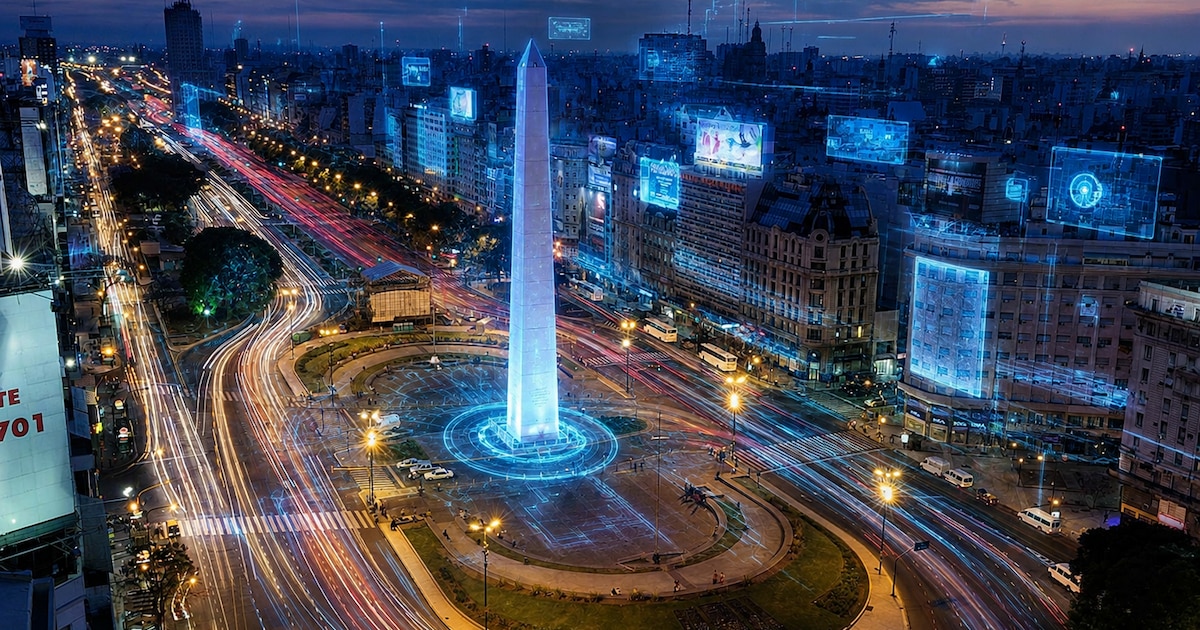
The World AI Film Festival, a competition built entirely around films made with generative AI, will hold its first Buenos Aires edition on 30 October, Infobae reports. The one-day event at the city's Convention Centre is backed by the Buenos Aires government's economic development ministry and sits inside TecWeek 2026, the city's technology week, which runs from 21 to 31 October. Screenings, talks, master classes and panels will be open to the public during the day, and an invitation-only awards gala closes it.
WAIFF is run by Institut EuropIA, a French association in the Sophia Antipolis technology park near Nice that works on public education about AI. Its founder, Marco Landi, is a former president of Apple Europe who later became the company's worldwide COO. The first edition, held in Nice in April 2025, drew about 1,500 films from 85 countries. The second moved to the Palais des Festivals in Cannes in April 2026 and received 5,474 entries, with actress Gong Li as jury president and director Claude Lelouch as honorary president.
Buenos Aires joins the festival's Road to Cannes programme of local editions and is, for now, its only stop in Spanish-speaking Latin America. Each host city puts forward five works, and the festival's global team decides which go on to the international competition. This season started in São Paulo in February and moves on to Istanbul and London in November, Beijing in December, and Seoul, Kyoto and Los Angeles in March 2027, before the Cannes final on 6 and 7 April 2027. The winner of the local Grand Prize will be invited to attend.
Entry is free and closes on 9 October. It is open to adults who are Argentine nationals or legal residents and to companies registered in Argentina. Both fully generated films and hybrids that mix live footage with generated material qualify, as long as AI played a significant creative part and at least three AI tools were used and documented in a production diary. Works must be original and respect intellectual property, deepfakes of identifiable people without their consent are banned, and films made since 1 January 2025 may compete even if already released.
There are six categories, each with its own running-time limits: short film, feature, animation, vertical micro-series, advertising and documentary. The jury picks an overall Grand Prize from the six category winners. Entries must be in Spanish with burned-in English subtitles. The jury, which will combine Argentine film, technology and creative figures with names from the festival's international circuit, has not yet been announced. Finalists are due to be named on 28 October, two days before the screenings and awards.
Sources · 1