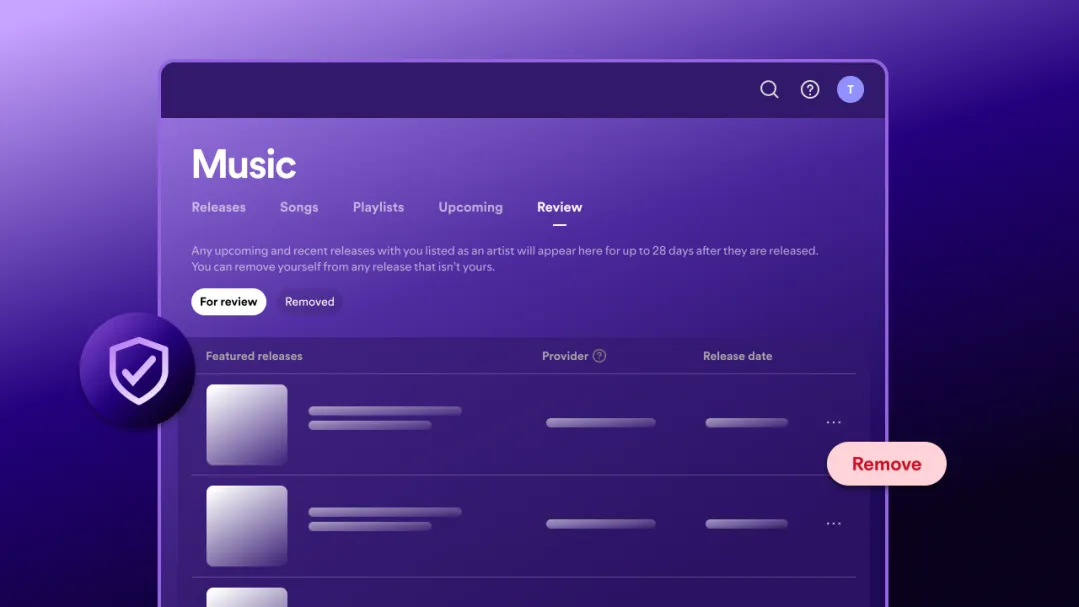
Spotify has opened Artist Profile Protection to every artist on its service. The tool, switched on inside Spotify for Artists, lets an act see what is being delivered under its name and keep releases that are not theirs off its page. It follows a test that began in March with a limited group of artists and ran for about eight months.
“Protecting artists' identity is more important than ever. Spotify is setting a new standard by being the first platform to give artists this level of control.”
Kyle McEvoy, manager for Evan Honer and Winyah, in comments reported by Hypebot · hypebot.com ↗
Once an artist turns it on, Spotify alerts them when music is submitted to their profile. If a track or album is not theirs, they can remove their link to it, so it never appears on their page or reaches their fans. By default, releases still go live on schedule unless the artist steps in. An advanced setting reverses that: each release waits until the artist or their team approves or rejects it.
The problem it targets is wrong-artist uploads, whether deliberate impersonation, a metadata slip or two acts sharing a name. Because distribution is open, anyone can attach a release to someone else's profile, and the flood of AI-generated tracks has made that easier to do. For the artist, a misplaced release can mean confused listeners, skewed statistics, poor recommendations and royalties paid to the wrong place. Sony Music was reported last month to have asked for more than 260,000 deepfake songs to be taken down, nearly twice the number it disclosed in March.
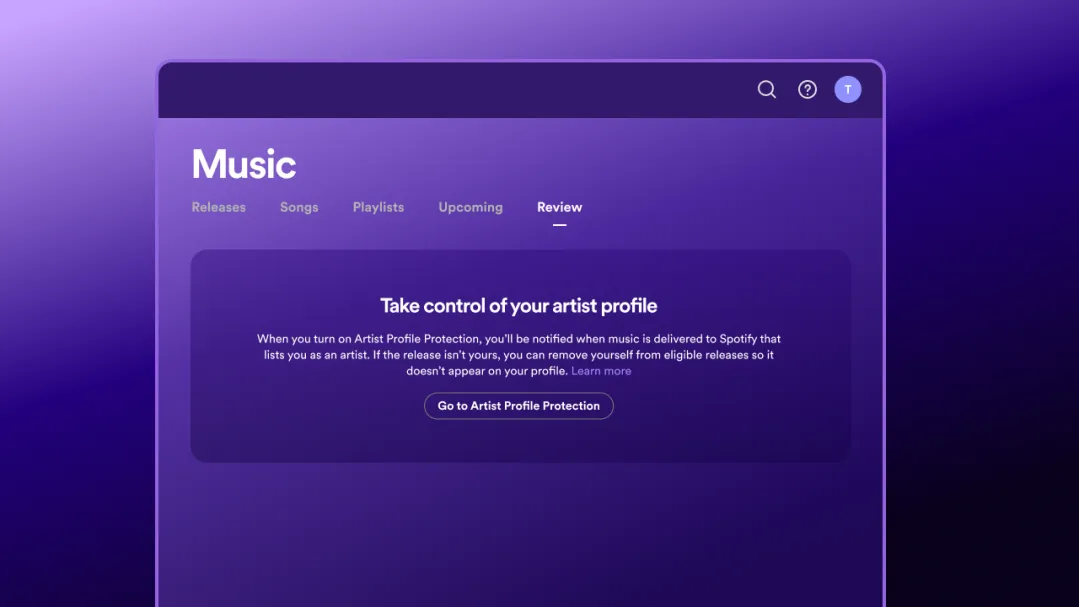
A second Spotify graphic showing the feature's artist-side controls
Spotify · Image: TechCrunch
Thousands of artists took part in the test, among them Diplo, Samia, Searows, The Army, The Navy and Dave East. Spotify says the trial was used to make the tool easier to use without disrupting release schedules. Representatives of some participants welcomed having more say over what carries their name. Spotify describes itself as the first and only streaming service to offer artists this control and hopes others follow.
About Spotify
Spotify is a Swedish music streaming company founded in Stockholm in April 2006 by Daniel Ek and Martin Lorentzon. Its service launched in several European markets in October 2008 and reached the United States in July 2011. It still has its headquarters in Stockholm.
This is not the first time Spotify has acted against fake and AI-made music on its service. In September 2025 it said it had removed more than 75 million spammy tracks over the previous 12 months, and it introduced an impersonation policy under which a vocal imitation of an artist can stand only if that artist authorised it. The same package added a stronger spam filter aimed at mass uploads, duplicates and artificially short tracks. In March 2026 it put Artist Profile Protection into beta, after saying that protecting artist identity was a priority for the year.
Nothing is automatic: artists and their teams must opt in, then pick the default or the approval mode that suits how they release music. Trade coverage notes that it remains to be seen whether the flow and its alerts hold up across millions of profiles.
Sources · 3
Comments