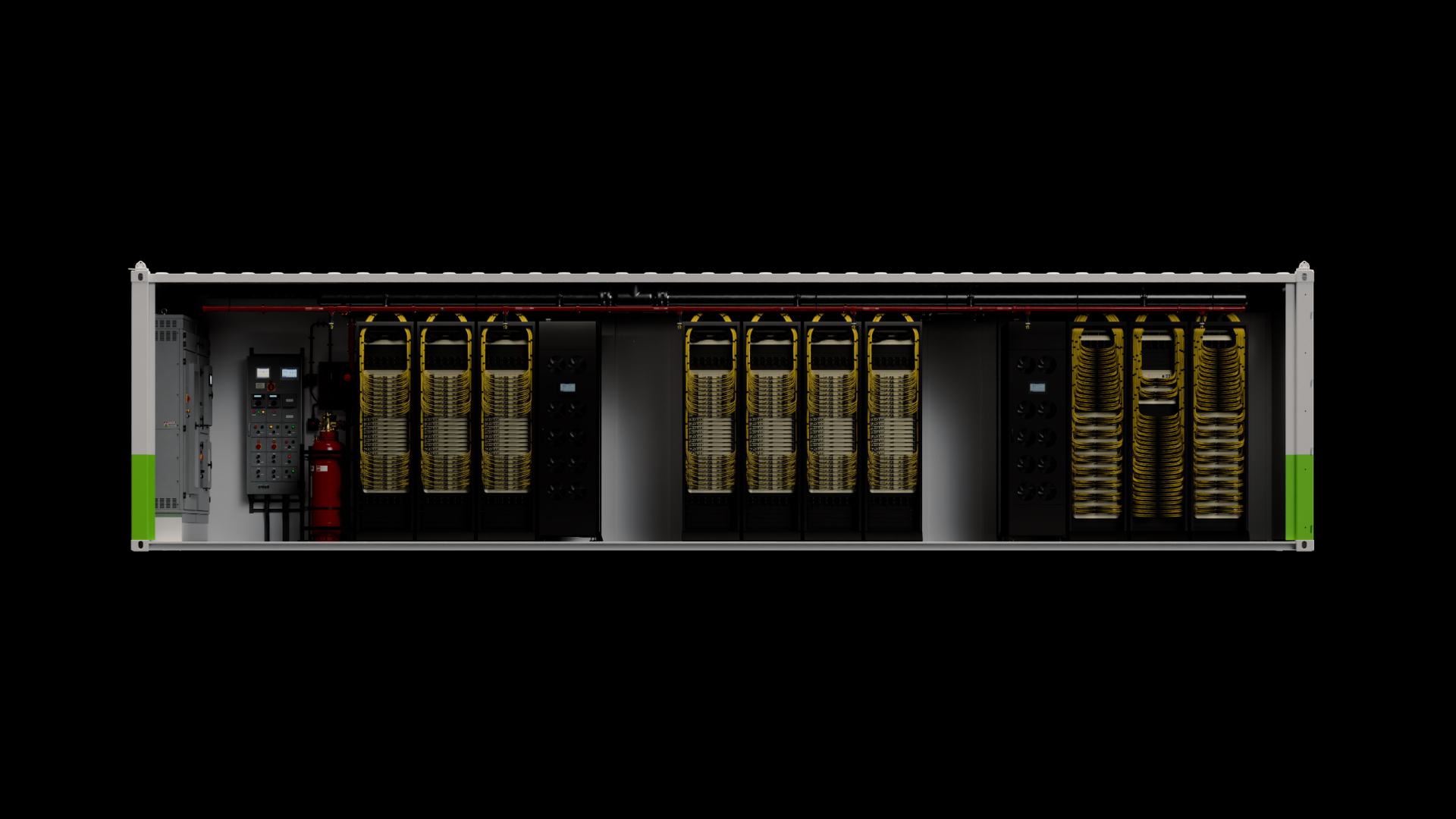
At its GTC Berlin event on 21 October 2026, Nvidia introduced two reference designs aimed at the companies building and running AI infrastructure. DSX POD is a complete Vera Rubin cluster delivered inside a shipping container. The OpenShell Reference Architecture is a blueprint for running AI agents with limits on what they can touch. Nvidia says the reference document and the software are available now.
A single pod packs seven Vera Rubin NVL72 racks along with its networking, cooling and management gear, and is rated at around 25 EFLOPs of inference. The factory pre-tests everything, including roughly 20 km of NVLink copper and 17 km of scale-out cabling. Once a site has power and water ready, Nvidia says installation drops from about six months to 14 days. ServeTheHome notes that Nvidia has not confirmed the container's dimensions and guesses it is a 40-foot unit.
Nvidia will not build or sell the pods itself. Dell, HPE, Gigabyte, Delta and QCT are among more than a dozen manufacturers lined up to make them, with deliveries expected from early 2027 and availability worldwide. The pods are separate from the DGX SuperPOD line and follow earlier DSX blueprint announcements. The wider DSX platform also gained warm-water cooling, a power-steering feature that Nvidia says can trim consumption by up to 30%, and a grid-response tool called DSX Flex.
“An AI factory creates value when it starts producing tokens — not when construction is complete.”
Jensen Huang, Nvidia CEO, at GTC Berlin · siliconangle.com ↗
The economic case comes from Jensen Huang's own arithmetic. By his figures a one-gigawatt AI factory costs about $50 billion to build and can earn about $40 billion a year, so a delay of a single quarter costs around $10 billion. Shrinking installation time is therefore pitched as revenue rather than convenience. Nvidia also described a supply-chain push with partners to lift capacity over three years, singling out optics.
OpenShell tackles a different worry. In the design, Vera CPUs run the agent software, Vera Rubin chips run the models, and BlueField-4 DPUs enforce security in hardware, while a supervisor watches traffic leaving each sandbox. With Nvidia's Sentry software, BlueField-4 can cut an agent off within milliseconds. CrowdStrike, Palo Alto Networks, Zscaler and Cisco have added support. The outlets disagree on the toolkit's age: SiliconANGLE's news report says it was released last month, while ServeTheHome says it appeared earlier this year.
Huang's keynote ranged wider. It covered an Isaac simulator update, GR00T robotics workflows and the Agile ONE humanoid, along with Mercedes-Benz's Hyperion and Deutsche Telekom's Industrial AI Cloud, and it leaned heavily on European sovereign AI. Forrester's Paul Miller observed that Huang positioned Nvidia as an enabler of Europe's ambitions, and the company has put close to $10 billion into the continent over the past year.
SiliconANGLE's analyst columnist offers some caution. He reads the pods as a fit for deployments in the hundreds of megawatts rather than gigawatt campuses, and notes they do nothing about the long queues for grid connections. He also advises buyers of OpenShell to separate its software protections from the extra enforcement that BlueField-4 and Sentry add in hardware.
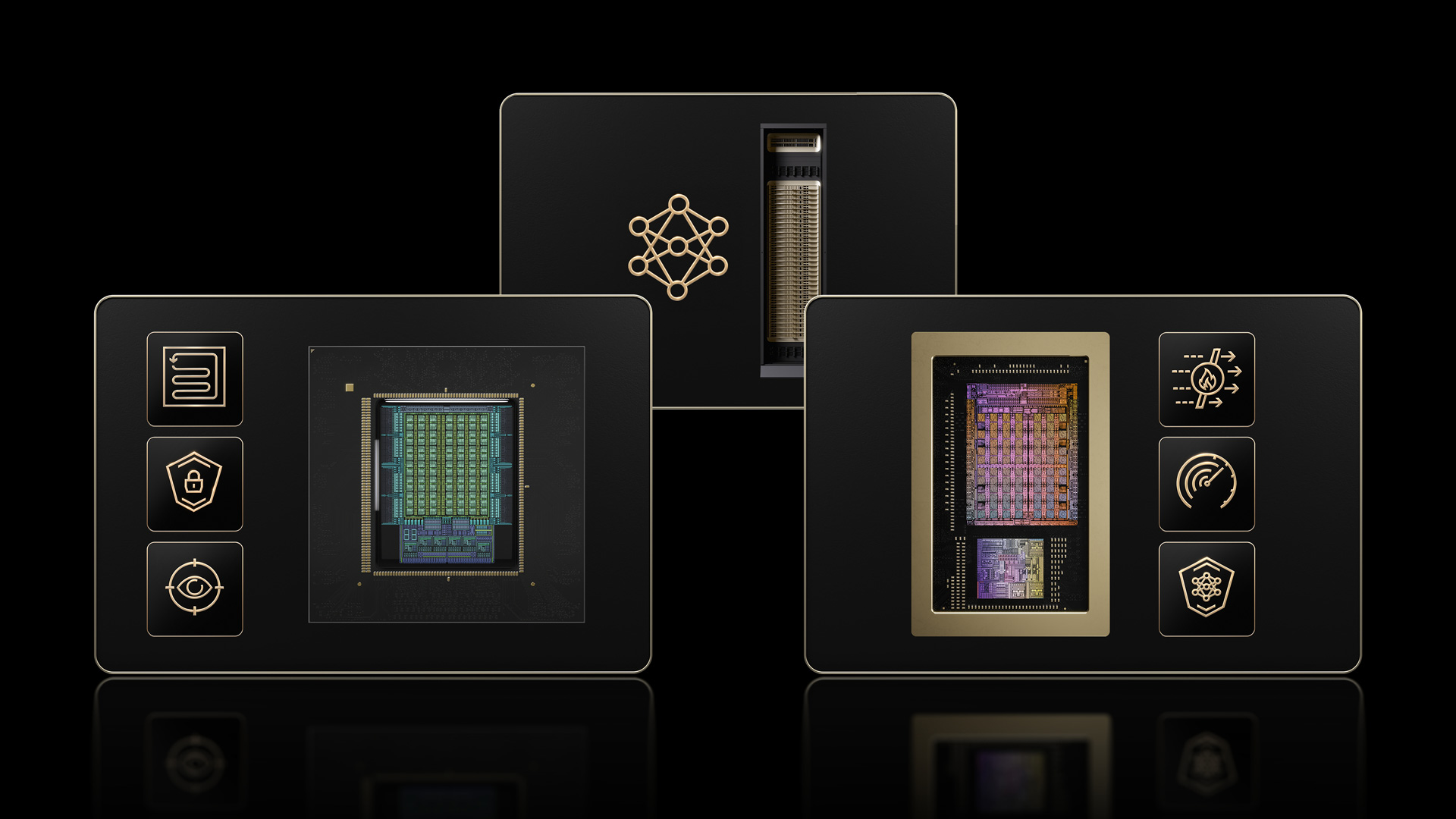
Diagram of the OpenShell reference architecture for running AI agents safely
Image: ServeTheHome
Beyond the hardware, the analyst piece frames the launches as Nvidia turning the AI factory into a product it can describe, price and certify with partners, and agents into the workload those factories exist to run. Huang's line is that AI is a manufacturing industry, and the pod is the most literal expression of that idea: a unit produced on a line, tested before it ships and dropped onto a prepared site. The security design does the same for agents, setting the boundaries in the architecture before an enterprise deploys them in large numbers.
The warm-water cooling in the wider platform is presented as a resource saving as well as an engineering choice. At a two-gigawatt site Nvidia says it avoids using 54 million litres of water a day. The MaxLPS power-steering feature and DSX Flex grid response are meant to let a facility draw less when the local grid is strained, which matters because power access has become the slowest part of many projects.
Europe was the backdrop to the whole event. Forrester counts 14 startup investments by Nvidia during Huang's trip, and the keynote's sovereign-AI theme included Deutsche Telekom's Industrial AI Cloud, one of the European deployments Huang pointed to during the event in Berlin. Mercedes-Benz's Hyperion was another, tying the infrastructure announcements to the carmaker's own use of simulation and robotics.
For now the next marker is early 2027, when partners are due to begin delivering DSX PODs to customers.
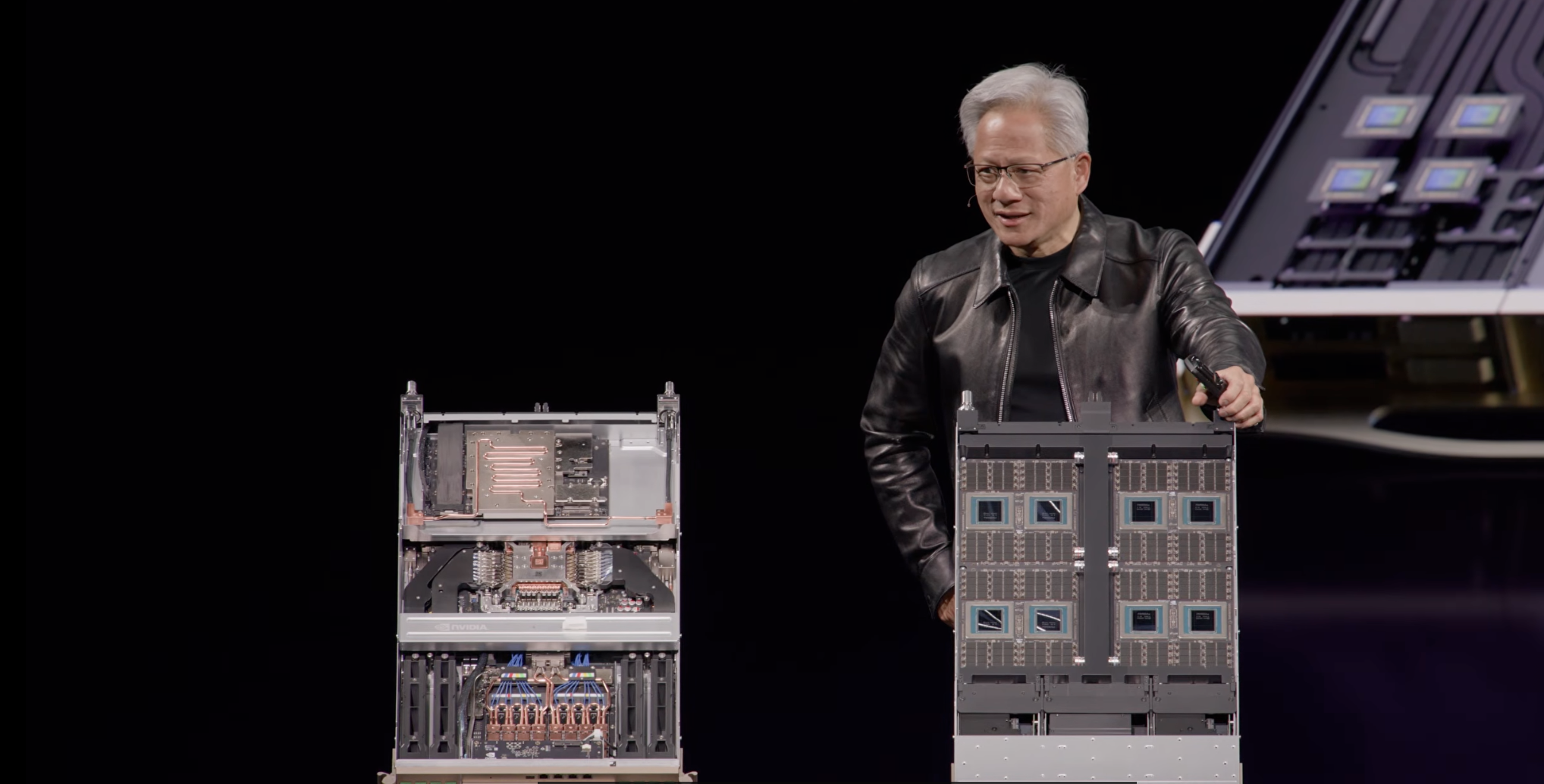
Jensen Huang presenting at the GTC Berlin keynote
Image: SiliconANGLE
Sources · 2