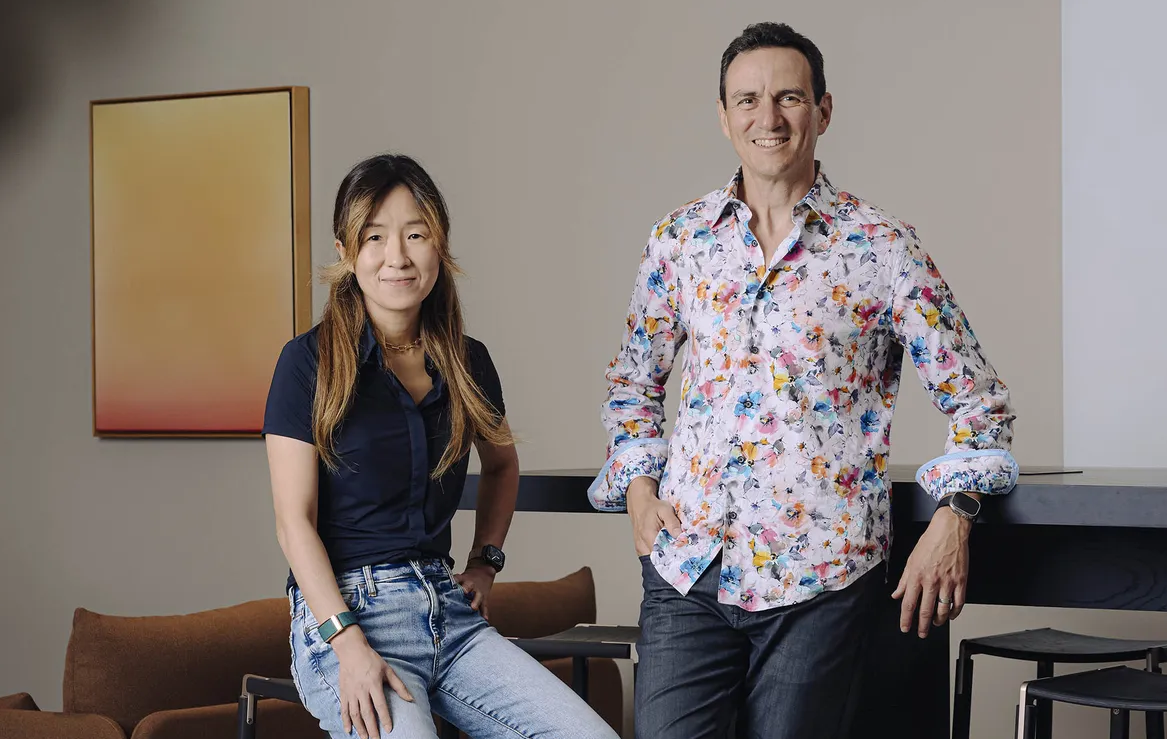
Noeri, a startup building AI systems that keep getting better at a company's own work, came out of stealth on 16 November with $110 million in funding. Menlo Ventures led the round, with Madrona, Kindred Ventures, Wing Venture Capital and NEA taking part, along with Snowflake and Cisco Ventures.
“Few companies would build their core operations on a single consultant who also advises every competitor, can change its terms at will and can never be brought in-house. A single, centralized AI offers exactly that arrangement.”
Yejin Choi and Carlos Guestrin, Noeri co-founders, in the startup's mission blog post · siliconangle.com ↗
The software studies an organisation's data, workflows and business processes, then proposes changes to individual tasks: new instructions, different tools, or a swap of the model handling one step of a workflow. Every suggestion arrives with an explanation and goes to a person for review before it is accepted, much as AI-written code changes do. It works with open-weight and proprietary models alike, and customers keep ownership of their workflows and the AI systems built from them. Noeri says it is already working with partners across several industries, some of them its own investors, to expose the system to varied work.
The founders are Yejin Choi and Carlos Guestrin, Stanford AI researchers who earlier worked on self-improving systems at the University of Washington. Guestrin helped create the XGBoost tool and co-founded GraphLab, later Turi, which Apple bought in 2016; he then led Apple's machine learning research. Choi led the Allen Institute for AI's common-sense reasoning team and spent about a year at Nvidia before moving to Stanford in early 2025. She helped Guestrin start Noeri in May 2026.
Noeri's own hero graphic for its launch, from the company's site
Courtesy of Noeri · Image: Noeri
The idea grew from a project helping a Stanford microbiology and immunology team use OpenAI models more cheaply, in which a small model trained to use OpenAI's older models beat GPT-5 on that team's tasks after fine-tuning. Guestrin's self-distillation technique, which lets models teach themselves by turning mistakes into lessons, and Choi's work on small models directing teams of agents and tools, underpin the pitch to organisations stuck choosing between unaffordable top models and weaker cheaper ones.
About Noeri
Noeri is an AI company whose software lets a business build specialised AI agents from its own data and know-how and keeps them improving from real work. Its site lists offices in Palo Alto and Zurich, and it was started in May 2026 by Stanford researchers Yejin Choi and Carlos Guestrin. The name means "intelligence, in the plural".
The company's starting point was an effort to help a Stanford microbiology and immunology team use OpenAI models more cheaply, where a small model trained on older OpenAI models beat GPT-5 on the team's tasks. In September 2026 Guestrin told Madrona's IA40 Summit that the future of intelligence should not be controlled by one or two companies owning the models.
The founders' vision essay prefers many specialised AIs that their owners control over a single superintelligence held by a few firms. Thinking Machines Labs, with its Tinker fine-tuning service, and Applied Compute, which embeds engineers with customers, have made similar multimodel arguments. Menlo's Venky Ganesan said that world-class research alongside deployment inside companies is rare, which is why the firm moved quickly to lead.
Sources · 2