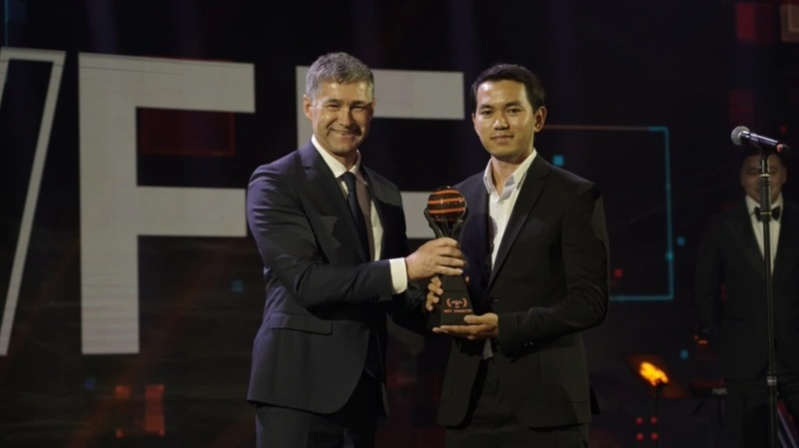
The first Astana AI Film Festival, AAIFF 2026, ran from 1 to 3 October in the Kazakh capital as part of AI Month, and its winners were named on 3 October. Latvian filmmaker Nikolay Shestak took the Grand Prix of $450,000 for The First Honest Day. Second place and $200,000 went to Abhik Banerjee of India for Sitara, and third place and $100,000 to Spain's Ernest Desumbila for Looking for Perseida.
Organisers present the event as the world's largest AI film competition, and Kazakhstan was hosting a contest of this kind for the first time. The contest drew 8,067 entries from 125 countries, and 25 films reached the final. Ten of them sat in the main thematic programme, titled The Future Worth Living In. Finalists were screened on 2 and 3 October at the Chaplin Cinema in the MEGA Silk Way mall. Kursiv Media describes The First Honest Day as a story in which a man's bad deeds make him uglier while his good deeds improve his looks.
Five special categories each carried $50,000, about 22.4 million tenge. Myrzakhan Zhumakhan won Best Character for IT WAS JUST A JOKE, and 2xLabs, with Liu Shuheng, won Best Story for The Last Span. Jacopo Zanetti took Best Visual for What's the Job?, Jacopo Reale took Best Direction for The Fracture, and Zachary London took Best Concept for Pomegranate. The Best Story team said it worked with Seedance 2.5 and a second, exclusive tool, one of the few production details the winners' coverage gives. The special awards sit alongside the three main prizes, so eight films in all came away with money from the prize pool, from $450,000 at the top down to $50,000 for each category winner.
“The most interesting thing about AI cinema today is not the technology itself, but what authors are beginning to create with it.”
Aizat Kussainov, AAIFF co-founder and creative director, to Qazinform · qazinform.com ↗
The total fund is $2m. Half is prize money, financed by the Freedom Shapagat Corporate Foundation of Freedom Holding Corp., and the other half is investment capital meant for AI production teams and for Kazakhstan's wider AI ecosystem. Freedom Holding was the general partner, Network School the technology partner and Kino.kz a partner. The jury included Audrey Azoulay, the former head of UNESCO, Ma Ping of the China Film Group's AI institute, Wang Hao of the Beijing Film Academy, Balaji Srinivasan and Li Long of BytePlus. Kursiv lists only three of them and Anadolu names only Azoulay and Srinivasan. The outlets differ in how complete their lists are rather than in what they say.
The winners' own accounts come from Qazinform. Shestak is a former actor who has been directing for about four years and making AI-assisted films for two. He said he had not expected to win and intends to put the money into more films, and he plans a trip to Almaty. Desumbila told the outlet he finished his entry in ten days, having found out about the festival with that little time left. Banerjee plans to take feature scripts to other festivals. Taken together, the three describe very different routes to the podium: a former actor who moved into directing, a filmmaker working against a ten-day clock, and a writer-director looking to turn a short into longer projects.
The prize structure shows what the organisers want from the event. Only the $1m of prizes goes to filmmakers directly. The remaining $1m is investment capital aimed at AI teams and at Kazakhstan's own AI ecosystem, so the festival is pitched as a funnel into production as well as a contest. The three main prizes alone total $750,000, and the five category awards add $250,000 more, which accounts for the whole prize pool.
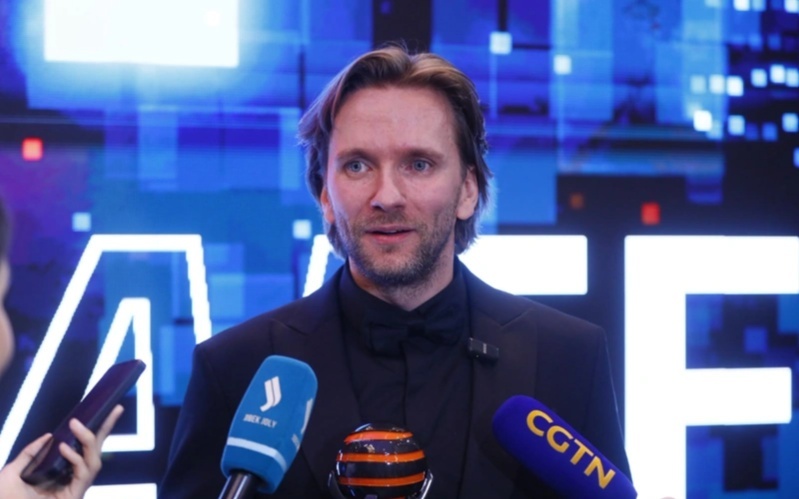
Grand Prix winner Nikolay Shestak (position in article matches his section; subject inferred from order, check before use)
Soltan Zhexenbekov / Kazinform · Image: Qazinform
The jury's make-up points the same direction. It mixes a former head of UNESCO with figures from Chinese film and AI institutions, an academic from the Beijing Film Academy, a technology investor and a representative of BytePlus, so cultural, educational and commercial voices all sat on the panel. The programme the ten main-strand films competed in carried the title The Future Worth Living In.
Shestak's route to the prize is the story Qazinform leans on. He spent years as an actor before turning to directing roughly four years ago, and he has been making films with AI assistance for the last two. He told the outlet that the win came as a surprise and that the money will go back into new films, with a visit to Almaty on his list. Desumbila's case is a different kind of underdog story: he heard about the festival late, had only ten days left before the deadline, and still finished Looking for Perseida in time to take third place and $100,000.
Organisers argue that the point of AI cinema lies in what authors make rather than in the technology, and that it is turning into a direction of its own. President Kassym-Jomart Tokayev, in remarks Kursiv reports, said AI lowers barriers for young people and lets small teams compete with studios, and he called for it to be used safely and responsibly. He added that AI will not replace the creator's spark but can serve as an indispensable tool for people devoted to creativity. Anadolu and Qazinform both bill the event as the world's largest AI film competition, and the reporting adds that Kazakhstan was the host for the first time. One date wrinkle appears in the coverage: Anadolu says Qazinform reported the result on Sunday, 4 October, which matches the Qazinform page, while Kursiv's report is dated 5 October.
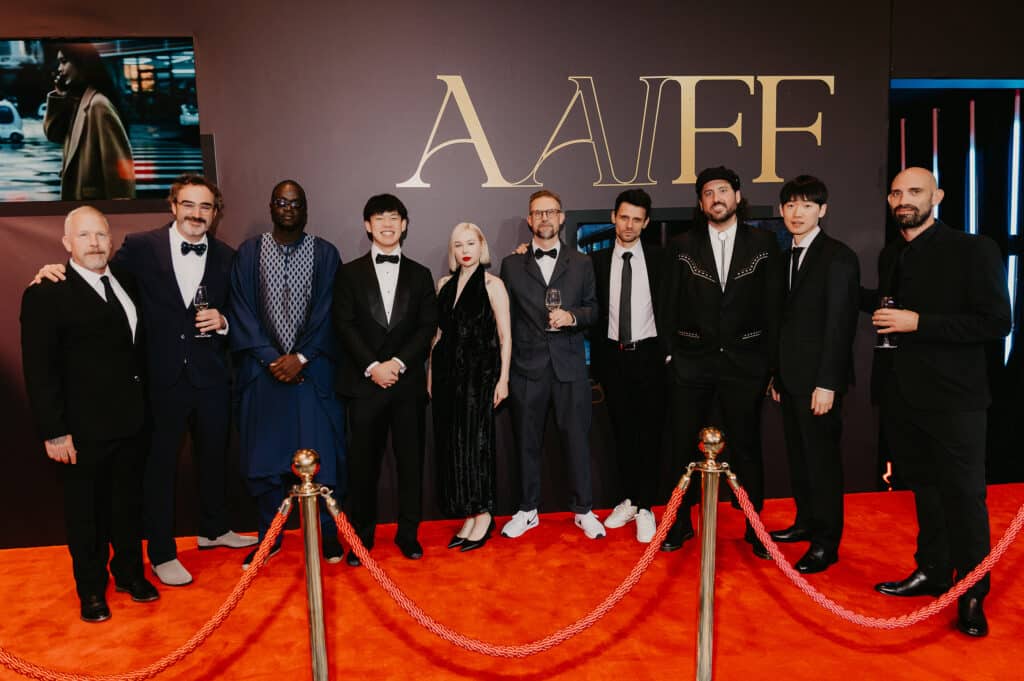
Festival photo lead image on Kursiv's report of the winners
Astana AI Film Festival · Image: Kursiv Media