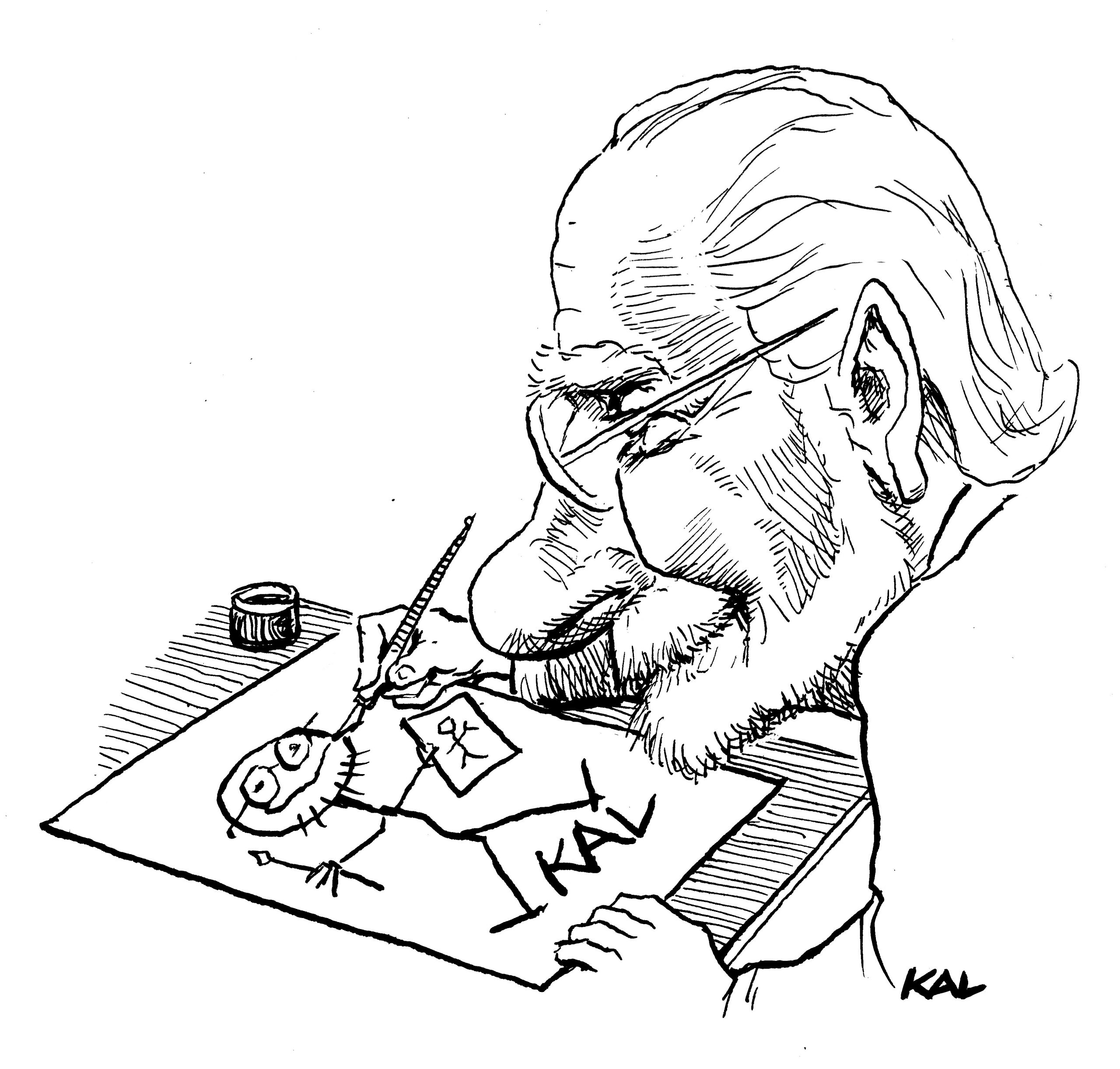
The Baltimore Sun has started running editorial cartoons that were plainly made with generative AI, and its best-known former cartoonist is speaking out about it. In an interview published by Baltimore Fishbowl on 22 September, Kevin Kallaugher, who signs his work KAL, said the paper appears to have made machine-made cartoons a routine part of its pages, which he believes is a first for American journalism.
The image that drew the most recent criticism ran earlier in September. It depicted Mayor Brandon Scott being thanked, seemingly with sarcasm, by business owners in Fells Point, the bar district where a police crackdown on late-night disorder began in July. The Association of American Editorial Cartoonists answered with an open letter from its president, Marc Murphy, urging the paper's publisher and editors to give up AI for cartoons and other editorial content on creative and moral grounds, and saying the choice had cost The Sun whatever claim to journalistic standing it still had. Fishbowl said The Sun had not yet answered a request for comment.
Kallaugher, a two-time Pulitzer finalist whose cartoons also appear in The Economist, said he first learned of an earlier AI cartoon when someone sent it to him. When a second appeared, and the images kept coming at a pace of roughly one a week, he concluded it was a deliberate policy set from the top and decided readers should know. Stories of AI taking jobs are familiar, he said, but a cartoon makes the point sharper because readers can see the difference between a drawing made by a person and one made by a machine, and can see a newspaper choosing the machine. He added that the Columbia Journalism Review had also interviewed him about it.
He does not reject the technology outright. Cartoonists working on deadline could use AI to find reference material, he said, such as a figure seen from an awkward angle or a sunset over the city, the way artists have always looked at photographs without tracing them. He could also picture using it to colour the characters in a graphic novel he has been working on, a job that would otherwise mean a year of watercolour painting. What The Sun is printing, he said, is something else entirely.
His objections to the cartoons come in two parts. On the art, he argued that generative tools mash thousands of individual styles into a bland average, which he described as a mushy pastiche assembled from other cartoonists' work. On the content, he said a cartoon has ten to twenty seconds to land its point and has to be clever enough to reward the reader; the Sun images read to him like a convoluted idea from an editor or a committee, and he judged them ineffective. He illustrated the art point with a comparison: a class of six-year-olds all copy their teacher's neat handwriting, yet 25 years later every signature is different; hand those signatures to an AI and it blends them into one that has none of that individuality.
Effectiveness, he said, is the test he applies to his own work too, and part of it is reaching readers who disagree. His favourite letter to the editor during his Sun years came from someone who said they hated his cartoons but could not stop looking at them.
The interview also covered how he came to leave. Kallaugher said he expected to be let go once Sinclair's David Smith bought the paper, having drawn several pointed cartoons about Sinclair and about Smith himself. In a face-to-face meeting, he said, Smith told him he had bought The Sun to bring his conservative views into Baltimore and Maryland politics and wanted a cartoonist who would do that on local subjects. When Kallaugher said he was not that person, Smith replied that he would come up with the ideas and simply have someone draw them. Kallaugher's point is that this is what is now happening, with software doing the drawing. He left a little over a year ago and later let his subscription lapse. He said he had grown annoyed with the paper's political commentary and with articles that seemed to come from the Sinclair organisation, and now follows city news through Baltimore Fishbowl, The Banner and others, although he once valued The Sun for its storytelling about Baltimore and Maryland.
He described a profession that has shrunk dramatically. As president of the cartoonists' association in 1996 he helped host a convention in Baltimore with around 300 attendees; an in-person meeting last year drew about 35. He estimated that fewer than ten staff editorial cartoonists remain in the United States, with many others scraping by as freelancers, and said the same is happening abroad.
Kallaugher said AI has already been used against cartoonists in other ways. He described people running recent political cartoons, his among them, through AI tools and posting the results in YouTube compilations for ad income, keeping each cartoon's idea and layout but stripping the artists' names. Some channels were taken down, only for others to appear. When he asked an AI tool for a cartoon in his own style, he said, the result was nowhere close, though a model trained on his roughly 11,000 published cartoons might do better.
He is among a handful of American cartoonists still drawing with pen on paper. The Economist is planning a touring exhibition, opening in Washington, D.C., to mark his 50th anniversary with the magazine in 2028, and he said part of it will look back at cross-hatching and hand craft and ask whether that tradition has run its course, the way earlier art movements such as Cubism had their time.
Sources · 1