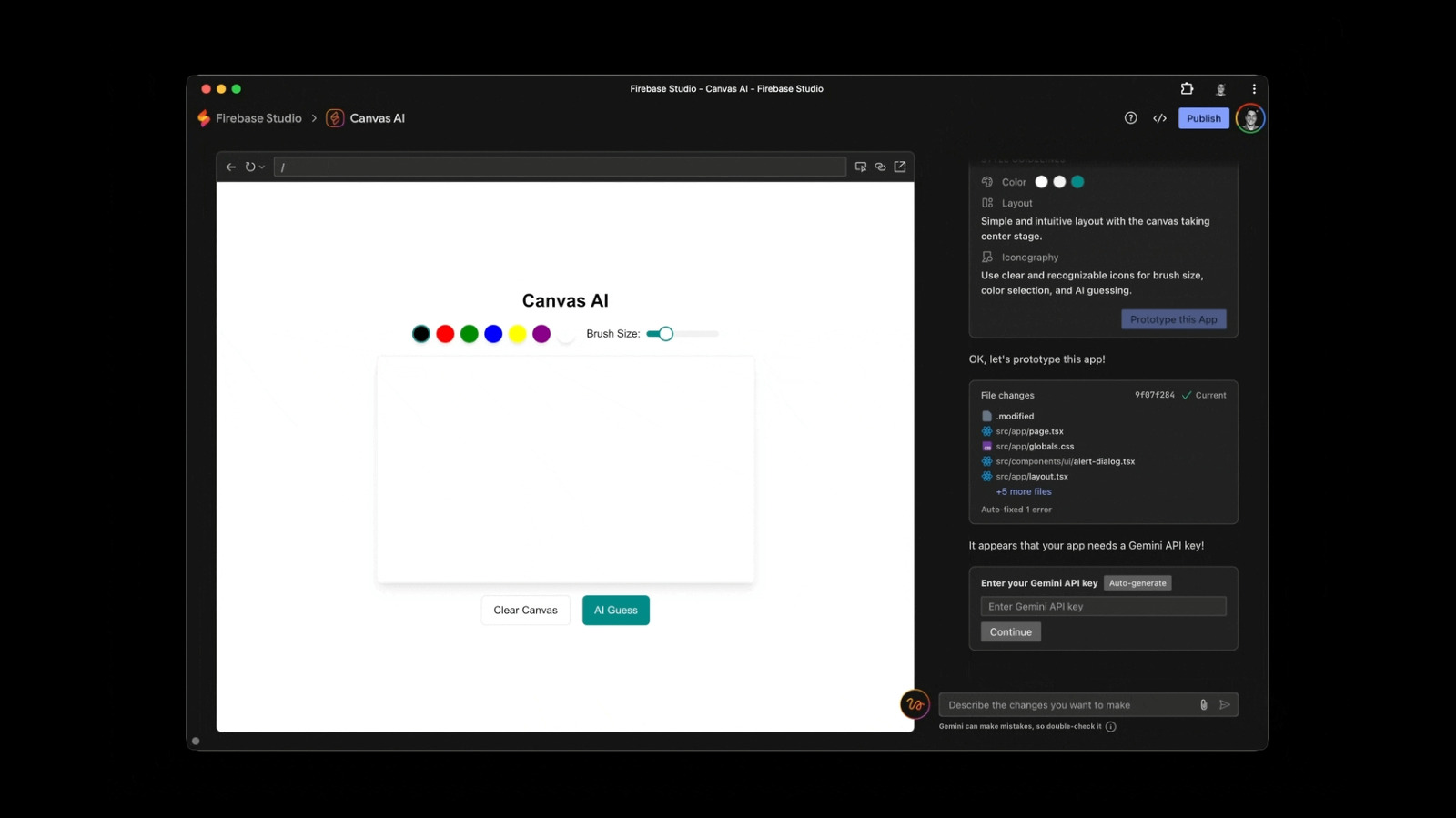
Google is closing Firebase Studio, the browser-based development environment it launched as a preview in April 2025. Engadget's report of 5 November restates a retirement Google first announced in March 2026, and developers are being told to move to Antigravity or Google AI Studio before the final day, 22 March 2027.
“the fastest path from prompt to full-stack production app”
Google, describing Google AI Studio, as quoted by Engadget · engadget.com ↗
The wind-down has been under way for months. Sign-ups and new workspaces stopped on 22 June 2026, though existing workspaces still open and can be migrated. After the March 2027 date, whatever remains is deleted for good and cannot be recovered, so developers are urged to export their work well before then; a zip-and-download option lets users save a workspace. The Firebase services behind it, such as Firestore, Authentication and App Hosting, are not affected.

Storyboard18's graphic for its March report on the Firebase Studio shutdown
Image: Storyboard18
The two replacements suit different habits. Antigravity runs as a desktop app on the developer's own machine, leans on code-first work directed by agents, and takes models beyond Gemini, including Claude and GPT-OSS. Google AI Studio lives in the browser, starts from a prompt, and has Firestore and Authentication built in. Google's migration guide sends template and repo-based projects, and people who used the Code View, to Antigravity, while projects built with the App Prototyping agent go to AI Studio.
About Firebase Studio
Firebase Studio was Google's browser-based development environment for building full-stack AI apps with Gemini, tied into Firebase services and built on Code OSS, the open-source core of Visual Studio Code.
Google launched it on 9 April 2025 by combining Gemini in Firebase, Genkit and Project IDX, an earlier cloud workspace that was itself a fork of Code OSS. It stayed a preview throughout. Existing Project IDX users did not have to do anything: their projects and data were moved into Firebase Studio automatically.
Google says the consolidation makes it clearer where to start building. Engadget adds that an editor-centred tool fits awkwardly as more projects begin from a prompt, but it also notes that neither successor is a like-for-like cloud IDE, so fans of the old approach are left looking. It names Cursor, now owned by SpaceX, Claude Code and Codex as options outside Google, and says subscription fees, token charges or both will weigh on where developers end up.