
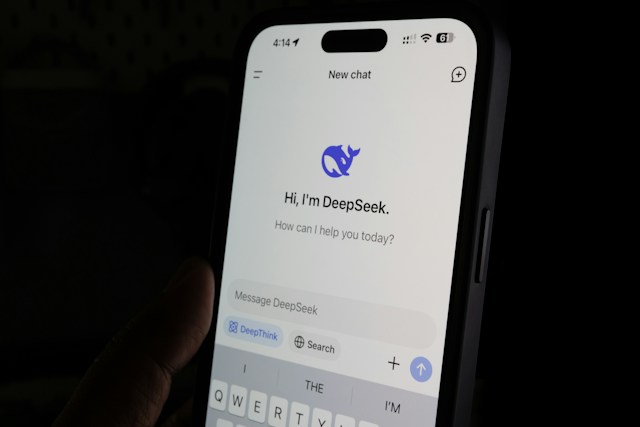
The US Department of Homeland Security has ordered civilian federal agencies to stop using DeepSeek and its affiliates, take down any versions they have already deployed, and halt purchases of the Chinese developer's products and services. The notice became public on 19 October, ahead of its publication in the Federal Register, and it also reaches third-party services that are built on DeepSeek's models.
The order rests on the 2018 Federal Acquisition Supply Chain Security Act and follows a review by the Federal Acquisition Security Council. It names Hangzhou DeepSeek Artificial Intelligence as the parent company. Homeland Security Secretary Markwayne Mullin's exclusion letter is dated 26 June according to CyberScoop, so the ban has been in force for months before surfacing; a summary of Bloomberg's coverage, which was not read directly, suggests 24 July instead.
DHS argues that DeepSeek's models carry several kinds of threat. User data sits on servers in China, where the government can demand access, so prompts and answers could pass sensitive material to Beijing. Joined with information that is already public, DHS says, what is collected could build a picture of Americans and of government programmes. CyberScoop adds that some of these worries are specific to China while data collection could apply to US AI products too. Neither outlet reports a reply from DeepSeek, which the order treats as the parent of its affiliates too.
Agencies that still need the tool can ask for an exception, filed 60 days ahead with a compelling justification such as being unable to perform a mission-critical function. While they remove it they are encouraged to watch network traffic, improve logging and look for data leaving their systems. Until now blocking was left to each agency: the Commerce Department barred DeepSeek on government devices last year, the Navy told personnel to avoid it, and New York State banned it on government devices and networks.
What happens next is procedural. Once the notice appears in the Federal Register, agencies have to strip existing DeepSeek products from their systems and block any new buying. SiliconANGLE reports no removal deadline, so the pace is left open, and the exception route is the only way out the notice describes. The measure replaces what had until now been a patchwork of blocks that each agency chose for itself.
About DeepSeek
More than a year before its April 2026 release, DeepSeek stunned the AI field with a low-cost reasoning model that matched US rivals. Federal agencies had already moved against it on their own authority, and the Commerce Department confirmed an earlier block to FedScoop the previous year.
On 12 February 2026 Reuters reported that OpenAI had accused the Chinese developer of distilling US models, an allegation US frontier AI companies and the federal government have since repeated. On 24 April 2026 DeepSeek released a new model it said came at drastically reduced costs. Homeland Security Secretary Markwayne Mullin signed the exclusion order on 26 June 2026, according to CyberScoop.
2023
Founded
4
Models indexed
Models on AIPopDB
DeepSeek is the only Chinese model named, though CyberScoop notes that other Chinese open-weight models such as Kimi and Qwen have drawn concern as well. US AI firms and the government accused the company more than a year ago of systematically distilling their models. Its R1 model, trained on less powerful chips, drew wide attention in 2025, and SiliconANGLE says the recent V4.1 Flash-1017 release may compete with leading US systems. No deadline for removal was reported.
Sources · 2