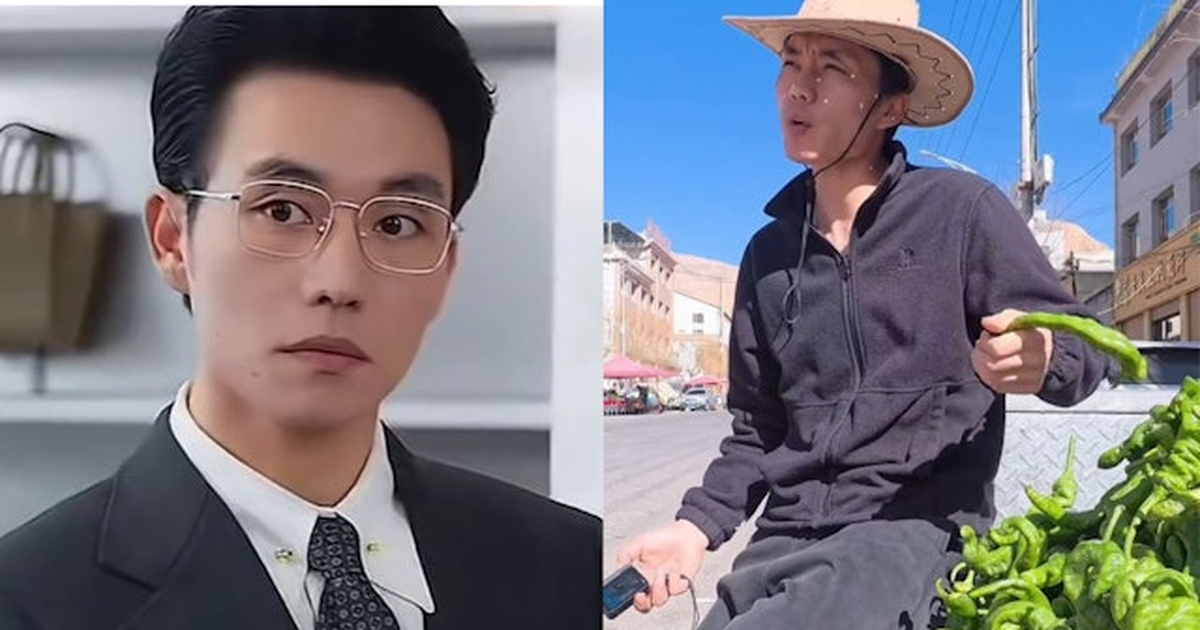
China's boom in AI-made micro-dramas is emptying the studio lots where live-action versions used to be shot in a week, and the actors who filled them are taking other work. A CafeBiz report from Vietnam follows three performers from Hengdian and Zhengzhou and sets their stories against industry figures on how quickly AI has taken over the format.
The numbers it cites are stark. A creative guide from the China Netcasting Services Association counted 128,000 short dramas released nationwide in the first quarter of 2026, 95% of them made with AI. One person with a computer can now finish an AI short in a few days for less than a tenth of what a live-action shoot costs. At Hengdian, 1,499 short-drama crews came to film by the end of May 2026, less than half the figure a year earlier, and nationwide starts of live-action shorts are estimated to be down about 75%.
Xu Peng, 30, trained in acting at the Central Academy of Drama and has had TV parts since 2016, including in Yi Nian Guan Shan and An He Zhuan. Some of his classmates have since become stars. He had paid little attention to short dramas, whose blunt, exaggerated acting was far from what he had been taught, but when television roles dried up in early 2025 he went home to rethink, then returned to Hengdian that July on a friend's introduction to try them. He quickly moved from supporting parts to leads, the fallen heir or hidden tycoon, working on three or four hours of sleep a night but finishing a drama in about a week. He made six or seven in six months and earned more than he had on television.
That changed around the end of 2025, when he saw crews in Hengdian, Xi'an and Zhengzhou testing AI. Two leading roles booked for after the Lunar New Year were cancelled when the production company moved to AI. He estimates 80% to 90% of short-drama actors have been hit. The offers still coming in have halved their shooting schedules to three or four days, cut the daily fee and left actors to pay their own travel; he has turned them down, worried the rushed work would hurt his career.
Xu now sells vegetables his grandfather grows and has spent about two months selling cold drinks at night markets in Qingdao, which he says is harder than it looks. He is preparing a short of his own with human actors, possibly adding AI later, and still wants to go back to acting. He does not think AI will wipe out live-action shorts: in his view it suits expensive or dangerous scenes, while emotional performance still needs people.
Xu Mengqiang, 32, from Sichuan, had no training when he arrived in Hengdian in July 2024 after working as a food courier and street vendor. He began as a non-speaking extra in film and TV; short dramas gave him lines and let him swap glasses, masks or hairstyles to play several characters in one production for extra pay, sometimes earning more than 3,000 yuan for five or six days. By early 2026 he had appeared in about 100 productions, more than 80 of them shorts.
He stayed in Hengdian over the 2026 New Year working as a mascot at a tourist site, planning to return to acting afterwards, but casting calls dropped sharply as companies switched to AI. He landed only three or four small parts, bought a tricycle to sell rice-paper snacks in town, and has since moved to Jiaxing in Zhejiang, doing advertising production, stage building and sound work for 300 to 400 yuan a day.
He sees one side effect: the live-action shorts that remain are getting bigger. Budgets that used to run 200,000 to 500,000 yuan now often pass a million, and some reach two or three million, while casting has become stricter, down to a eunuch role that demanded actors over 1.8 metres tall. He does not enjoy AI dramas himself, finding the faces stiff and the details sometimes off, and thinks humour and emotional delivery are still hard for AI to copy, since it mostly imitates what people have already made.
He had once tried AI video tools without imagining they could produce a whole drama; now, he points out, a live-action short needs cranes, wires and stunt crews while an AI one can be one person and a computer for two or three days. At 32 he wants to help his parents, and says a dream cannot be allowed to crush everyday life.
Yuan Jiyi, 74, retired from Wuhan to Zhengzhou, one of China's three short-drama hubs with Xi'an and Hengdian and nicknamed the "vertical Hengdian". A former member of a veterans' performing troupe, he played patriarchs, Taoist masters, healers and professors in dozens of shorts a year, at busy times five or six a month for more than 1,000 yuan a day. Since the New Year he gets few calls and some months none; ten people may apply for one part, fees have fallen and some Zhengzhou studios sit empty all day. Where crews once competed for actors, he says, actors now compete for crews. With a pension, he spends the time looking after his grandchildren.
He tried watching an AI drama but could not finish an episode: the picture was sharp, he says, but the characters could not carry joy or anger through their eyes and bodies the way actors do. He still sees why companies choose it, at roughly a tenth of the cost, letting them spread their risk across sheer numbers of titles. Like Xu Mengqiang, he thinks the pressure may force live-action producers to do better, and notes that some Zhengzhou companies still shooting with people now face lower costs for actors and locations and can afford less punishing schedules.
The report gives several reasons short dramas are the first casualty. The format lives on fast conflict and constant twists, so viewers forgive stiff AI faces if the plot grips. Distribution depends on recommendation algorithms that reward volume, which AI supplies. And China had close to 700 million short-drama users in 2025, spread from big cities to small towns and the countryside, many of whom care more about a gripping story and strong feeling than about performance, costume or authentic sets. Long dramas, by contrast, are chosen more deliberately, by title, cast or genre.
It also notes that crew jobs such as directing, assistant directing, producing, lighting, costume, make-up, props and casting coordination are shrinking, that some of those workers have moved to deliveries or night-market food stalls, and that TV actors who once filled gaps with shorts now find less work in both. Long-form production is trying a hybrid route instead: in June 2026 producer Yu Zheng showed trailers for three projects mixing real actors with AI-generated costume and sets, and Tencent Video has announced a series and a film made with AI throughout. The article's conclusion is that the industry is splitting tasks between AI and people, with live-action shorts needing to compete on quality rather than quantity.
Sources · 1