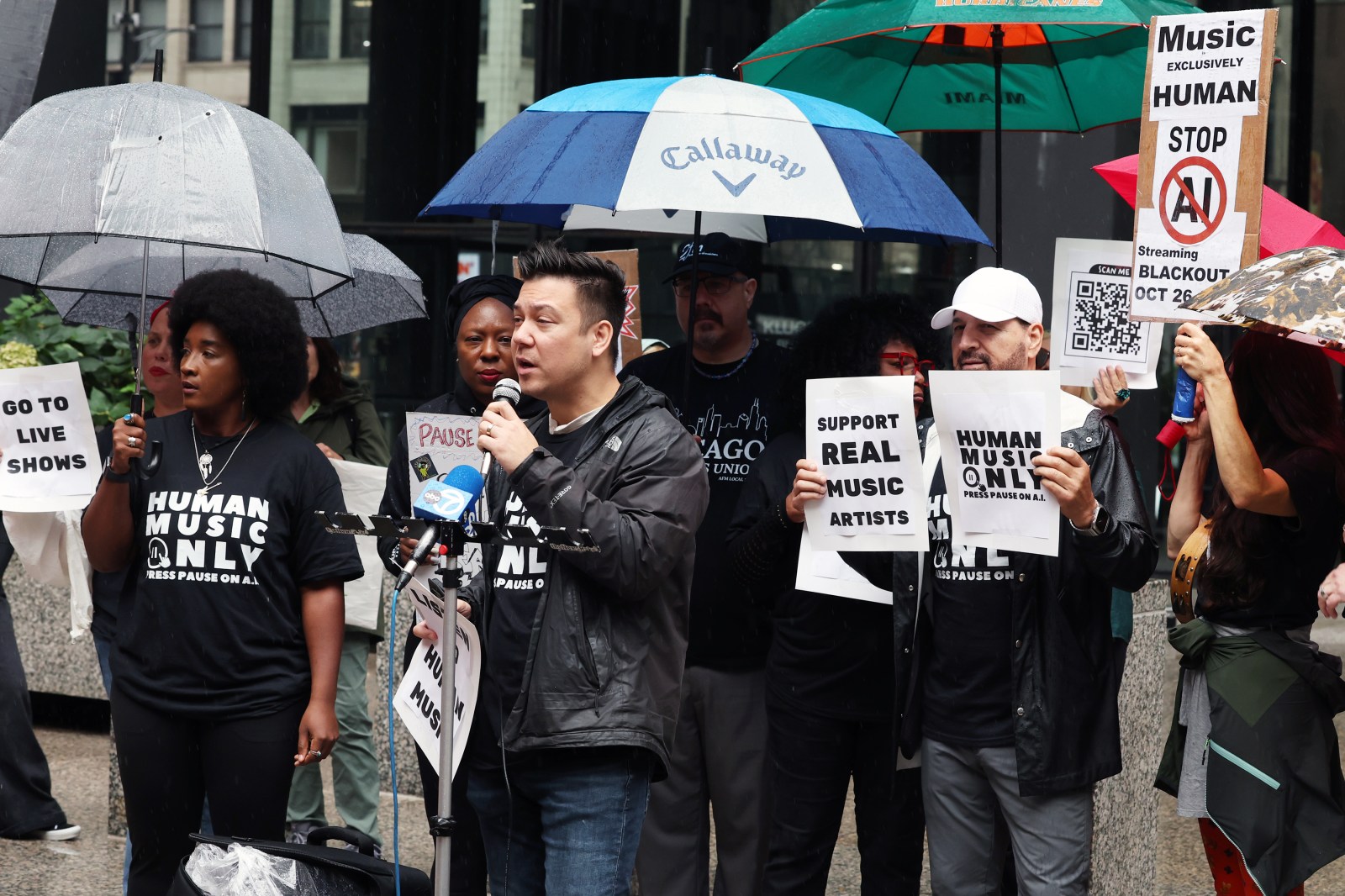
On Thursday 1 October 2026, around twenty Chicago musicians gathered in the rain at the Federal Center's plaza in the Loop to protest AI-generated music. For about half an hour they chanted "Pause AI!" and sang, wearing black T-shirts printed with the slogan "Human Music Only. Press Pause on AI".
The rally doubled as the launch of a campaign aimed at AI music, the tech companies behind it and the streaming services that carry it. Its main demand is legal protection against AI imitations of musicians' work. Its first concrete action is a "music platform blackout" on 26 and 27 October, when organisers want listeners to stay away from Spotify and Apple Music.
Several musicians spoke, among them Melody Angel, Tammy McCann, Tim Corpus, Ugochi Nwaogwugwu and Jeannie Tanner. Corpus read aloud a remark from the head of Suno, made in 2025, to the effect that most people do not enjoy making music, and the crowd booed it. The wider push is organised by Sam Cantor, who performs as Minor Moon, and Austin Koenigstein, who performs as Smushie. They described it as the start of a long campaign that could spread beyond the city.
“We want policy that says: ‘This is fake music, and this is real music.’ We should have the choice.”
Melody Angel, Bronzeville-based musician, to the Chicago Tribune · chicagotribune.com ↗
The speakers framed it as a matter of urgency and of craft. Tanner argued that each day of delay lets more machine-made filler seep into the field every working musician depends on, while Nwaogwugwu stressed that being a musician is something a person earns, not something a prompt box hands out. Angel's own appeal, set out in the pull quote above, was for a policy that tells the audience what is real.
What the musicians ask for is mostly about transparency. They want AI tracks clearly separated from human ones on the platforms, so that listeners know what they are choosing. Spotify, for its part, has said it pays no fixed per-play rate and that independent artists and labels earned more than $5bn on the service in 2024.
The protest has a year-long history. In September 2025 a group of Chicago musicians signed an open letter attacking Spotify over low pay, its ties to AI, unlabelled AI music and its collection of user data. Reports at the time put the number of signers at nearly 70 or at least 80, depending on the outlet. The letter came after Spotify chief executive Daniel Ek backed the defence startup Helsing with $640m, a move that had already led bands such as Deerhoof and King Gizzard to pull their music.
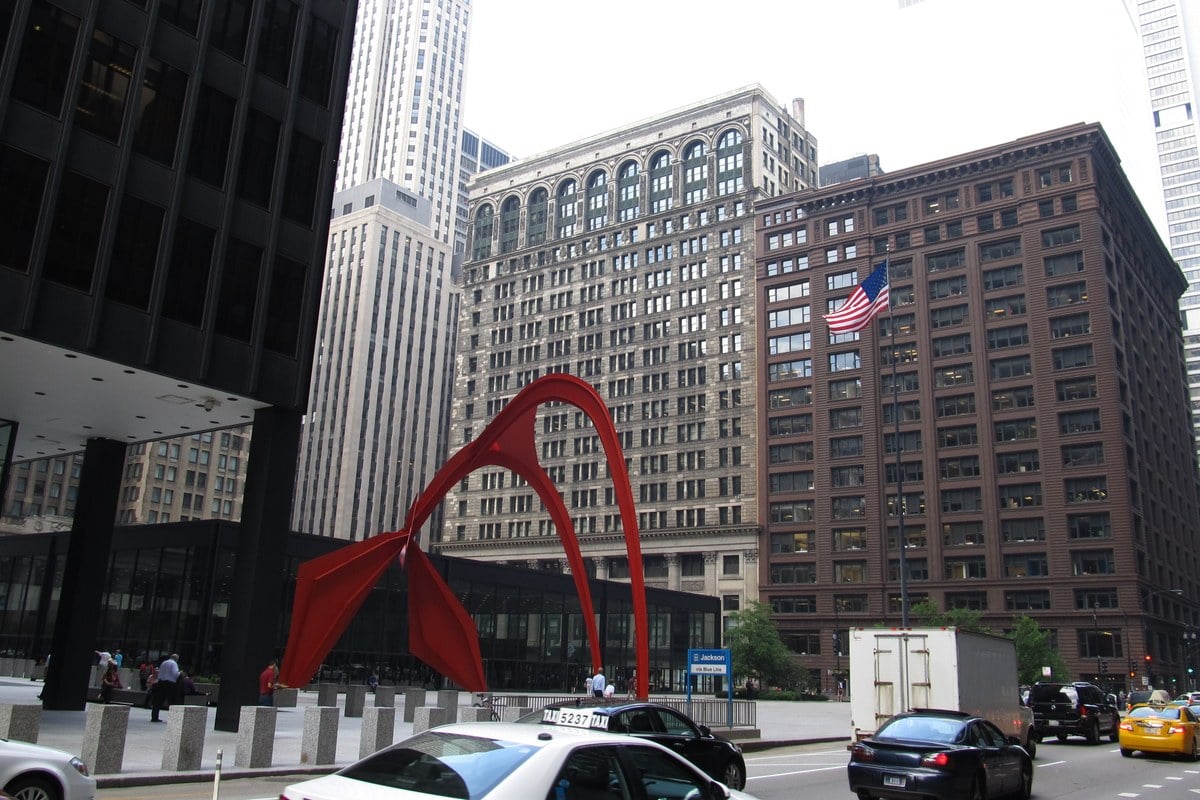
The Chicago Federal Center in the Loop, where the rally took place (file photo, not from the event)
Ken Lund / Wikimedia Commons · Image: Hoodline
The rapper and poet Mykele Deville has gone further than most, holding his new album back from Spotify because of what small independent acts earn there. He told CBS in 2025 that AI-generated content makes artists feel replaceable. Hoodline adds that Massive Attack and Hotline TNT have also left the service, and sets the Chicago action beside platform moves such as Spotify's AI labels, limits at Tidal and Bandcamp, and the major labels' lawsuit against DistroKid.
Hoodline also notes that Deezer and Qobuz have published figures on how much of their uploads are AI-made, a sign that the labelling question the Chicago musicians raise is already being argued across the industry. The rally itself, as the Tribune describes it, was small and short, but its organisers present it as a first step rather than a one-off.
The blackout on 26 and 27 October is the next date organisers have announced. Whether a turnout this small can dent streaming numbers is not something the coverage addresses; the campaign is, for now, mainly a statement of intent from working Chicago musicians.