Several artists who walked away from the Brisbane Portrait Prize after it began accepting AI-generated entries have come back for the 2026 edition, this time as finalists with human-made work. Among the 49 works in the main competition, only one declares the use of generative AI, and that single entry has become the focus of the prize's argument about where the line sits. One declared AI work in forty-nine is a small share, yet it is enough to keep the 2024 decision in the conversation around this year's show.
The AI-assisted piece is Jackie Ryan's The Catch. It depicts the comedian Alice Fraser inside a claw machine, surrounded by figures produced with the image tool Krea, and it is built on a photograph Ryan took herself. The prize's 2024 rules allowed declared AI work to compete on the same terms as everything else, including for the $50,000 Lord Mayor's prize, and that decision is what triggered the original boycott by past winners.
“An AI piece is not art. It's decoration, illustration at best. It doesn't have cultural content.”
Birrunga, Wiradyuri artist and former Packer's Prize winner (via The Guardian), to The Guardian, as reported by Yahoo · yahoo.com ↗
The most visible return is that of Birrunga, a Wiradyuri artist and former Packer's Prize winner. He pulled five First Nations artists from his gallery in both 2024 and 2025, and this year he brought them back. His objection is not only aesthetic: he argues that AI output carries no cultural content and risks extracting First Nations cultural and intellectual property. Two of those artists, Kane Brunjes with Ancestral Integrity and Elysia Love-Anderson with Reflections, are among the finalists. Love-Anderson, who is Kamilaroi, says knowledge handed down through families and elders is something a model cannot supply.
Photographer Glenn Hunt, a 2020 digital-category winner and one of the leaders of the 2024 boycott, is also a finalist. His portrait is of Dean Clifford, who lives with epidermolysis bullosa. Hunt says his view of AI has not changed; entering is his way of answering it with something real rather than staying away.
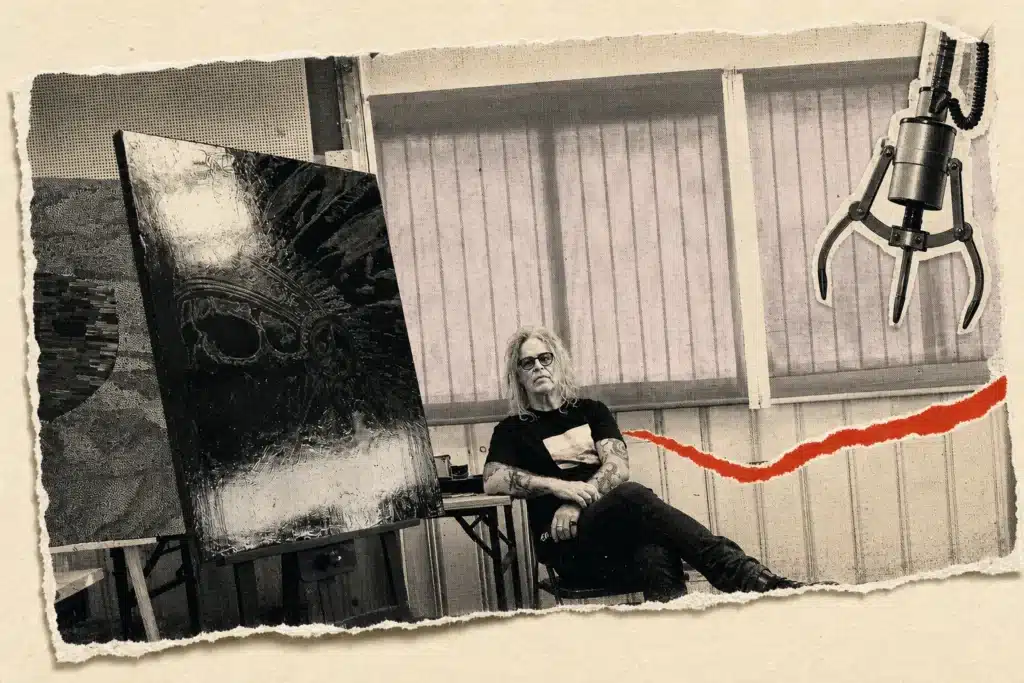
Illustration OzArab Media used for its report on the artists' return
Image: OzArab Media
The contrast with 2024 is what both outlets stress. That year the decision to let AI work compete prompted past winners to withdraw, and Birrunga's own gallery stayed out again in 2025. Seeing the same names on this year's finalist list, with work made by hand, is the reversal the coverage is built around, though neither outlet says the boycott has formally ended, and the artists' stated views on AI have not softened.
Prize director Anna Reynolds describes the policy as accepting AI entries only where they do not breach copyright, and says the question of whether AI belongs at all has been settled. In her account the conversation now concerns how much creative control stays with a human, and she calls retaining that human creative control the thing that matters. The written rule is unchanged from 2024: declared AI work can still enter and can still compete for the top prize, provided it does not breach copyright. Both outlets report this second-hand from the Guardian's coverage, and one says winners are announced on a Friday with the exhibition opening the next day, a date to check on the prize's own site.