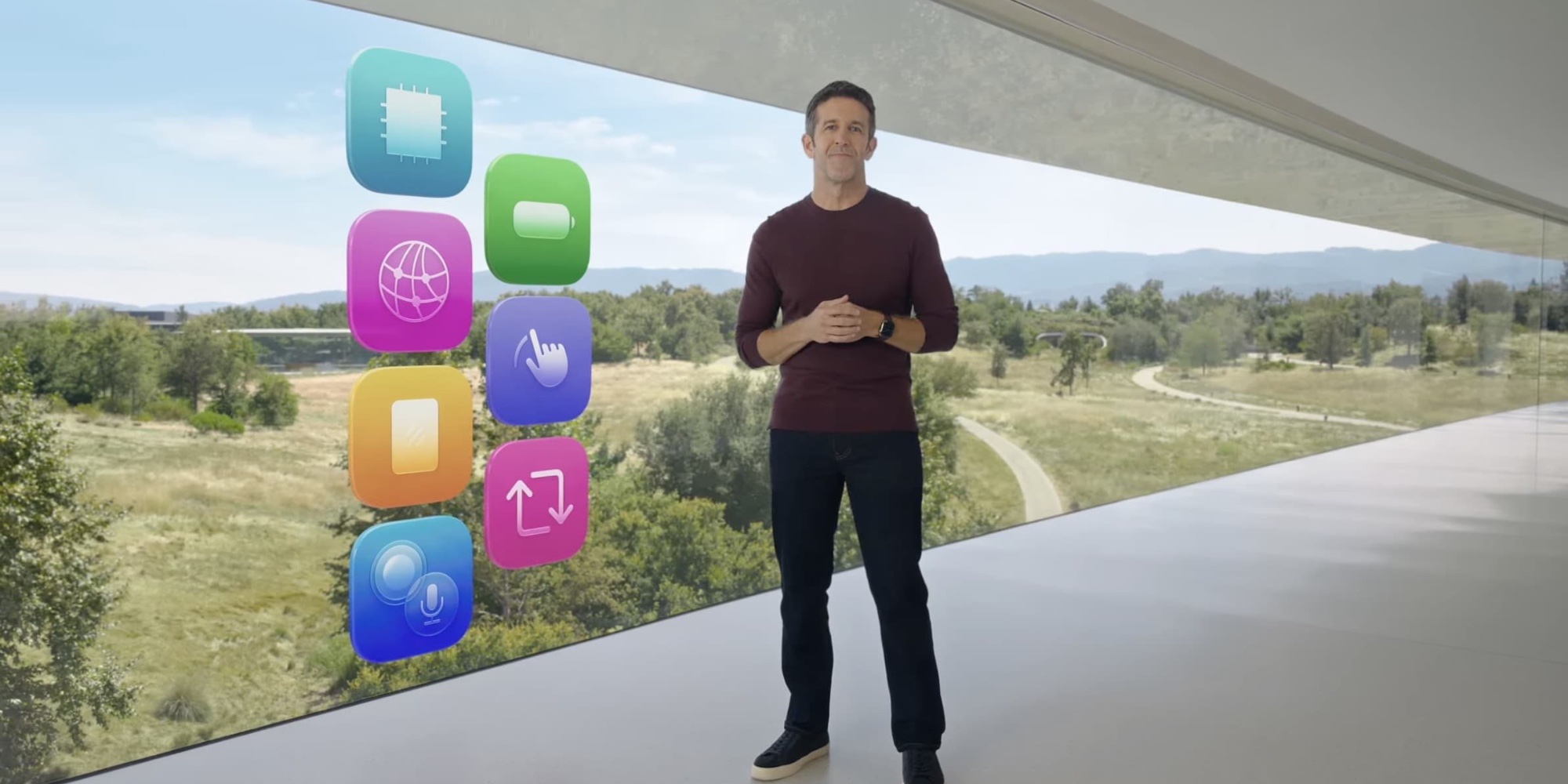
On his first earnings call as Apple's chief executive, John Ternus was pressed again and again about where Siri AI goes from here. The call on 2 November covered Apple's fiscal fourth quarter, and he was joined by finance chief Kevan Parekh and operating chief Sabih Khan. His answer was that the version now shipping is only a beginning and that Apple has much more planned.
“We just want to make sure that users are aware of what they're giving access to. We want to make sure this is done in a way that protects security and privacy.”
John Ternus, Apple CEO, on agentic capabilities · macrumors.com ↗
Analysts and reporters on the call kept returning to the subject. Ternus described Siri AI as mainly request-based today, built on an orchestrator-driven design that Apple showed at WWDC and that leaves room to add capabilities over time. Asked about agents, he called agentic tools promising but said users have to understand what access they are handing over, and that security and privacy have to hold. Privacy, he argued, is a core advantage, because contacts, messages, health and financial details sit on the iPhone and Siri can use them without Apple seeing them. Tech press read his wording as a hint that Apple is working toward an assistant less tied to single requests, though that is the outlets' interpretation and not something Apple said.
Money was the other thread. Siri AI and photo editing that run on server-side models will have usage limits, and people who want more will be able to buy expanded access. No prices were given, and nor were the iCloud+ limits for each plan. Ternus presented intelligence as a further services opportunity beyond storage tiers, which echoes what Tim Cook said on the July call about upgrade options for heavy users. Parekh said the balance between on-device processing and Apple's Private Cloud Compute is at a very early stage: running on the device carries essentially no cost, while server-side work brings inference costs.

Generic Siri AI orb graphic from Apple's WWDC presentation
Image: 9to5Mac
Those costs show up in the guidance. Apple expects gross margin of 45 to 46% in the December quarter, held back by memory prices, which Ternus called unprecedented, and by the cost of ramping up Siri AI. According to the call transcript, Siri handles more than 2.5 billion requests a day, and hardware revenue in the December quarter will be deferred to reflect the new features.
About Siri AI
Apple unveiled Siri AI at its Worldwide Developers Conference on 8 June 2026. On the July earnings call Tim Cook said heavy users would be offered upgrade options on iCloud+, an early sign that extra capacity would be paid for.
Siri AI began rolling out in beta in English on 14 September 2026, arriving with the next generation of Apple Intelligence. On 26 October 2026 it expanded to French, Japanese, Korean, Portuguese and Spanish, so the paid-capacity plans Ternus described on the latest call concern a product that has been in people's hands for less than two months.
Sep 2026
Released
The assistant was unveiled at WWDC on 8 June 2026 and released on 14 September as a beta in US English. French, Japanese, Korean, Portuguese and Spanish followed in October. Ternus said iOS 27.2, which shipped the week before, already showed Apple improving the product more quickly, and that Apple's devices are the best place to use every kind of AI, and that the company has plenty still to do on the product. He also told Reuters after the results that Apple cannot meet demand for the iPhone Duo and gave no date for when supply will catch up.
Sources · 2