Intel's shares fell nearly 30% on Friday 30 October 2026, to about $65 to $67 from a $92.07 close the day before, after the chipmaker paired its third-quarter results with a weak fourth-quarter forecast. The drop erased roughly $145bn of market value. Decrypt called it the worst single-day decline in more than 50 years, while IBTimes Australia says only 5 July 1974, with a 29.9% fall, was worse.
The quarter itself beat expectations. Revenue rose 21% to $16.5bn and adjusted earnings per share were $0.52 against $0.38 to $0.41 expected. Data Center and AI revenue jumped 78% to $7.3bn, its fastest growth in 15 years, and Intel Foundry sales rose 58% to $6.7bn. Client Computing revenue, which covers PCs, fell 5% to $8.1bn, the one major segment that shrank.
The forecast is what hurt. Intel guided fourth-quarter revenue of $15bn to $16bn against about $17.07bn expected, adjusted earnings of $0.25 a share against $0.43, and a non-GAAP gross margin of 38%. IBTimes reports that the PC market is expected to shrink 12% in 2026 and 10% in 2027, which it ties to a global memory-chip shortage. Chief executive Lip-Bu Tan said conditions will last until memory supply and prices normalise, and finance chief Dave Zinsner said 2027 is an investment year in which free cash flow is unlikely to turn positive.
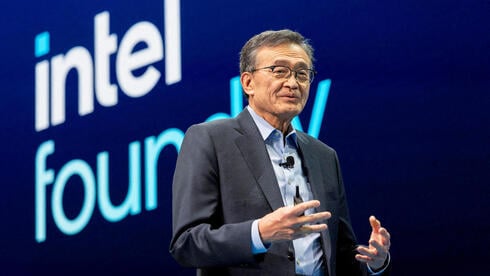
Ynet's file picture used with its report on Intel's share collapse
Image: Ynetnews
Other chip names slid too: Dell fell 13%, AMD 10% and Nvidia 3%. BofA's Vivek Arya cut his rating to neutral with a $100 target, down from $145, and Roth and Cantor also lowered their targets. Of 33 analysts tracked, 10 rate Intel a buy, 22 a hold and one a sell. Bulls point to data-center demand that exceeds supply and better Foundry yields, while sceptics fear a longer PC slump with cash burn. Decrypt reads the day as AI-server demand booming while manufacturing and packaging capacity cannot keep up.
About Intel
Intel is an American chip company headquartered in Santa Clara, California, founded in 1968 by Gordon Moore and Robert Noyce. It became a household name through its Intel Inside campaign from 1991 and its Pentium processors.
Its recent past has been turbulent. After a $1.6bn loss in the second quarter of 2024 it announced 15,000 job cuts to save $10bn in 2025. CEO Pat Gelsinger was ousted in December 2024 amid slow progress on his turnaround, and Lip-Bu Tan was named CEO on 13 March 2025. The US government bought a 9.9% stake in August 2025, and Nvidia invested $5bn in September 2025.
Intel completed a $23bn share offering in August 2026 and says this was its eighth straight quarter of beating its own guidance. The stock had risen nearly 150% in 2026 before the fall and is still about 86% up, though roughly 52% below its $142.35 52-week high. Management expects to name new foundry customers over the next two quarters, and its 18A process, behind the Panther Lake chips, is central to its recovery plan.
Sources · 3