Universal Music, Sony Music and DistroKid have told a federal court in Manhattan that they are working on a resolution to a fight over DistroKid's AI-music data. The joint filing was signed by the parties' lawyers on 27 October and approved by Judge Arun Subramanian the next day. It gives DistroKid until 6 November to answer the labels' request for a court order. It does not say what a settlement would involve, or whether DistroKid would hand over any of the data.
“That makes DistroKid a singular source of relevant evidence”
Lawyers for UMG and Sony Music, in their filing · billboard.com ↗
The dispute sits beside the labels' 2024 copyright case against Suno, which is pending in Massachusetts. DistroKid is not a defendant in that case. The labels served it with a subpoena in September and asked the New York court on 14 October to enforce it. They want monthly figures since DistroKid began using a third-party model that predicts whether a track is AI-made: how many tracks were delivered, tested and scored as likely AI-generated, in whole or in part. They also want the streams and royalties those tracks earned, how many the model traces to Suno, and the model's name and vendor.
The labels say DistroKid is a main route by which AI recordings reach streaming services, and that its numbers bear on whether Suno's outputs harm the market, which goes to Suno's fair-use defence. They also want the basis for DistroKid's claim that its detection throws up false positives. DistroKid, which says it handles roughly 30 to 40 percent of new music worldwide, calls itself a third party that will cooperate and stresses its commitment to transparency. Per the labels, it has argued the data says little about how Suno built its models. Suno maintains that training on copyrighted recordings is fair use and does not track where its exports end up.
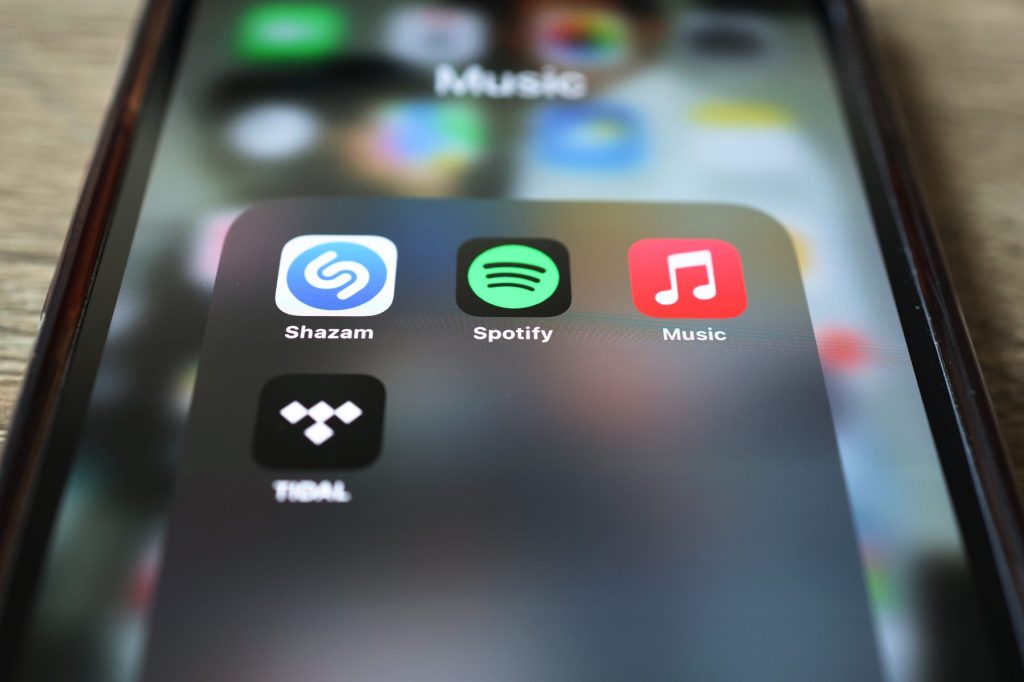
Music streaming apps on a phone screen, a stock illustration of the streaming market the labels say AI tracks are flooding
Michael M. Santiago/Getty Images · Image: Billboard
Several other threads run alongside. Universal sued DistroKid itself in Delaware on 15 September, listing 1,000 recordings it says were copied by tracks DistroKid delivered, with nearly 2,000 found so far; at $150,000 each, the first 1,000 imply a ceiling of about $150 million. DistroKid disputes the allegations and says it removed a small number of tracks, though critics note that human artists were sometimes caught in the clean-up. The same week as the New York motion, the labels pressed Suno's investors Bond Capital and Menlo Ventures to comply with subpoenas, and on 26 October a Massachusetts court cleared them to question a former Menlo principal under oath. Warner Music, which sued Suno alongside the others in 2024, settled in November 2025, and the two remaining labels filed a second suit against Suno on 18 September over 60,202 recordings.
About DistroKid
DistroKid is an independent music distributor based in New York that lets musicians and rights holders deliver music to Spotify, Apple Music, YouTube Music and other services while keeping their rights and royalties. It began in early 2012 under Philip Kaplan as a feature of his platform Fandalism and took the DistroKid name in mid-2013.
This is not the first time it has sat at the centre of music-industry attention. In 2018 it agreed with Spotify to support cross-platform uploads, and Spotify and Silversmith Capital Partners took a stake in the company. A funding round in September 2021 valued it at $1.3 billion, and by 2020 it was distributing at least 30 percent of new songs. In February 2023 it launched Mixea, an AI-powered mastering service.
If no deal is reached by 6 November and the court sides with the labels, DistroKid would have to produce the AI-flagged track and earnings figures. Its reply to Universal's Delaware complaint is due on 4 December.
Hypebot's illustration for its report on the labels' motion against DistroKid
Image: Hypebot