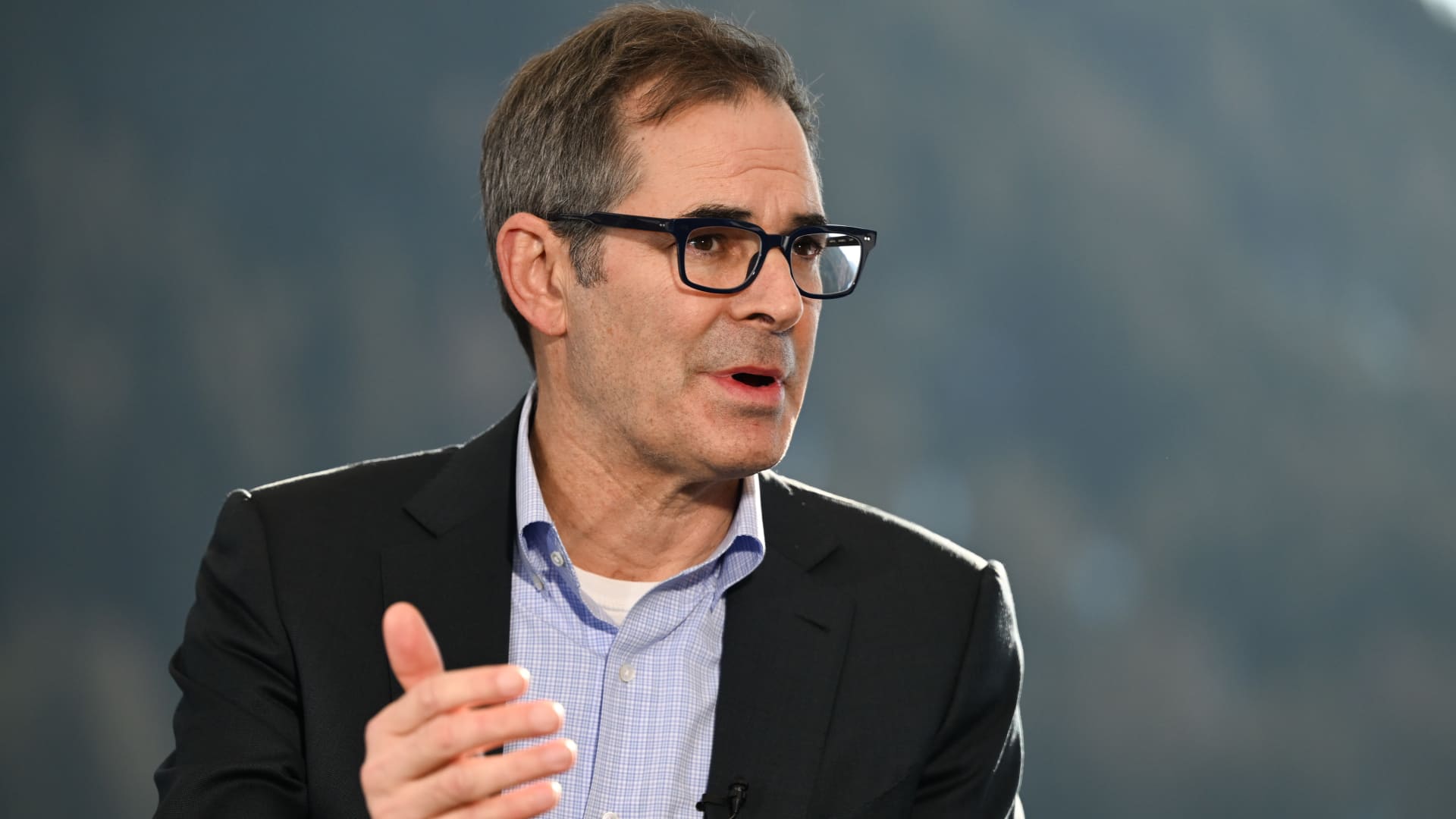
CoreWeave, the cloud provider that rents out GPU capacity to AI developers, reported third-quarter results on 10 November that beat Wall Street's forecasts, and it raised its outlook for 2026. Shares rose in extended trading, and by the next morning had jumped more than 20%, helping lift tech stocks. The report arrived while investors were souring on AI infrastructure names and while Nvidia was dealing with a scandal around chief executive Jensen Huang over an alleged affair with a Chinese spy.
“If data center construction across the sector were to slow, installed compute becomes scarcer, and the knock-on effect is that GPU pricing may stay higher for longer.”
Michael Intrator, CoreWeave CEO, on the earnings call · cnbc.com ↗
Revenue grew 168% from about $1.36bn a year earlier to $3.66bn, ahead of the $3.55bn analysts expected. The company still lost money: a net loss of $709m, or $1.27 a share, compared with a $110m loss a year before, and the adjusted loss per share was wider than the $1.16 the Street had pencilled in. For the full year it now guides to $13bn to $13.3bn in revenue and $1.275bn to $1.375bn in adjusted operating income, up from August's ranges and above the consensus of $12.86bn and $1.07bn.
The order book is what investors watched most closely. Revenue backlog reached $132.5bn, up from $104bn in June. Capital spending for 2026 is planned at $37bn to $39bn, roughly 155% more than last year at the midpoint, and the company still expects 1.85 gigawatts of active power by year end. Debt stood close to $47bn, and the stock had lost more than 40% over the past month, with some of its bonds yielding above 16%. During the quarter it said it would open its first Asian data centres and announced Forge, a service for running and evaluating AI models.
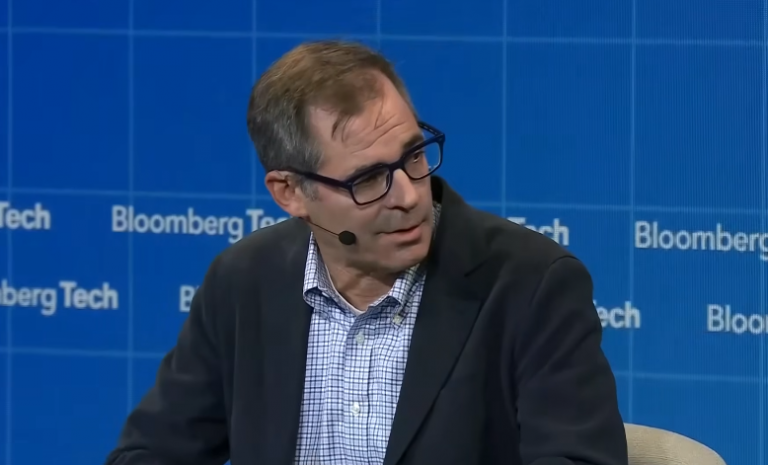
Screenshot used by SiliconANGLE to illustrate its report on CoreWeave's results (the article pictures Intrator)
Image: SiliconANGLE
On funding, Michael Intrator said most of the capital for 2027 would come from customer pre-payments and financing from hardware partners, plus a limited amount raised. Finance chief Nitin Agrawal said new debt secured against a set of contracts is coming, but that there would be no more unsecured debt at the parent level through 2027 and under $5bn of parent-level debt financing. Intrator said the company could sell all of its capacity but is choosing to bring infrastructure to market patiently, and that he expects no effect from the regulatory shift around data centres. Investor Joe Tigay called demand encouraging but said the cost and availability of capital remain critical.
About CoreWeave
CoreWeave is a US cloud-computing company that rents high-performance GPU capacity for training and running AI models, with its own data centres in the US and Europe. It trades on Nasdaq as CRWV. It was founded on 21 September 2017 in New Jersey as Atlantic Crypto by commodities traders Michael Intrator, Brian Venturo and Brannin McBee, with Peter Salanki, and began in cryptocurrency mining before moving to AI computing.
Its growth has leaned on big AI customers and capital markets. In March 2025 it signed a five-year contract with OpenAI worth about $12bn, and OpenAI took a $350m stake in its IPO. It went public on 28 March 2025, raising $1.5bn after cutting the offering from $2.7bn, which Dealogic called the largest AI-related listing by amount raised. In July 2025 it agreed to buy Core Scientific for $9bn, but Core Scientific's shareholders rejected the deal in October 2025.
The backdrop is unsettled. Voters last week rejected dozens of data-centre initiatives, and Nvidia, a key supplier, fell nearly 10% at the start of the week after its board hired a law firm to investigate Huang. Anthropic, a major CoreWeave customer, is due to list on Nasdaq next week at an implied valuation of about $1.4tn, and rival Nebius reports earnings on Thursday. Agrawal added that if the company focused only on committed backlog, 2027 capital spending would stay in line with 2026 while revenue and EBITDA grow significantly.
Sources · 2
Comments