Applied Compute, a San Francisco startup that helps companies train and run their own AI models, announced on 2 November a $350 million raise at a $3.25 billion valuation. Elad Gil led the round, with Nvidia, Shopify Ventures and HubSpot Ventures among more than a dozen other investors. The company's own post also lists Kleiner Perkins, Lux Capital and Blackstone.
The announcement came with a revenue milestone: annualized run rate above $100 million, less than 18 months after founding. The company put it at roughly $50 million in August, as reported by The Information. Enterprise customers have more than doubled since an April round and include Microsoft, Shopify, DoorDash, Harvey and Clay, across life sciences, cybersecurity, legal, finance and logistics.
The product is a cloud platform for training language models and serving them. Its training approach uses asynchronous reinforcement learning and self-distillation, which does away with teacher models. An autoscaling inference engine handles serving, and an "online RL" step periodically fine-tunes on live prompts. The company says its AC2 platform launched about three months ago, with over 1,700 training runs since July, and that its inference service handles more than a trillion tokens a day.
“Training, inference, and routing are the first pieces of a much larger stack. We're building the AI infrastructure every company will need to fully own their intelligence”
Rhythm Garg, Yash Patil and Linden Li, Applied Compute founders, in the company blog post · appliedcompute.com ↗
Cost savings are the pitch. A custom router for Clay reportedly cut production inference costs by up to 47%, and a model built for Harvey matched a frontier alternative's quality at under half the price. A router called Shift-1 sends coding-agent requests to the most cost-efficient model and can split tasks between them. About 40% of customers use both training and inference.
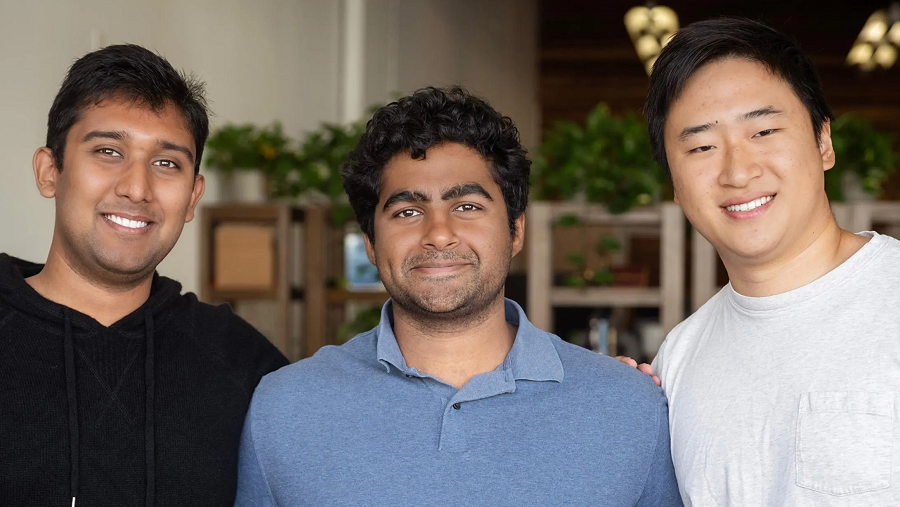
The founders, Rhythm Garg, Yash Patil and Linden Li, all left OpenAI to start the company. Forbes called them Stanford friends under 25. In September Patil told the magazine that the money would mainly buy chips for a large compute fleet, and said open-weight models can in some cases be up to ten times cheaper than frontier ones. Gil told Forbes he had always believed open source would matter and rated the founders as at the frontier of this work.
The staff has tripled since January, with 85% researchers and engineers, and in-house machine-learning researchers work with customers to build the evaluations their models are judged on. The new money goes to more compute capacity, hiring and enterprise deployment.
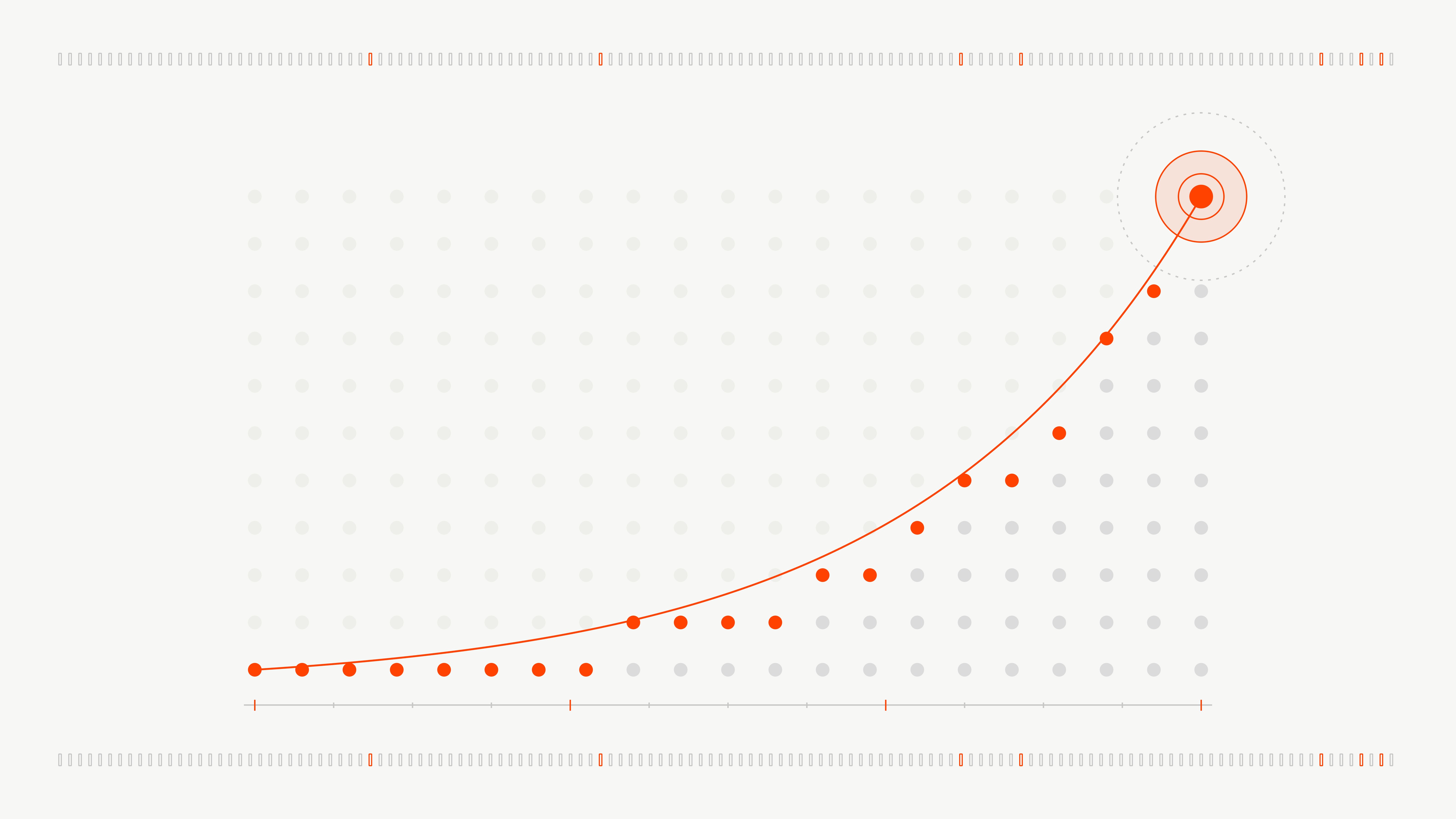
Header graphic of the company's announcement of its $100M run rate and $350M raise
Image: Applied Compute
The round follows a quick climb. The company raised $80 million at a $1.3 billion valuation in April, led by Kleiner Perkins, and in early September told Forbes it was negotiating the $350 million that has now closed, at nearly double its value of four months before. Forbes' piece set out the economic case behind the business: in some cases an open-weight model can run at a tenth of the cost of a frontier one.
The company's own account of its customer base is broad. Besides the names above, it lists Mercor, Cognition and Decagon, and says the list spans hardware design as well as the sectors already named. It counts training, inference and routing together as the first pieces of a bigger stack, and says enterprises should be able to own the AI that runs their products and operations. Its post says the number of enterprises served has more than doubled since April, and that around 40% use both the training and the inference side of the platform.
SiliconANGLE's account puts weight on how the models are made. Its description has the company's researchers helping each customer build evaluations first, then training with the reinforcement-learning and self-distillation methods above, then serving the result on the autoscaling engine. The router, in that telling, is the piece that keeps a company from paying frontier prices for every request.
About Applied Compute
Applied Compute is a San Francisco startup founded by three former OpenAI researchers, Yash Patil, Rhythm Garg and Linden Li. It trains custom open-source models for enterprise customers and runs them on its own cloud. It was about fifteen months old in September 2026.
It raised a $20 million seed round in June 2025. Its April 2026 round brought $80 million at a $1.3 billion post-money valuation, with Elad Gil, Lux, Greenoaks, Neo and Hanabi alongside lead investor Kleiner Perkins, and took total funding to $160 million.
1
Models indexed
Models on AIPopDB
The company's earlier history shows how fast it has moved. It started with a $20 million seed round in June 2025, so the business was only about 15 months old when Forbes wrote about it in September. The April round took total funding to $160 million, and the new $350 million is more than double that figure again. Forbes' September report gave no revenue number; the first figure of about $50 million was circulated in August through The Information's reporting, and the company has now confirmed a figure twice that size. Both the company and SiliconANGLE treat the 18-month mark as the headline proof that enterprises will pay for custom models, and the customer list as the evidence behind it.