Praise
A thought-provoking central idea
“Congrats - thought provoking, informative, and mind-blowing.”View comment on YouTube
17 Oct 2026 · 2,865 works · 698 news indexed

Synopsis
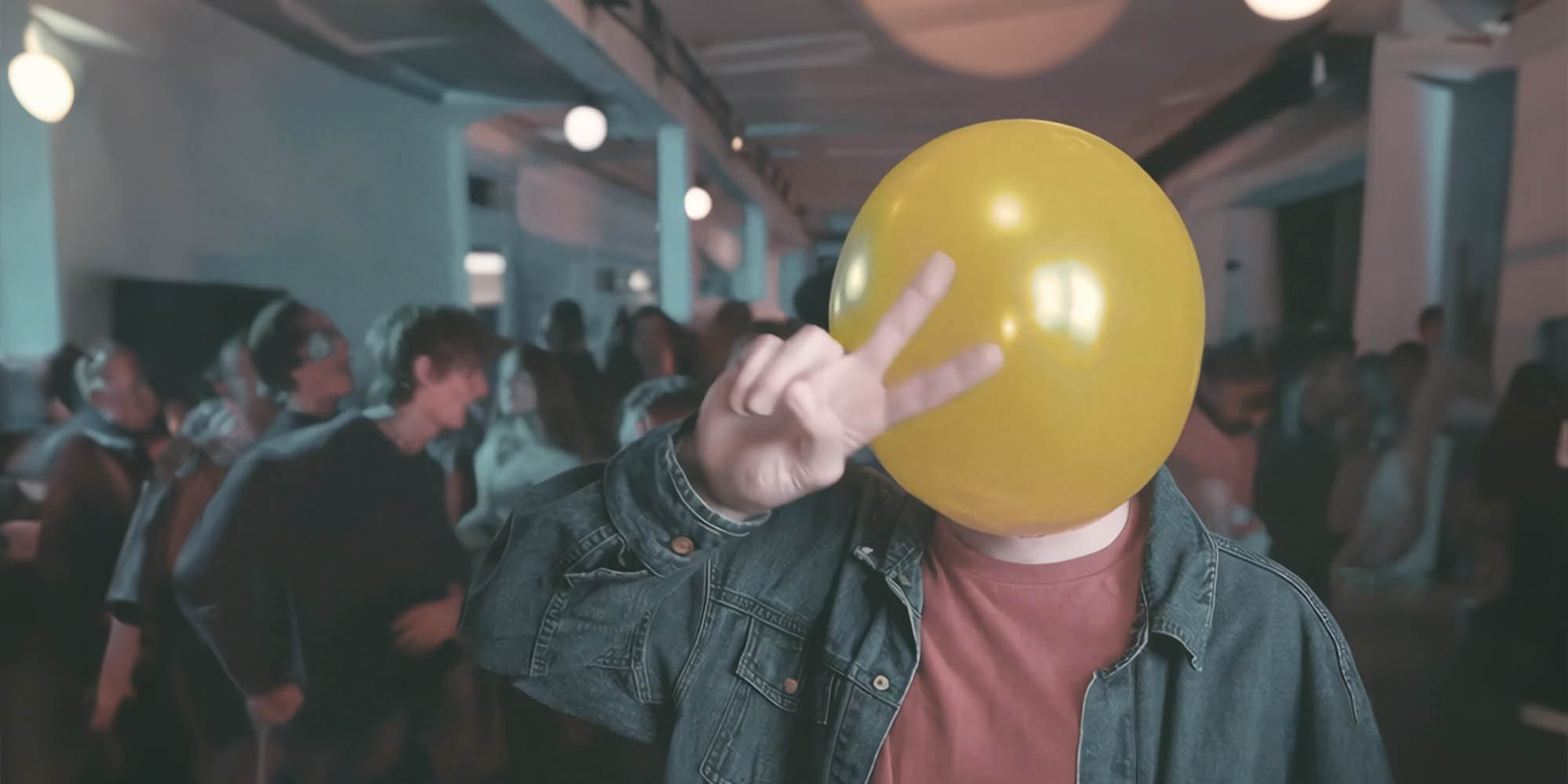
Total Pixel Space is a nine-minute essay film built on a single idea: a digital image is a grid of pixels, each holding numbers for colour, so the number of possible images is enormous but finite, and every image that could exist is already one of those combinations. The film works through the arithmetic, giving counts so large they are hard to picture, and admits that most of those images are random noise, with recognisable scenes, faces and objects only rare islands in a vast sea of it.
A calm voiceover follows the idea outward. If every possible image exists, so does every possible film made by stacking them, and the narration lists what that would hold: a film of your whole life, the lives you never lived, portraits of every person, the history of humanity from dawn to demise, and a million-year documentary of an alien civilization's rise and fall. The film frames these as waiting to be found rather than made, in the spirit of the infinite monkeys theorem.
It ends on images of dreams, of future discoveries and of the moment of our deaths, in a vastness that holds every frame of every possible past, present and future. Drifting, surreal imagery accompanies the narration, with a quiet, twinkling score. The tone is sober and contemplative, closer to a philosophy lecture than a story, and it never names AI in the narration.
Last Updated 14 October 2026
Total Pixel Space is a nine-minute AI-made essay film written, directed, produced and narrated by Jacob Adler, a composer and musician who also works in film and photography. It was released on his YouTube channel on 22 December 2024 and is also listed on Curious Refuge's AI film gallery and on WatchAIShortFilms. The YouTube upload had about 98,000 views when last read on 10 October 2026.
Daily Doc says Adler made it entirely in 2024 using AI tools, and Laughing Squid describes it as using generative AI to explore the nature of digital images. A catalogue page on WatchAIShortFilms says the visuals were generated with Runway Gen-3 and edited in DaVinci Resolve with a separately recorded voiceover. That page is an aggregator and no interview with Adler confirmed it in the pages read, so the tool list should be treated as unconfirmed. Short of the Week describes Adler as a musician by training who had carried the idea for several years without a way to express it; AI gave him the means, and enjoying making AI videos has led him to take up non-AI filmmaking too.
The film won the Grand Prix at the 2025 Runway AI Film Festival, shown in New York and Los Angeles. Short of the Week, in a piece dated 6 June 2025 on the festival's Lincoln Center screening, called it the writer's favourite of the programme, with a "magical, almost hypnotic effect", while also finding it possibly the most pretentious of the finalists. Artnet's Ben Davis, who attended the June 2025 screening at Alice Tully Hall, where the judges included Harmony Korine and Gaspar Noe, called it his favourite of the ten and described the soundtrack and washed-out palette, while also calling the technology already passe.
Runway's Cristobal Valenzuela shared the film on 24 June 2025, and Laughing Squid and Daily Doc covered it in July 2025. On Instagram Adler said he was honoured that it was selected for the festival. Computational Complexity, a computer-science blog, wrote about it in August 2025, saying the New York Times had highlighted it, and used Kolmogorov complexity to argue that compression shrinks the film's image counts; its tone was playful and largely positive.
It has also become a reference point in arguments about originality. A blog post on The Big(gin) Blog uses the film to ask what "unique" means when every image is a finite arrangement of coloured dots, and ties that to wider disputes over AI art, authorship and the music world's chord-progression plagiarism cases. The pages read give no formal critical reviews beyond the festival coverage.
Audience sentiment
Overwhelmingly positive: viewers call it beautiful, mind-blowing and thought-provoking, with the idea of every possible image moving many of them; criticism is minor, about a flashing sequence and the limits of the premise
92% positive
Based on 62 comments about the show on Instagram and YouTube
“Congrats - thought provoking, informative, and mind-blowing.”View comment on YouTube
“wow. you gave me such an insightful and emotional moment Jacob. thank you”View comment on YouTube
“Beautiful and profound. Congratulations on a well deserved win.”View comment on YouTube
“1:37 holy seizure warning batman”View comment on YouTube
“You are talking about flat digital images. We experience life at 360 HDR. Your premise is interesting but has its limitations baked in (resolution of screen, etc). pixels are an approximation that create an illusion. What you consider finite is actua…”View comment on YouTube
Measured 14 October 2026

Image: ytimg.com

Image: ytimg.com

Image: ytimg.com
Image: cloudfront.net

Image: laughingsquid.com
Related content
short
On Social Media